Share
ShareFrom Risk to Resilience: How Network Diversity Future-Proofs Global Connectivity
-
 July 28, 2025
 -

 7 min read
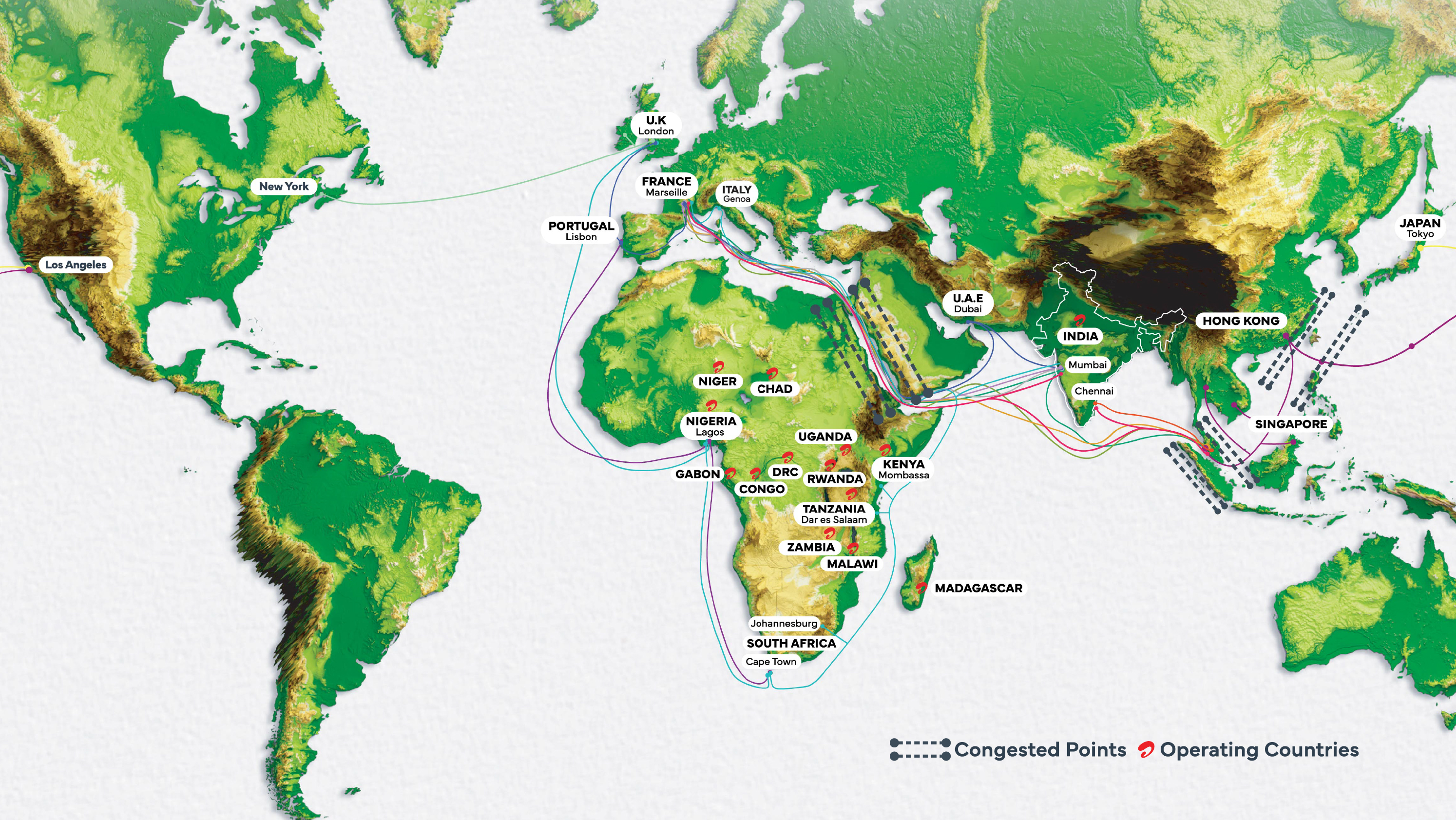
In March 2024, a subsea cable fault disrupted internet services across more than 10 African countries, leaving banks, e-commerce platforms, and enterprise operations paralysed for hours. It wasn’t a failure of infrastructure—it was a failure of redundancy. In today’s hyperconnected world, global operations don’t just rely on bandwidth. They depend on network diversity to survive.
The New Reality of Connectivity Risk
Today’s digital businesses are no longer confined to single data centers or local offices. They’re distributed, cloud-based, remote-first, and operating across multiple geographies. And that means they are more vulnerable than ever.



One cable cut. One overloaded exchange. One provider-level disruption. That’s all it takes to bring an entire global operation to a standstill.
But here’s the truth most businesses learn the hard way: it’s not the speed of your network that fails you—it’s the lack of diversity.
What Is Network Diversity and Why Does It Matter?
Think of network diversity as the digital world’s version of “don’t put all your eggs in one basket.”
At its core, it means building your connectivity across different technologies, paths, so your business doesn’t rely on a single point of failure.
Here’s what it looks like in practice:
- Different connection types – fiber, wireless, satellite, or subsea cables.
- Multiple network routes so traffic can reroute seamlessly during disruption.
- Redundancy built in – both at the edge (branch offices) and deep within your core network.
Why it matters?
- It eliminates weak spots that could bring your business offline.
- It ensures operations stay live even if a specific region or provider experiences an issue.
- It’s the foundation for business continuity—especially for globally distributed teams, apps, and services.
In short, network diversity isn’t just a technical upgrade—it’s a business safeguard.
The Hidden Cost of Network Outages
When connectivity fails, the impact isn’t just technical—it’s deeply commercial. And in many cases, it’s silent until it’s costly.
What’s Really at Risk?
Outages—whether a brief glitch or a prolonged failure—can ripple across every part of your business. Here’s what it looks like:
- Application Timeouts:
Business-critical applications like CRMs, ERPs, and collaboration tools stall. Sales reps can’t pull up client data. Customer support dashboards go blank. Productivity plummets. - Payment Processing Failures:
In industries like retail, banking, and travel, even a few minutes of downtime can block thousands of transactions. Customers abandon carts. Payments fail. Refund queues pile up. - Missed Meetings and Sales Moments:
In a hybrid, global world, dropped video calls, laggy demos, and failed logins create more than embarrassment—they cause missed deals, broken trust, and lost pipeline momentum. - Cloud Service Disruption:
Teams can’t access files. Code deployment halts. Marketing campaigns stall. What’s meant to be agile becomes immobilised.
The Financial Reality
For customer-facing industries like e-commerce and banking, downtime costs can escalate significantly. Industry analyses report that the average cost of IT downtime is approximately $5,600 per minute, with some studies indicating figures as high as $9,000 per minute. In certain high-risk sectors, such as finance and healthcare, these costs can soar to $5 million per hour, underscoring the critical importance of network resilience.
SLA Penalties & Compliance Risk
Beyond lost revenue, businesses face:
- SLA Penalties: Missing uptime commitments results in financial and contractual penalties, especially when serving enterprise clients.
- Compliance Breaches: In sectors like healthcare, BFSI, and public services, downtime can violate regulatory mandates tied to service availability and data access.
The People Impact
- Internal Friction: IT teams get flooded with support tickets they can’t resolve without root cause visibility. Executives grow frustrated. Teams lose faith in infrastructure reliability.
- Customer Experience Fallout: Users don’t see technical excuses. They just experience slowness, failure, or silence. Loyalty erodes. NPS scores fall.
5 Elements of a Resilient Connectivity Strategy
Resilient enterprises aren’t just adding more bandwidth—they’re engineering intelligent, diversified networks that can adapt in real time. Here’s how they do it:
1. Geographic & Path Redundancy
Build in alternate physical routes—undersea cables, terrestrial fiber, and satellite overlays—that span multiple regions. But it’s not just about diversity on paper. True resilience comes from working with a provider that can actively reroute traffic away from congested or geopolitically sensitive areas in real time, minimizing exposure to regional disruptions.
2. Multi-Carrier, Multi-Partner Architecture
Relying on a single ISP or infrastructure provider creates hidden risk. Partnering with a global provider like Airtel Business—one with a deep ecosystem of regional alliances, cable consortiums, and last-mile partners—ensures that failover is not limited by jurisdiction, geography, or licensing.
3. Access-Level Redundancy Across Sites
At the edge, resilience requires dual-link connectivity: primary fiber plus 5G, satellite, or wireless backup—especially at remote branches, plants, or delivery hubs. This ensures that each critical site remains connected even when local infrastructure is compromised.
4. Intelligent Traffic Management & Prioritisation
Not all traffic is equal. A resilient network continuously monitors for latency, jitter, and packet loss—dynamically prioritising mission-critical workloads (e.g., payments, video calls, ERP) while rerouting or throttling non-critical traffic to maintain user experience.
5. End-to-End Visibility & Proactive Monitoring
Downtime prevention begins with insight. With tools that offer real-time visibility across all links, carriers, and regions, enterprises can detect anomalies, act pre-emptively, and automatically switch to alternate routes before users are impacted.
Industry Use Cases: Where Network Diversity Delivers Real ROI
Retail: Always-On Shopping, No Matter What
Imagine your biggest weekend sale event—footfall is surging, carts are filling up, and transactions are flying in. Suddenly, your main internet link drops. Without network diversity, everything comes to a complete halt. But with a resilient, multi-path network in place, your POS systems, online shopfront, and payment gateways reroute instantly, keeping every transaction flowing and every customer connected, unaware that anything even went wrong.
POS systems, online storefronts, and payment gateways stay online—even when the primary link fails.
Finance: Downtime Isn’t an Option
When trading platforms or banking portals go dark, millions can be lost in seconds. Redundant, multi-path connectivity ensures your systems stay live—even during regional fiber cuts or carrier-level issues—preserving both revenue and reputation.
Uninterrupted access to trading platforms and digital banking apps protects revenue and customer trust.
Manufacturing: No Room for Delays
Smart factories rely on remote diagnostics, real-time sensors, and connected machinery. A single connectivity lapse can disrupt production. A resilient network keeps operations flowing across sites, geographies, and conditions.
Reliable plant operations and remote diagnostics run seamlessly across diverse links.
IT & ITeS: Empowering the Everywhere Workforce
Whether teams are working from home, client locations, or delivery centers, they need uninterrupted access to internal platforms and cloud apps. Network diversity ensures consistent, low-latency access—so productivity never dips.
Hybrid teams and remote delivery centers enjoy low-latency access to cloud tools and internal apps.
Resilience Is Not a Product—It’s a Strategy
There is no one-size-fits-all solution. Your enterprise may need subsea fiber backup, 5G failover, or satellite continuity—depending on geography, workload, and risk profile.
Start by asking:
- Where are we most vulnerable?
- Are we overly dependent on one carrier or route?
- Which applications cannot afford downtime?
- How fast can we reroute traffic if one link fails?
Building a resilience roadmap begins with understanding your exposure and aligning your network with your business risk posture.
Uptime Is the New Currency
In an economy where milliseconds matter and customer trust is earned digitally, connectivity is no longer just a utility—it’s a business-critical enabler.
Enterprises that embrace network diversity are not just avoiding outages—they’re unlocking new levels of agility, global scalability, and operational stability.
The next step isn’t just buying more bandwidth—it’s buying yourself resilience.