Share
ShareWhat Is Device Protection and How Does It Secure Hybrid Workforces?
-
 August 31, 2026
 -

 7 min read
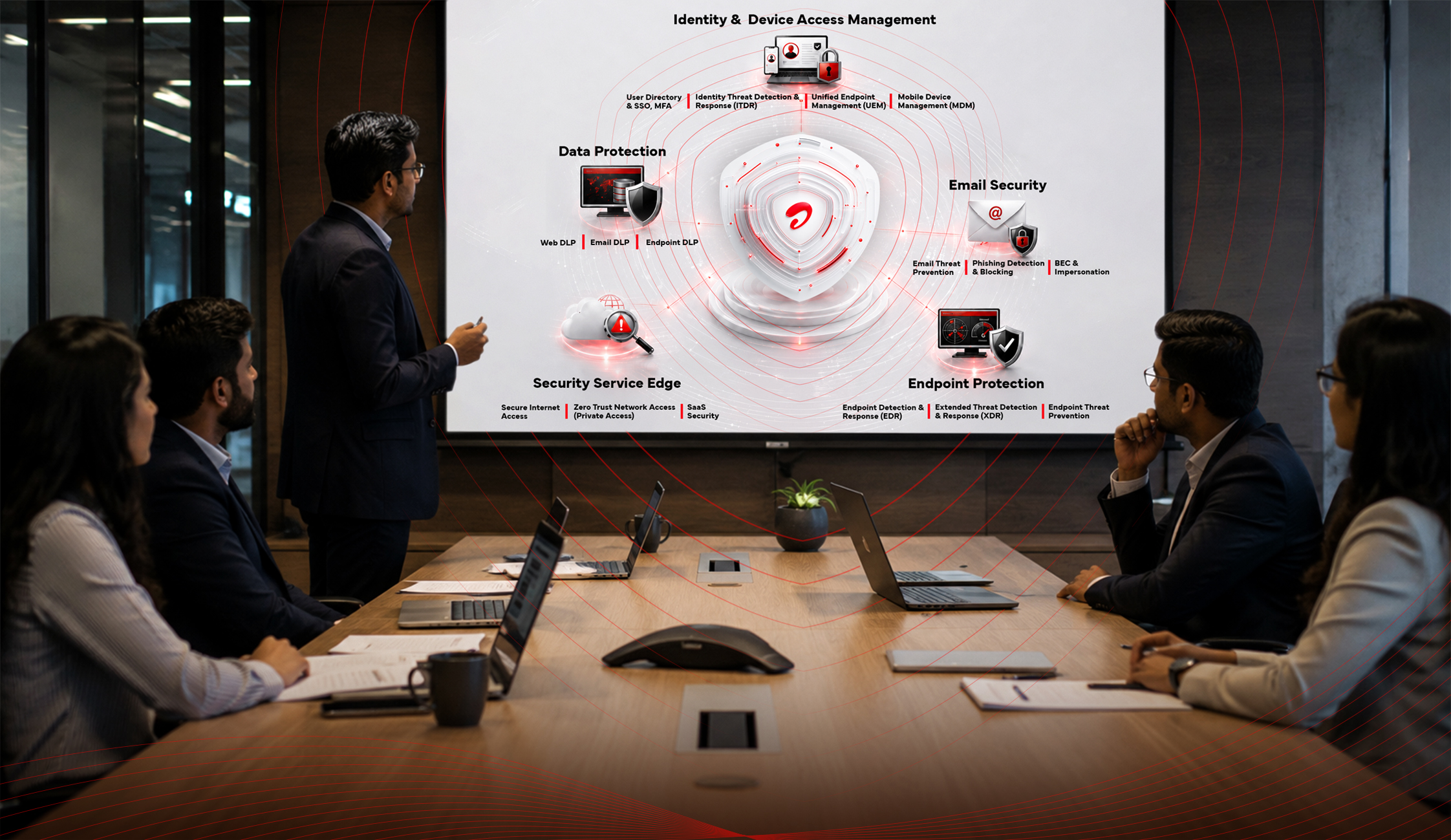
Hybrid work has transformed enterprise cybersecurity by expanding the number of connected devices beyond corporate networks. Every laptop, smartphone, and tablet can become an entry point for cyber threats without the right security controls. This article showcases what device protection is, why it is critical for hybrid workforces, the risks it addresses, the essential capabilities organisations should prioritise and the role it plays in strengthening enterprise security.
Can organisations protect every employee device when work happens across homes, offices, and public locations? Hybrid work has changed corporate operations and expanded digital exposure.



Every connected laptop, smartphone, and tablet creates another entry point for cyber threats. Strong device protection has become a strategic requirement for organisations that manage distributed teams and sensitive business data.
Modern enterprises require consistent security across every endpoint. Cyber attacks continue to target remote devices through phishing, ransomware, malicious applications, and unpatched software. Effective device protection strengthens organisational resilience through continuous monitoring, rapid threat detection, and policy enforcement across every connected device.
What is Device Protection?
Device protection refers to technologies and security controls that safeguard laptops, desktops, smartphones, tablets, and other connected endpoints from cyber threats. It combines prevention, monitoring, detection, and response capabilities across enterprise devices.
Unlike traditional antivirus software, modern device protection focuses on identifying suspicious behaviour before attacks spread across corporate environments.
Typical capabilities cover:
-
Malware detection
-
Ransomware defence
-
Vulnerability management
-
Patch management
-
Device monitoring
-
Policy enforcement
-
Incident response
-
Threat intelligence
These capabilities strengthen organisational resilience across distributed work environments.
Why Do Hybrid Workforces Need Device Protection?
Hybrid work has expanded the corporate attack surface. Employees now access business resources from multiple locations and networks. Personal devices and public Wi-Fi connections create additional exposure.
Without effective device protection, organisations face greater operational risk.
Common challenges involve:
|
Hybrid workforce challenge |
Security impact |
|
Remote working |
Greater exposure to external threats |
|
Personal devices |
Reduced visibility across endpoints |
|
Public networks |
Higher interception risk |
|
Delayed updates |
Increased vulnerability exploitation |
|
Cloud applications |
More identity-based attacks |
Modern security strategies require continuous visibility across every managed device.
Security Risks Across Hybrid Work Environments
Hybrid work introduces several security challenges that can expose enterprise devices and sensitive business information if organisations lack effective security controls.
Phishing attacks
Phishing remains one of the most common attack methods. Employees receive fraudulent emails that imitate trusted organisations. A single successful attack may expose credentials or install malicious software.
Ransomware
Ransomware attacks continue to grow across enterprise environments. Attackers encrypt files and demand payment. Strong device protection identifies suspicious behaviour before widespread encryption occurs.
Unpatched software
Delayed software updates create known vulnerabilities. Attackers actively search for outdated operating systems and applications.
Shadow IT
Employees frequently install unauthorised software. These applications may introduce hidden vulnerabilities or malicious code.
Lost or stolen devices
Mobile devices frequently contain confidential business information. Centralised controls reduce exposure after theft or accidental loss.
How Device Protection Secures Hybrid Workforces
Modern device protection combines several security functions into one coordinated strategy.
Continuous threat detection
Traditional security tools often rely on known malware signatures. Modern device protection goes beyond this approach. It analyses device behaviour to identify unusual activities. Suspicious file execution, abnormal network traffic, and unauthorised processes trigger immediate alerts.
Early detection limits attack progression and reduces the risk of widespread compromise across enterprise environments.
Real-time monitoring
Continuous monitoring gives security teams visibility across every managed endpoint. Device activity remains visible regardless of employee location. Security administrators can identify suspicious behaviour, unauthorised software, and policy violations quickly.
Faster visibility enables quicker investigation and reduces the time attackers remain active within enterprise systems.
Vulnerability management
Outdated software and incorrect configurations create opportunities for attackers. Regular vulnerability assessments identify these weaknesses before exploitation.
Security teams can prioritise remediation based on risk levels. Timely patch deployment strengthens the overall security posture and reduces exposure across hybrid work environments.
Automated threat response
Rapid response plays a vital role during a cyber incident. Modern security platforms automatically isolate compromised devices after detecting malicious activity.
This action limits lateral movement across enterprise networks. Automated response also reduces investigation time and enables security teams to focus on critical incidents.
Policy enforcement
Hybrid work requires consistent security controls across office and remote devices. Centralised policy management applies the same security standards throughout the organisation.
Administrators can control device configurations, application access, and security settings from one platform. This approach reduces security gaps created by inconsistent endpoint configurations.
The Role of Endpoint Security in Enterprise Cybersecurity
Modern organisations require more than traditional antivirus software. Endpoint security has evolved into an intelligent defence strategy that monitors device activity throughout the attack lifecycle.
Effective endpoint security provides:
-
Behaviour-based threat detection
-
Device health monitoring
-
Centralised policy management
-
Incident investigation
-
Threat intelligence
-
Automated response actions
-
Vulnerability assessment and prioritisation
-
Patch and update management
-
Application and device control
-
Compliance monitoring and reporting
These capabilities strengthen organisational resilience against sophisticated cyber attacks.
Security teams also benefit from improved visibility across distributed environments. Faster detection reduces attacker dwell time and limits operational disruption.
Essential Features to Evaluate
Selecting the right device protection platform requires careful evaluation of security capabilities and operational value.
|
Feature |
Business value |
|
Behavioural detection |
Identifies advanced threats earlier |
|
Vulnerability management |
Reduces exposure from outdated software |
|
Central management |
Improves visibility across devices |
|
Automated response |
Limits attack progression |
|
Patch management |
Reduces known vulnerabilities |
|
Threat intelligence |
Improves threat identification |
|
Compliance reporting |
Simplifies regulatory audits |
Many enterprises also evaluate managed security expertise alongside technology capabilities.
For organisations seeking an integrated managed solution, Airtel Secure Endpoint Protection combines continuous monitoring, behavioural detection, vulnerability management, compliance capabilities, and rapid incident response through a unified enterprise platform.
Benefits of Device Protection for Organisations
Modern enterprises gain several operational advantages through effective device protection.
Major benefits are:
-
Reduced ransomware exposure through early threat detection and rapid containment.
- Better visibility across enterprise devices from a centralised security platform.
- Faster threat detection through continuous monitoring and behavioural analysis.
- Improved regulatory compliance with consistent security policies and reporting.
- Lower operational risk by addressing vulnerabilities before exploitation.
- Stronger remote workforce security across office, home, and mobile environments.
- Better asset visibility through continuous monitoring of connected enterprise devices.
- Faster incident response to minimise attack impact and operational disruption.
These outcomes strengthen organisational security without increasing operational complexity.
Modern endpoint security also strengthens cyber resilience across hybrid environments by protecting every managed endpoint through centralised controls.
Best Practices for Strengthening Device Protection
Technology alone cannot reduce every cyber risk. Organisations require disciplined operational practices.
Recommended practices:
-
Deploy security updates promptly.
-
Monitor endpoint activity continuously.
-
Apply least privilege access controls.
-
Encrypt sensitive business information.
-
Conduct regular vulnerability assessments.
-
Maintain strong authentication policies.
-
Review security policies periodically.
-
Train employees to recognise phishing attacks.
These practices strengthen device protection across distributed work environments.
Regular security reviews also identify emerging risks before attackers exploit weaknesses.
Mistakes That Organisations Should Avoid
Several operational gaps weaken enterprise security despite technology investments.
Common mistakes involve:
-
Delayed software updates
-
Weak password practices
-
Limited endpoint visibility
-
Excessive administrator privileges
-
Unmanaged personal devices
-
Infrequent vulnerability reviews
-
Poor incident response planning
Every weakness creates additional opportunities for attackers. Strong governance, continuous monitoring, and modern endpoint security reduce these operational risks across hybrid workplaces.
Protecting Every Endpoint in a Hybrid Workplace
Hybrid work has expanded the enterprise attack surface and increased cyber risks across connected devices. Modern device protection strengthens security through continuous monitoring, threat detection, vulnerability management, and rapid incident response.
Organisations that invest in proactive security can reduce operational risks and improve visibility across distributed work environments.
Strengthen enterprise security with Airtel Secure Endpoint Protection. Its advanced capabilities help protect endpoints, detect threats early, and improve cyber resilience across hybrid workplaces. Explore the solution to strengthen long-term organisational security.
FAQs
-
Device protection safeguards enterprise devices against cyber threats. It monitors endpoint activity, detects risks early, and strengthens security across hybrid work environments. It also protects sensitive business data from evolving cyber attacks.
-
Traditional antivirus mainly detects known malware. Endpoint security provides broader protection through behavioural analysis, continuous monitoring, policy enforcement, and automated threat response. It also improves visibility across enterprise endpoints.
-
Software updates fix vulnerabilities before attackers exploit them. They reduce exposure to known threats and improve device security. Regular patching also strengthens compliance and lowers cyber risks across hybrid workplaces.
-
Yes. Cloud-based device protection centralises security management across distributed devices. It improves visibility, simplifies policy deployment, and enables faster threat monitoring. Security teams can manage endpoints from one platform.
-
Employees often encounter phishing emails and malicious links. Cybersecurity awareness programmes encourage safer online behaviour. They reduce human error and strengthen organisational resilience against common cyber threats across hybrid workforces.
-
Organisations should evaluate threat detection, scalability, automation, reporting, and vulnerability management. They should also assess deployment flexibility, compliance capabilities, and vendor expertise. These factors influence long-term security performance.