If you’ve ever bought gold jewellery, you’ve likely wondered why the final bill always exceeds the pure metal price. The answer lies in gold making charges, a fee that covers the artistry, labour, and design work behind every ornament. Knowing how to calculate making charges on gold ensures you never pay more than a fair price and helps you compare jewellers with confidence.
Overview
Gold making charges on jewellery usually sit between 5% and 25% of the gold value, or you might see a flat ₹300 to ₹1,000 added per gram. Getting comfortable with the two main calculation methods and the hidden extras as GST puts you in a stronger position to spot inflated bills and negotiate better.
Gold Making Charges in India
When you buy gold jewellery, the final price includes more than just the gold’s market value. Making charges on gold represent the cost of transforming raw gold into beautiful ornaments. These charges typically range from 5% to 25% of the gold value, depending on design complexity and craftsmanship involved.
India’s jewellery market, worth 24.21% of the global share, sees significant demand during weddings and festivals. With gold prices changing based on market conditions, understanding per gram making charges for gold jewellery becomes crucial for smart purchasing decisions.
GST on Gold Making Charges
Here’s a detail many buyers miss: the GST you pay depends on how the bill is structured. When the gold value and making charges for gold jewellery appear as one combined amount, the entire invoice attracts 3% GST. But if the jeweller chooses to list making charges as a separate service line, that specific part may be taxed at 5%. The same craftsmanship, two different tax treatments, all because of invoice formatting.
To see how this works in practice, imagine a ring with a gold value of ₹50,000 and a making charge of gold jewellery of ₹6,000. Under a combined bill, the GST at 3% on ₹56,000 comes to ₹1,680. If the making charge is split out, the gold value attracts 3% (₹1,500) while the making charge attracts 5% (₹300), totalling ₹1,800. A detailed, itemised billing sheet lets you spot which method is being used and whether you’re paying extra.
Pro tip: Always request a jewellery invoice that breaks down the gold cost and making charges line by line. That simple habit makes it easy to calculate making charges on gold accurately and keeps the GST on making charges transparent.
Factors Influencing Gold Jewellery Making Charges
The making charges of gold jewellery aren’t a random markup. Several concrete factors push the cost up or down, and knowing them helps you negotiate from a position of strength.
- Design complexity and jewellery craftsmanship: Hand‑crafted filigree, meenakari, or intricate temple jewellery calls for hours of skilled labour. The more complex the pattern, the higher the percentage-based making charges tend to climb.
- Manufacturing method: Machine‑stamped chains and lightweight earrings usually carry modest fixed making charges. Hand‑finished pieces, though, bring steeper costs because of the human time involved. Always ask whether the piece was handmade or cast, as that choice ripples through the final price.
- Gold purity: 22‑karat gold is the standard for jewellery in India, but working with 24‑karat is trickier because the metal is softer and demands specialised handling. Higher purity can mean higher per gram charges.
- Brand premium and jeweller reputation: A well‑known store with decades of trust may quote higher rates. Part of what you’re paying for is the assurance of correct hallmarking and a clear buyback value promise down the line.
- Geographic or regional location: Making charges on gold can shift quite a bit from city to city. In a metro like Mumbai or Delhi, shop rents and labour overheads push metro pricing higher, often ₹600–₹800 a gram for work that might cost ₹400–₹550 in a tier‑2 or tier‑3 town.
How to Calculate Gold Making Charges
The two primary calculation methods are:
Fixed Per‑Gram Charges
This straightforward method charges a flat rate per gram, typically ₹300–₹1,000. For example, if you’re buying a 10‑gram gold chain with ₹500 per gram making charges:
Gold cost: ₹6,000 × 10g = ₹60,000
Making charges: ₹500 × 10g = ₹5,000
Subtotal: ₹65,000
Percentage‑Based Charges
Here, making charges are calculated as a percentage of gold value, usually 6–15%. Using the same 10‑gram chain example with 12% making charges:
Gold cost: ₹60,000
Making charges: 12% of ₹60,000 = ₹7,200
Subtotal: ₹67,200
Gold Jewellery Making Charges Examples
Understanding making charges on gold becomes clearer when you examine real‑world examples from major Indian jewellers. However, for a practical calculation example, consider an 11‑gram gold chain with a flat rate of ₹500 per gram making charge. The pure gold value would be ₹6,500 × 11g = ₹71,500, with additional making charges of ₹5,500. These examples demonstrate how charges vary significantly across jewellers and designs, making it essential to compare before purchasing.
Making Charges by Product Type
Not all gold purchases are priced in the same way. The product you pick, a designer necklace versus a plain coin, can swing the gold making charges per gram by thousands of rupees. Here’s what to expect.
Making Charges on Gold Jewellery
Jewellery almost always attracts higher making charges because every piece involves some degree of design planning, soldering, stone setting, and polishing. Simple machine‑made chains might see making charges on gold as low as 5%, while ornate bridal sets can reach 25% or more. Delicate filigree work, kundan settings, and hand‑engraved motifs require significant artisan labour, and that skill shows up on the invoice. If you’re buying a heavy necklace, a 12% percentage‑based making charge on ₹2,00,000 worth of gold adds ₹24,000 to the cost, enough to make anyone pause and negotiate.
Making Charges on Gold Coins and Biscuits
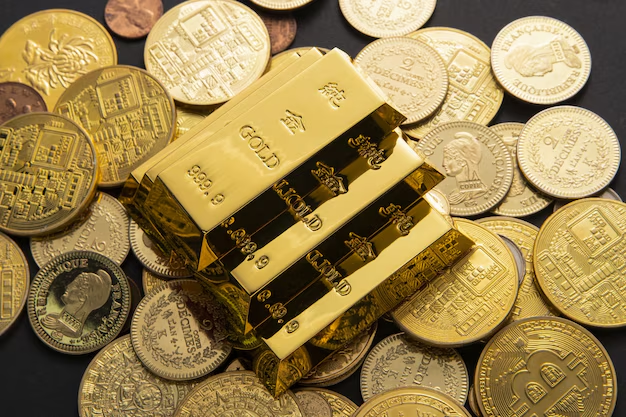
Gold coins and gold biscuits sit at the opposite end of the spectrum. They’re stamped or minted with minimal handwork, so fabrication costs stay low. Typical making charges range between ₹50 and ₹150 per gram. For someone buying 50 grams of a coin, that’s a maximum of ₹7,500 in making charges, dramatically less than what a jewelled set of the same weight would command. Because the premium is so thin, these products appeal strongly to those who treat gold as investment gold. The near‑total metal value you recover later makes gold coins a staple for long‑term wealth building, not just ornamentation.
Wastage Charges for Gold in India
Wastage charges compensate for gold lost during manufacturing, typically 5–15% of gold weight. These charges are separate from making charges and cover material loss during cutting, melting, and polishing processes.
Calculation Example:
If 20 grams of gold results in 19 grams of finished jewellery:
Wastage Percentage = (20g – 19g) / 20g × 100 = 5%
When jewellery purchases feel financially heavy, some buyers choose to leverage their existing gold. A gold loan via Airtel Finance from lending partners such as Bajaj Finance can offer up to ₹2 crore with transparent evaluation and no hidden charges. And if you already have a running loan, a gold loan transfer to a lender with a lower gold loan interest rate might ease your cash outflow without disturbing your asset. Before applying, check the gold loan eligibility criteria; typically age, proof of ownership, and purity of the gold, so you’re prepared. Some lenders even offer a fully digital gold loan process that completes in under thirty minutes.
Making vs Wastage: Key Differences
| Aspect | Making Charges | Wastage Charges |
| Purpose | Labour and craftsmanship costs | Compensation for gold loss |
| Range | 5–25% of gold value | 5–15% of gold weight |
| Calculation | Based on final product | Based on material loss |
Does Gold Resale Value Include Making Charges?
Here’s a point many first‑time buyers overlook: making charges are almost never recoverable. When you sell jewellery back to a jeweller or a gold loan company, the valuation hinges on the prevailing gold rate and the net weight of the metal, not on the craftsmanship. The intricate meenakari pendant that costs you a premium of 18% in labour will fetch exactly the same per‑gram rate as a plain cast bar of the same purity. Those non‑recoverable charges are essentially the price of beauty, lost at the time of sale.
That’s why anyone eyeing strong resale value should pay attention to the making‑charge percentage at the time of purchase. Opting for simpler designs, or mixing jewellery purchases with gold biscuits, directly improves the buyback value down the road. If you’re buying purely for investment, coins remain the smartest vehicle because the making cost is minimal and the metal value dominates.
How to Identify and Avoid Hidden Charges?
Identifying hidden charges requires careful examination of your jewellery bill and asking specific questions before purchase. Watch for these common hidden costs:
- Certification charges that should be included.
- Excessive wastage percentages above industry standards.
- Unclear “handling” or “processing” fees.
- GST calculations on inflated base prices.
- Stone setting charges not disclosed upfront.
Verify the actual gold weight using digital scales and ensure purity certificates are provided. Ask the jeweller to explain every component of the bill before making payment.
Securing Maximum Value
Understanding these calculations helps you negotiate better prices and make informed decisions. Always compare per gram gold making charges across multiple jewellers before finalising your purchase. Request detailed invoices, verify GST calculations, and don’t hesitate to ask questions about any additional charges.
Timing matters too. During Diwali, Akshaya Tritiya, or end‑of‑season sales, many jewellers offer festive discounts that slash making charges by 15–20%. Similarly, exchange offers let you trade in old ornaments and pay only the making charge on the new piece, often at a reduced rate. When you pair such offers with a little negotiation, the savings can be significant.
If part of your purchase plan includes unlocking cash from existing jewellery, a gold loan provides immediate liquidity without selling the asset. Compare the gold loan interest rate across lenders, and if your current loan feels expensive, a gold loan transfer might bring down the cost while keeping your gold safe. Always verify your gold loan eligibility beforehand; most lenders require you to be at least 18 with clear ownership documents. And if you value speed, several lenders now let you complete a digital gold loan application entirely from your phone.
FAQs
1. What is the average making charges on gold jewellery in India?
Making charges typically range from 8–15% of gold value for standard designs, while intricate handcrafted pieces may attract 20–25% charges.
2. How do I calculate per gram making charges for gold jewellery accurately?
Divide total making charges by gold weight. For ₹5,000 making charges on 10 grams, per gram cost equals ₹500.
3. Are wastage and making charges the same thing?
No, making charges cover labour costs while wastage charges compensate for gold lost during manufacturing. Both are separate components.
4. What GST rate applies to making charges on gold purchases?
It depends on the invoice. When gold value and making charges are billed together, 3% GST is applied to the total. If the making charge is shown as a separate line, that portion can attract 5% GST. The safest approach is to ask for a split invoice so you see exactly how the tax is calculated.
5. How can I avoid excessive making charges when buying gold?
Compare rates across multiple jewellers, understand calculation methods, request detailed invoices, and negotiate based on design complexity and purchase quantity.
6. Are making charges refunded if I sell my gold jewellery back?
No, making charges are non‑recoverable charges. The resale price depends entirely on the metal weight and the current gold rate in India, not on the craftsmanship. Check the jeweller’s exchange or buyback policy before purchasing.
7. Do gold coins and biscuits have lower making charges than jewellery?
Yes, gold coins and biscuits carry far lower fabrication costs, typically ₹50–₹150 per gram. Because the labour component is minimal, they serve as excellent investment gold with better buyback value compared to ornamented jewellery.