| Overview: Choosing between a top loader and a front loader washing machine affects your budget and utility bills. This guide compares costs, efficiency, water usage, and financing options to help you select the right home appliances for your household needs and budget. |
Making the Right Choice for Your Home
Indian households spend an average of ₹15,000–₹40,000 on washing machines, making it a significant purchase decision. With the home appliances market growing at 8.5% annually, understanding the difference between top loader and front loader machines is crucial. The choice impacts not just your initial investment but also your monthly water and electricity bills for years to come.
If the upfront cost feels heavy, financing options like Airtel Finance let you purchase premium washing machines without straining your budget, with flexible repayment plans tailored to your needs.
Front Loader Washing Machines: The Efficiency Champions
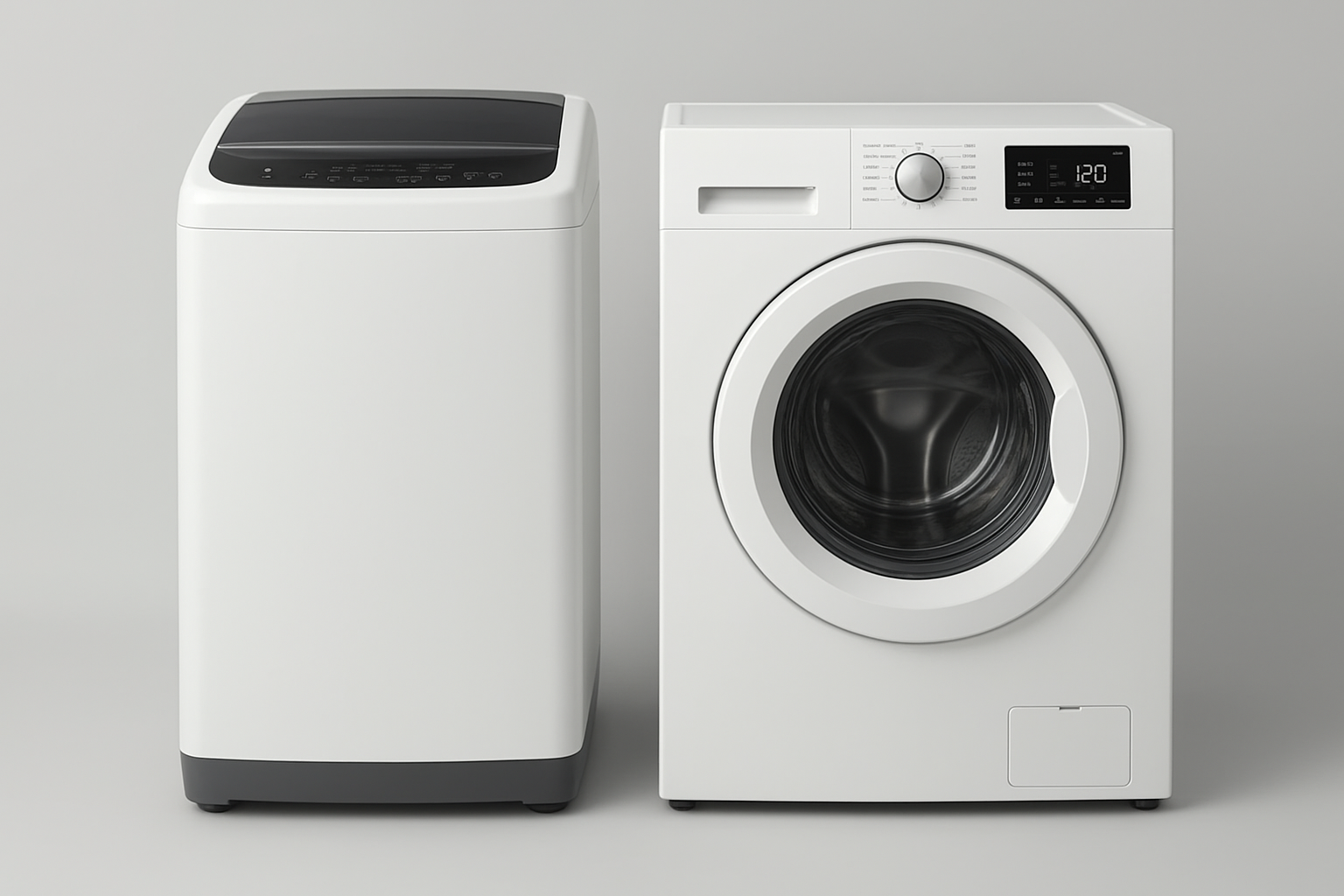
Front loaders are known for superior cleaning performance. If you meet the eligibility criteria, you can purchase one using the Airtel Bajaj Finserv Insta EMI Card. Using a horizontal-axis design, they tumble clothes gently through water and detergent, removing stains effectively while being kinder to fabrics.
Their biggest advantage is efficiency. Front loaders use up to 50% less water and significantly less electricity than top loaders. Higher spin speeds (around 1,500 RPM) extract more water from clothes, cutting drying time and saving additional energy. Over the machine’s lifetime, this translates into substantial utility bill savings.
They also offer larger capacity without an agitator, making it easier to wash bulky items like blankets and comforters. Space-conscious buyers will appreciate that front loaders can be stacked with dryers.
Top Loader Washing Machines: The Convenient Choice
Top loaders remain popular for their ease of use. With a vertical drum, loading and unloading requires no bending—ideal for people with mobility or back issues. You can also add forgotten items mid-cycle, adding convenience.
They offer faster wash cycles—sometimes as short as 30 minutes—and generally cost less upfront. Maintenance is simpler since water drains fully, reducing odor risk.
If you wish to purchase one through easy EMIs, you can apply online for an Insta EMI Card via the Airtel Thanks App.
Top Loader vs Front Loader: Quick Comparison
Choosing between a top loader and a front loader becomes easier when you compare their features side by side. With the Airtel Bajaj Finserv Insta EMI Card, you can pick the model that best fits your needs without worrying about upfront costs, thanks to flexible EMI options.
| Feature | Top Loader | Front Loader |
| Upfront Cost | Lower (₹12,000–₹25,000) | Higher (₹20,000–₹45,000) |
| Water Usage | 150–200 litres per cycle | 80–120 litres per cycle (40–50% less) |
| Energy Efficiency | Lower | Higher (20–30% savings) |
| Cycle Time | Shorter (30–45 minutes) | Longer (60–90 minutes) |
| Cleaning Quality | Good, but less gentle on fabrics | Superior stain removal, gentler on clothes |
| Capacity for Bulky Items | Limited | Larger, fits comforters & blankets |
| Ease of Loading | No bending required | Requires bending/kneeling |
| Maintenance | Lower, minimal mold risk | Needs regular gasket cleaning to prevent mold |
| Space Saving | Requires more floor space | Can be stacked with dryer |
| Mid-Cycle Additions | Yes | No (in most models) |
| Lifespan | 7–10 years with maintenance | 7–10 years with maintenance |
Making Your Decision
Your choice depends on priorities:
- Choose a front loader for efficiency, gentle fabric care, and space-saving potential; it’s ideal for larger families or heavy laundry loads.
- Choose a top loader for convenience, quick cycles, and lower upfront costs; it’s ideal for smaller households or those with mobility concerns.
Final Word
Front loaders excel in efficiency, while top loaders stand out for speed. The right choice depends on your household size, laundry frequency, space constraints, and budget.
If your ideal washing machine feels out of reach, Airtel Finance offers EMI options. With quick digital application, instant approval, and eligibility based on factors like your credit score and income, you can use the Airtel Bajaj Finserv Insta EMI Card to manage your EMIs.
FAQs
1. Which washing machine is better for Indian families?
Top-loaders suit budget-conscious families preferring quick cycles, while front-loaders benefit households prioritising water conservation and energy efficiency.
2. How much water do top loader vs front loader machines consume?
Top-load machines use 150-200 litres per cycle, while front-load machines consume 80-120 litres, making front-loaders 40-50% more water-efficient for Indian households.
3. Can financing help purchase premium washing machines?
Yes, Insta EMI Cards make expensive front-load home appliances affordable with EMIs starting at ₹1,500-₹2,000, allowing access to energy-efficient models without budget strain.
4. What’s the typical lifespan difference between machine types?
Both top loader vs front loader machines last 7-10 years with proper maintenance, though front-loaders may require more frequent cleaning to prevent mold buildup.
5. Do front-load machines really save money long-term?
Front-load home appliances save ₹18,000-₹25,000 in utility costs over their lifetime, offsetting their higher purchase price compared to top-load alternatives.