Share
ShareIoT vs M2M: Key Differences, Communication Models & Applications
-
 January 16, 2026
 -

 11 min read
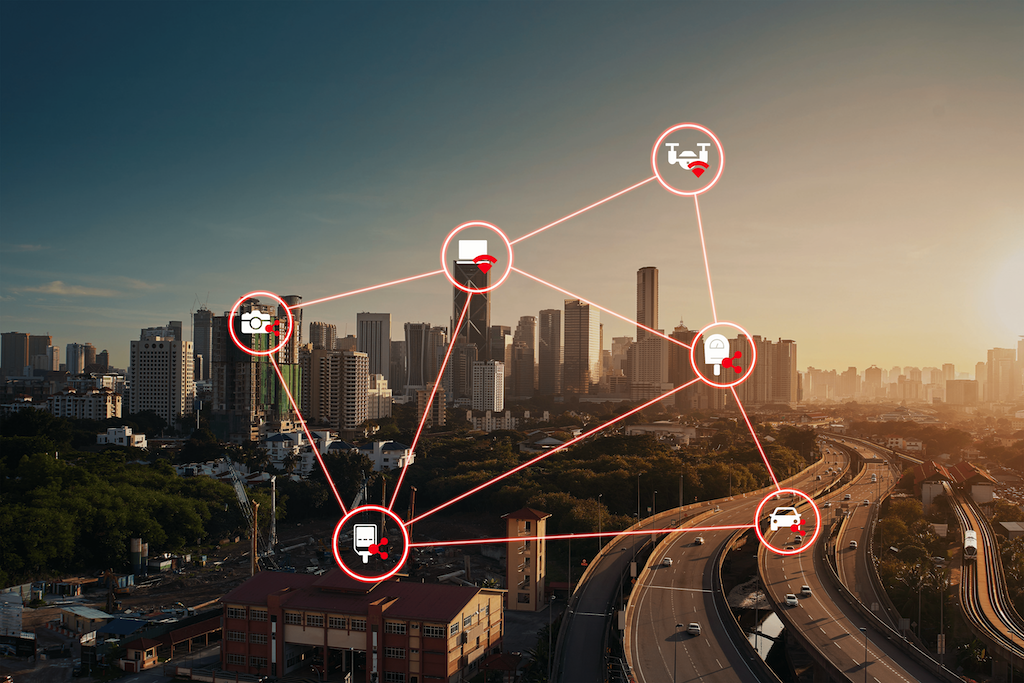
The field of remote device networking has been revolutionized in the past several years. Two technologies that we often hear while discussing device networking are M2M (Machine-to-Machine) and IoT (Internet of Things). They both have similar objectives: connecting smart devices without, or with the least, human involvement for capturing and transmitting the data and remote monitoring. So what do the two mean? How are they different?



Difference Between IoT and M2M: Full Comparison, Examples & Business Use Cases
The difference between IoT and M2M reflects how far connectivity has evolved in the digital age. Both allow machines to communicate, yet their scope and intelligence differ greatly. M2M relies on direct point-to-point links between devices, while IoT builds a cloud-powered ecosystem that connects machines, data, and applications across networks. Businesses today depend on these technologies to improve efficiency, reduce costs, and unlock new insights.
This article explores both concepts in detail, explaining how they work, where they differ, and how each supports modern industries such as manufacturing, logistics, utilities, and smart infrastructure.
What is M2M? (Machine-to-Machine Communication)
M2M stands as the foundation of modern connected systems, enabling machines to communicate and share data seamlessly without the need for human input.
Definition: Point-to-Point, Hardware-Centric Communication
Machine-to-Machine (M2M) communication refers to the direct exchange of data between physical devices without human involvement. It follows a point-to-point structure, where hardware units communicate using cellular, wired, or radio networks. M2M focuses on hardware-driven operations, designed primarily for specific, closed-loop systems such as industrial control or remote monitoring.
In essence, M2M represents device-level connectivity, usually embedded in industrial systems or proprietary solutions, with limited integration to the internet or cloud.
How M2M Works
M2M uses embedded sensors, modems, and dedicated modules to send data from one machine to another over a network. These devices often use cellular connectivity, Ethernet, or radio frequency communication.
Typical M2M setup:
-
Sensors or controllers collect operational data.
-
Data transmits directly to another machine or server using M2M SIM cards.
-
The receiving device performs pre-defined actions (like switching a valve or sending alerts).
This design is efficient for closed systems but lacks flexibility for integration with modern cloud applications.
Common M2M Examples
These examples highlight how M2M communication powers everyday operations across industries, delivering reliable connectivity and automation in systems that demand speed, accuracy, and consistency.
-
ATM Machines: Use M2M SIM connections to transmit transaction data securely to banks.
-
Vending Machines: Send refill or maintenance alerts through GSM modules.
-
Fleet Tracking Systems: Use GPS and M2M IoT modules to track vehicle location.
-
Smart Meters: Communicate electricity or gas consumption to utility providers.
-
Remote Healthcare Devices: Transmit patient readings to hospitals.
Benefits of M2M
The benefits of M2M extend far beyond simple connectivity, offering practical advantages that boost operational efficiency, reduce manual effort, and create faster, more reliable communication between devices.
-
Real-time Machine Data: Enables quick responses in critical operations.
-
Reduced Manual Work: Automated reporting and status updates.
-
Reliable Point-to-Point Communication: Minimal latency within local systems.
-
Cost Control: No dependency on expensive cloud infrastructure.
-
Enhanced Productivity: Machines make instant decisions without waiting for human input.
What Is IoT? (Internet of Things)
IoT represents the next stage of connected innovation, transforming traditional machines into intelligent systems that gather, share, and analyse data to drive smarter decisions and automation across industries.
Definition: Cloud-Centric, Software-Driven Ecosystem
The Internet of Things (IoT) refers to a network of connected devices that communicate through the internet and cloud platforms. It’s software-driven, scalable, and designed for data collection, analysis, and automation.
Unlike M2M, IoT is cloud-centric, combining sensors, connectivity, and data analytics platforms to drive actionable insights. It uses open APIs and flexible integrations, connecting everything from industrial systems to consumer gadgets.
How IoT Works
-
Devices collect data through embedded sensors.
-
Gateways transmit data to the cloud using cellular, Wi-Fi, or LPWAN.
-
Cloud platforms store, process, and analyse data.
-
Applications turn that data into insights and automate workflows.
IoT relies heavily on platforms like Airtel IoT Hub, which simplify device management, connectivity, and analytics through the cloud.
Examples of IoT Devices & Platforms
These examples demonstrate the wide reach of IoT, showing how connected devices and platforms transform industries, improve efficiency, and create new possibilities for automation and intelligent control.
-
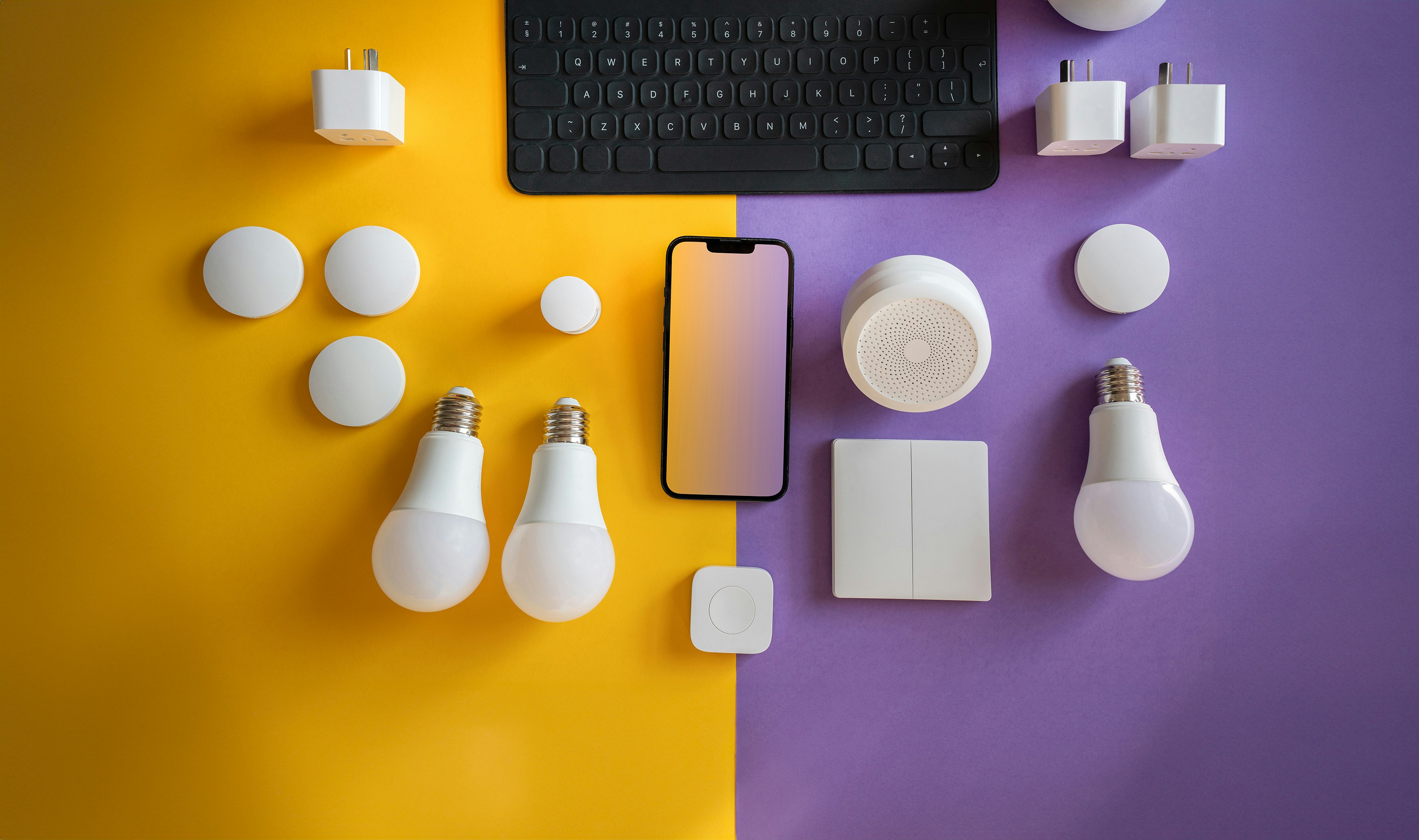
Smart Homes: Smart thermostats, lighting, and voice assistants.
-
Connected Manufacturing: Industrial sensors, predictive maintenance systems.
-
Smart Agriculture: Soil moisture sensors, weather-based irrigation.
-
Fleet Management: Real-time logistics tracking powered by Airtel IoT SIMs.
-
IoT Platforms: Airtel IoT Hub, AWS IoT Core, Azure IoT Central.
The Purpose of IoT
The main purpose of IoT is to create an intelligent, connected environment where devices communicate seamlessly, share valuable data, and drive automation that enhances efficiency and decision-making across industries.
-
To connect devices globally through the internet.
-
To analyse data for business insights.
-
To automate operations for improved efficiency.
-
To enable interoperability between different systems.
IoT bridges hardware and software, creating a data-driven ecosystem that supports innovation at scale.
M2M vs IoT: Key Differences Explained
The difference between IoT and M2M lies in architecture, connectivity, scalability, and purpose. While both involve machine communication, IoT adds a cloud layer that transforms raw data into intelligent outcomes.
Some of the key differences between these two technologies are:
|
Feature |
M2M |
IoT |
|
Definition |
Point-to-point, hardware-centric communication between devices. |
Cloud-centric, software-driven ecosystem of connected devices. |
|
Connectivity |
Cellular, wired, or radio links. |
4G, 5G, Wi-Fi, NB-IoT, LoRa, or satellite. |
|
Integration |
Proprietary systems. |
Open APIs and cloud integration. |
|
Scalability |
Limited to local setups. |
Global scalability via cloud platforms. |
|
Data Handling |
Processed at the device edge. |
Processed and analysed in the cloud. |
|
Hardware |
Proprietary modules and dedicated SIMs. |
Commodity hardware and IoT SIMs. |
|
Protocols |
Modbus, DNP3. |
MQTT, CoAP, HTTP. |
|
Management |
Manual device control. |
Centralised management through IoT platforms. |
|
Analytics |
Minimal or none. |
Advanced real-time analytics. |
|
Example |
Smart meters, vending machines. |
Smart cities, connected cars, IoT manufacturing. |
Connectivity Models
-
M2M: One-to-one or one-to-few connections using GSM or radio.
-
IoT: Many-to-many network using gateways and the cloud.
Communication Protocols (MQTT vs Modbus)
-
Modbus (M2M): Simple and hardware-oriented, used in industrial equipment.
-
MQTT (IoT): Lightweight, designed for cloud communication and IoT platforms.
Hardware Differences (Proprietary vs Commodity)
-
M2M: Relies on proprietary modems and hardware integration.
-
IoT: Uses standardised components compatible with multiple networks, such as Airtel IoT SIM modules.
Data Handling (Edge vs Cloud)
-
M2M: Data processed locally for fast response.
-
IoT: Data transmitted to the cloud for global analytics, automation, and AI insights.
Must Read: Understanding the Logical and Physical Design of IoT
Architecture Breakdown: How M2M and IoT Systems Operate
Both M2M and IoT systems follow distinct architectural models that define how devices communicate, share data, and deliver value. Understanding their structure helps reveal why each is suited to different operational needs and business goals.
M2M Architecture: Point-to-Point Flow
-
Device with M2M SIM connects via cellular network.
-
Data travels directly to another machine or control centre.
-
Limited or no cloud involvement.
This model suits environments where speed and simplicity matter more than large-scale analytics.
IoT Architecture: Device → Gateway → Cloud
-
Devices send data to a gateway.
-
Gateways forward data to cloud platforms like Airtel IoT Hub.
-
Cloud processes and visualises insights in dashboards.
-
Applications take automated action.
This structure supports real-time monitoring, predictive analytics, and massive scalability.
Advantages of IoT Over M2M
The growing adoption of IoT stems from its ability to overcome the limitations of traditional M2M systems. By combining cloud connectivity, open integrations, and powerful analytics, IoT delivers broader visibility, faster decisions, and easier control over connected devices.
Cloud Integration & Scalability
IoT connects millions of devices using cloud-based platforms, unlike M2M’s limited connections.
Businesses can deploy devices worldwide with Airtel IoT SIMs and manage them via the cloud.
Open APIs & Interoperability
IoT promotes open integration with CRM, ERP, and AI tools. M2M, by contrast, often locks data within vendor systems.
Real-Time Analytics
IoT enables real-time dashboards, predictive maintenance, and business insights, whereas M2M focuses mainly on operational control.
Centralised Device Management
With platforms like Airtel IoT Hub, enterprises gain full visibility of all connected devices, tracking usage, performance, and SIM activity.
Decision Checklist: Which One Does Your Business Need?
Choosing between M2M and IoT depends on your business goals, scale, and connectivity needs. This checklist helps identify which technology aligns best with your operations and the outcomes you want to achieve.
Choose M2M If Your Application Requires:
-
Direct device-to-device communication
-
Hardware-based automation
-
No dependency on the internet or cloud
-
Small, closed networks (e.g. factory automation)
-
Cost-sensitive, low-maintenance deployment
Choose IoT If Your Application Requires:
-
Cloud connectivity and global scalability
-
Real-time data analytics
-
Centralised management through IoT Hub
-
Integration with business software
-
Multiple device ecosystems and cross-platform support
M2M Use Cases
M2M use cases highlight how direct device communication supports automation, monitoring, and control across industries that rely on reliable, hardware-based connectivity.
Smart Metering
Utility providers use M2M SIMs for data transmission from smart meters to central systems, automating billing and outage detection.
Industrial Automation
M2M IoT modules connect machinery for local control and maintenance alerts.
Remote Diagnostics
Manufacturers track performance of devices deployed across remote sites through M2M connectivity.
Basic Tracking & Monitoring
Fleet companies use GPS trackers with M2M SIM modules for basic location tracking and reporting.
IoT Use Cases
IoT use cases showcase how connected devices and cloud platforms create intelligent ecosystems that enhance productivity, efficiency, and sustainability across diverse industries.
Smart Homes & Consumer IoT
Connected lighting, thermostats, and home appliances that communicate via Wi-Fi or cellular networks.
Connected Manufacturing
Factories deploy IoT sensors and Airtel IoT SIM modules for predictive maintenance, remote management, and energy optimisation.
Smart Agriculture
IoT devices collect soil and weather data to optimise irrigation cycles, reducing water waste.
Fleet & Logistics Management
With Airtel IoT Hub, logistics firms use cloud-based dashboards to monitor vehicles in real-time and improve delivery accuracy.
How Airtel IoT Hub Enhances IoT Deployments
The Airtel IoT Hub strengthens every stage of IoT deployment by combining secure connectivity, flexible management, and real-time visibility. It gives businesses the tools to scale confidently while maintaining control over all connected devices.
IoT SIM Lifecycle Management
The Airtel IoT Hub provides full control over device connections and SIM lifecycles. Businesses can activate, suspend, or track each IoT SIM remotely, ideal for large-scale IoT deployments.
Secure Connectivity
The Airtel IoT network integrates 5G, NB-IoT, 4G, LTE-M, and satellite technologies with telco-grade security. Each Airtel IoT SIM supports encrypted data and secure APNs, reducing risks of unauthorised access.
Cloud Integration
IoT Hub supports multi-cloud environments, connecting seamlessly with enterprise systems for analytics and automation.
Real-Time Monitoring & Alerts
Businesses receive real-time insights into SIM performance, data usage, and device health, making IoT management transparent and reliable.
M2M or IoT: Choosing the Right Technology for the Future
Selecting between M2M and IoT depends on the future direction of your business. By assessing factors such as scale, data requirements, and connectivity, you can choose the technology that delivers the right balance of performance and growth potential.
Choosing Based on Scale
For small networks with limited devices, M2M is practical. For large-scale, global deployments, IoT, supported by platforms like Airtel IoT Hub, is more adaptable.
Choosing Based on Data Needs
M2M handles operational data for automation, while IoT provides deep data insights for decision-making and analytics.
Choosing Based on Connectivity Requirements
If your devices need constant connectivity across regions, Airtel IoT SIM and Hub solutions offer the most reliable, scalable choice.
Key Takeaways
The difference between IoT and M2M defines how businesses shape digital transformation. M2M offers simple, direct machine communication, while IoT provides global connectivity, cloud analytics, and centralised control.
With powerful solutions such as the Airtel IoT Hub and Airtel IoT SIM, enterprises can move from basic automation to intelligent, data-driven ecosystems. Whether you need reliable M2M SIM networks or scalable IoT deployments, the future of connected business lies in choosing the right balance between both worlds.