Locate & track your business priorities, even without GPS, with Airtel IoT Locate.
Learn More about IoT Locate

Airtel IoT provides a scalable and reliable foundation for connected devices. Our robust network, encompassing advanced platforms like IoTHub and cutting-edge technologies like 5G and NB-IoT, ensures seamless communication across a vast array of devices and applications. From smart utilities and industrial automation to energy management and asset tracking, we empower diverse solutions to thrive in the ever-evolving IoT ecosystem.

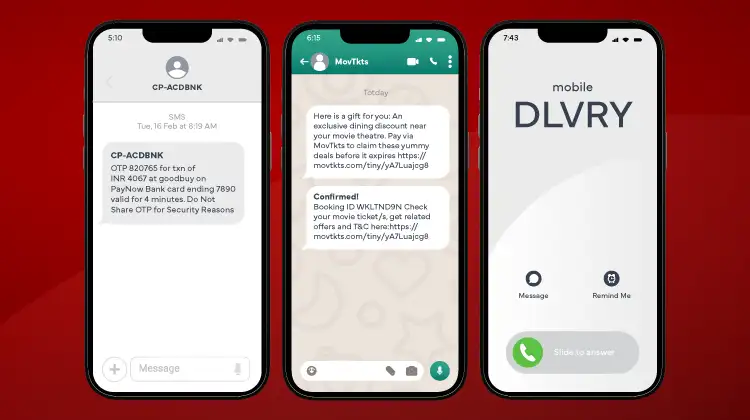
Digitization challenges at merchant end, reconciliation issues at peak hours and manual checks in case of payment failures.

Real-time transaction updates for location of transactions and types of merchant activity. Multi-cloud support backed by secure network to build exactly what you need.

Network connectivity dependent on Bluetooth of the mobile device of car user with inability to provide advanced safety and security features.

Support for SOS calling, theft alerts and driving behavior analytics. Multi-party split-billing allows OEMs to share connectivity costs with vehicle owners.

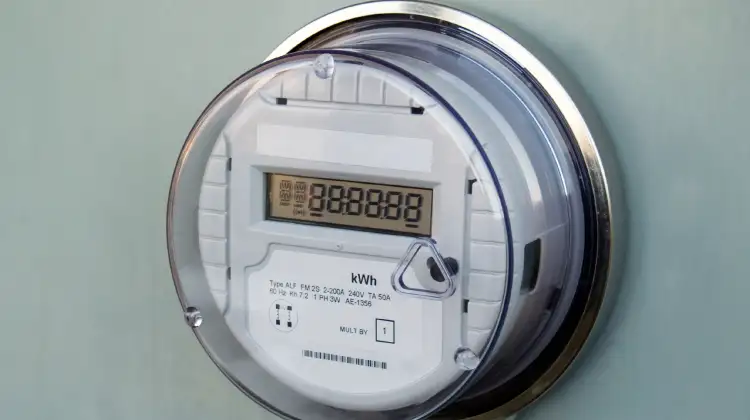
Limited connectivity options for utilities in remote areas. Lack of simple tech options, SLA hassles and multi-vendor challenges.

Various IoT connectivity options of NBIoT, 4G, 2G, coupled with applications such as head end systems, meter data management and prepaid billing hosted on Airtel Cloud.

Operational inefficiencies in the logistics space and lack of economical options to track shipments.

Complete fleet and shipment visibility around routes, fuel utilization, driving patterns to drive operational and economic efficiencies.

Manual, fragmented battery and vehicle management was painfully inefficient, lacking real-time insights.

Integrated, predictive, automated and real-time battery and vehicle management, optimizing performance and enhancing safety.

Fragmented networks, complex integrations, and slow market entry created painful delays and inefficiencies.

A single provider, seamless integration, and faster global reach to solve delays and inefficiencies.

One platform to easily manage all your connected devices with flexible billings, network feasibility map and flexible APN which is secure by design.

Powered by range of connectivity services and vast network to ensure connectivity for all your devices.

Option to send/receive bulk SMS, support for emergency calling and location services (SIM based) without using GPS.

Monitor real-time SIM wise data usage and diagnose issues with automated tests. Deep-dive into core network performance to analyze vital data.
By leveraging Airtel’s presence across IoT solutions and services, we are enabling businesses and developers across the country to seamlessly adopt precise positioning for automation and autonomy.
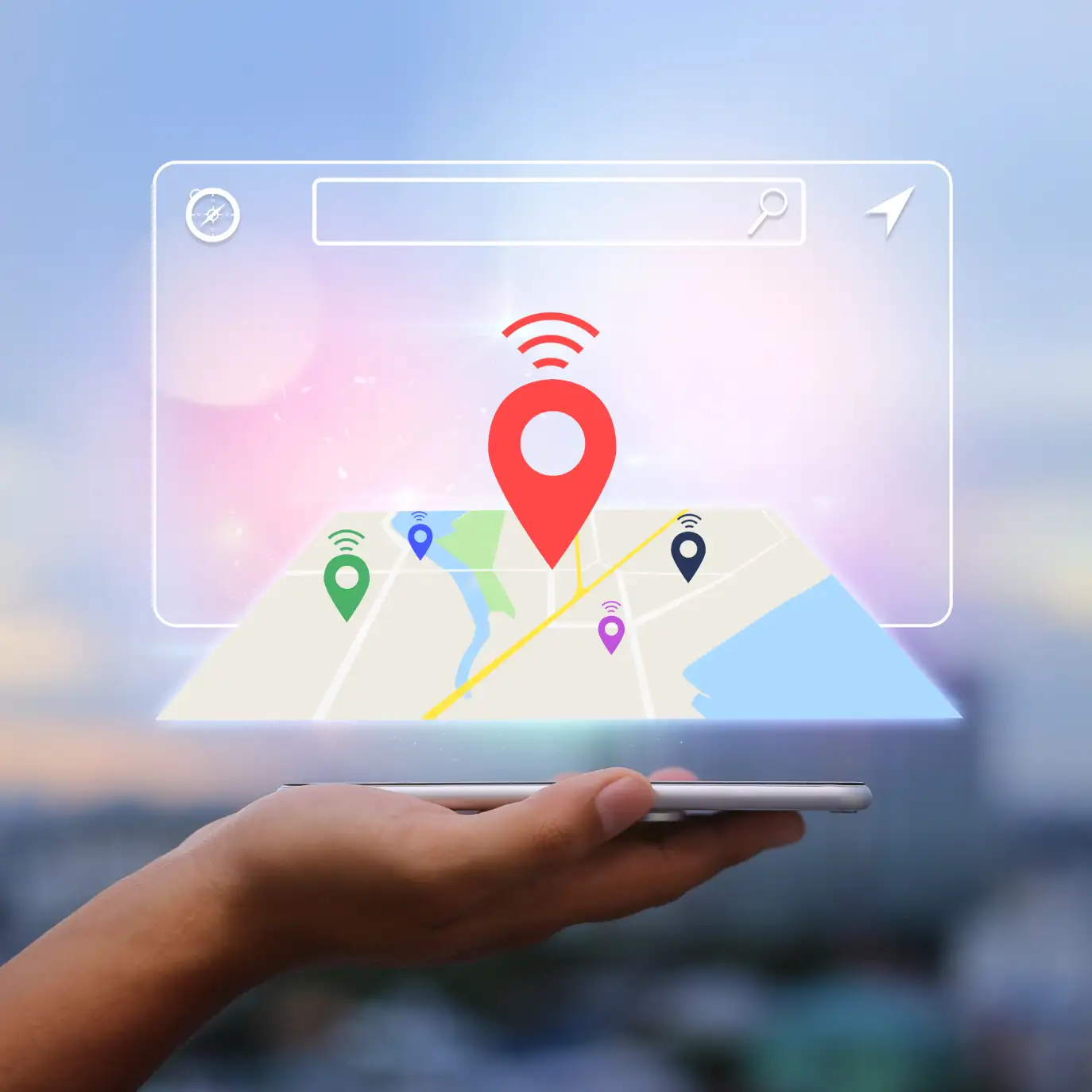


Locate & track your business priorities, even without GPS, with Airtel IoT Locate.
Learn More about IoT Locate
Monitor and track physical assets in real time and cost effectively.
Learn More about IoT Super Tracker
One-platform to easily manage all your connected devices powered by NBIoT, 5G, 4G, & 2G.
Learn More about IoTHub


Airtel IoT connectivity is a secure, scalable solution enabling seamless connection of IoT devices via 5G, 4G, NB-IoT, LTE-M, 2G, and satellite networks. Using dual-profile eSIMs, devices maintain continuous connectivity by switching networks automatically. The Airtel IoT Hub manages device lifecycles, offers real-time data analytics, diagnostics, and API integration for businesses. It supports applications like smart metering, vehicle telematics, asset tracking, and industrial monitoring across industries, ensuring reliable, telco-grade security and future-ready technology. This integrated platform simplifies device management and empowers enterprises to leverage IoT data effectively for improved operational efficiency.
Airtel IoT connectivity offers a suite of benefits designed to support modern business requirements like below: –
Reliable and seamless connectivity via 5G, 4G, NB-IoT, LTE-M, 2G, and satellite networks with dual-profile eSIMs ensuring always-on device connections.
Telco-grade security that protects IoT data, ensuring safe and real-time availability for analytics and service delivery.
Scalable and future-proof platform supporting billions of devices with lifecycle management, diagnostics, and API integration for easy business adoption.
Cost-effective and efficient solutions enabling enterprises to reduce operational costs, enhance safety, and improve decision-making.
Industry-wide use cases including smart metering, vehicle telematics, asset monitoring, and smart logistics.
Airtel’s IoT connectivity solutions benefit several industries.
Airtel’s IoT platform incorporates several features designed for reliability and security. Its network is built to support various connectivity technologies, including 5G, NB-IoT, 4G, and 2G, ensuring coverage and resilience across different locations and use cases. The IoTHub platform is “secure by design” and includes secure APNs (Access Point Names), which provide controlled network access for connected devices. It also supports multi-cloud environments for secure integration with business systems. The platform includes SIM-level monitoring and diagnostic tools to detect and resolve issues in real time. By offering controlled data flow, access management, and encrypted communications, Airtel’s solution helps maintain the confidentiality, integrity, and availability of IoT operations for business-critical environments.
Through Airtel IoT Hub, businesses can
Airtel’s IoT Connectivity Management Platform supports a wide range of tailored such as:
IoT networks differ from conventional networks in that they are specifically designed to support the connectivity and communication of a large number of devices, often in remote or mobile environments. Unlike typical networks that focus on user-based data consumption, IoT networks facilitate machine-to-machine (M2M) communication with minimal human intervention. They support low-bandwidth, low-power communication protocols such as NB-IoT and LTE-M, which are optimised for small data transfers over extended periods. Airtel’s IoT network incorporates features like real-time diagnostics, SIM-level monitoring, and integration with cloud platforms. These networks must also be highly scalable, secure, and capable of handling diverse device behaviours and requirements, distinguishing them from more traditional broadband or enterprise networks.
Yes, Airtel IoT connectivity solutions are designed to be integrated with existing business infrastructure. The IoTHub platform provides flexible APIs and supports multi-cloud environments for easy interoperability with your current systems and workflows. This means businesses can adopt Airtel’s connectivity without overhauling their existing technologies. Features like secure APNs, flexible billing options, and SIM-based services can be tailored to fit existing operational models. The platform supports scalable deployment, enabling gradual expansion as required. Real-time data tracking and device monitoring tools further help in aligning connectivity with specific operational goals.
Airtel IoT enables SIM-based remote operations by using cellular networks to facilitate continuous data exchange between devices and centralised systems. Each device is equipped with a SIM card that connects it to the Airtel network. This setup supports functions such as real-time data monitoring, diagnostics, and control without requiring direct human interaction or local connectivity like Wi-Fi or Bluetooth. The platform includes support for bulk SMS, SIM-based location services, and emergency calling, making it ideal for distributed operations. Remote devices can be managed via the IoTHub interface, which provides real-time insights and network performance analytics. This setup helps businesses maintain oversight of assets and operations across geographically dispersed environments.
The latest trends in IoT include the increasing adoption of NB-IoT and 5G technologies, which offer improved scalability, low latency, and wider coverage. There is also a shift toward real-time analytics and predictive maintenance, allowing businesses to act on device-level data quickly. Another trend is the move toward secure cloud integration, enabling seamless data sharing and management across platforms. SIM-based remote control and low-power connectivity are becoming standard for mobile and energy-constrained applications. Overall, the focus is on making IoT systems more integrated, intelligent, and adaptable for various industry-specific use cases.
5G technology is set to significantly enhance IoT connectivity management by providing high-speed, low-latency communication and greater device capacity per square kilometre. Airtel’s platform is already 5G-ready and helps businesses to future-proof their IoT deployments. With 5G, devices can transmit data faster and more efficiently, which is particularly important for real-time applications like autonomous vehicles, remote diagnostics, and critical infrastructure monitoring. It also enables more robust support for high-density deployments, such as smart cities or industrial automation, where thousands of sensors may be operating simultaneously.
Real-time insights, predictive battery management, and behavioural analytics indicate that the platform can support AI-driven decision-making. In IoT systems, AI and Machine Learning analyse the large volumes of data generated by devices to identify patterns, optimise performance, and forecast maintenance needs. These capabilities improve operational efficiency, reduce downtime, and enable proactive management. When integrated with platforms like Airtel’s IoTHub, AI tools can automate responses to network anomalies, adapt to changing conditions, and refine service delivery based on historical performance data.
Airtel’s IoT connectivity management platform addresses several business challenges related to operational inefficiencies, fragmented infrastructure, and lack of real-time visibility. It replaces manual processes with automated, data-driven alternatives, improving accuracy and responsiveness. For instance, in logistics, it provides end-to-end visibility of fleet and shipments, reducing costs associated with delays or route inefficiencies. In retail, real-time transaction monitoring resolves reconciliation issues. In utilities, the platform supports smart metering and energy management in remote areas. It also solves the challenge of managing multiple vendors by offering an integrated solution for global connectivity. With tools for device monitoring, diagnostics, and flexible billing, it helps businesses streamline operations and reduce administrative burdens.
Yes, Airtel’s IoT connectivity management platform offers comprehensive tools for remote device management and monitoring. Through the IoTHub interface, businesses can oversee all connected devices in real time, track SIM-wise data usage, and perform diagnostics to identify issues quickly. The system allows for centralised control over diverse devices spread across different locations, reducing the need for physical interventions. It also supports automated testing and deep analysis of network performance. Moreover, the platform provides SIM-based services like location tracking and emergency calling, which contribute to robust asset monitoring. These features enable proactive maintenance, efficient resource allocation, and improved uptime, which are essential for managing large-scale IoT deployments effectively.
Airtel IoT provides a reliable and secure platform for large-scale, business-critical operations. It supports a wide range of connectivity technologies, including 5G, NB-IoT, and legacy networks that enable deployment across various environments. The IoTHub platform offers centralised control, real-time analytics, and multi-cloud integration for smooth compatibility with existing infrastructure. It also provides essential tools like secure APNs, flexible billing options, and real-time diagnostics to optimise operations. The platform’s design makes it easy to scale, whether for regional expansion or increased device volumes. With a focus on reliability, security, and adaptability, Airtel IoT is well-suited for organisations seeking to simplify device management and improve service delivery across sectors.
IoT sensors detect physical changes—temperature, pressure, motion, humidity—and convert them into digital signals. A temperature sensor measuring -55°C to +125°C sends readings through communication protocols like LoRaWAN, NB-IoT, or cellular networks to cloud platforms. The sensor authenticates with the network and transmits data packets (up to 140 daily for some protocols), where IoT gateways aggregate information from multiple devices. Agriculture uses soil moisture sensors for irrigation automation, while manufacturing monitors equipment vibration for maintenance scheduling.
An M2M SIM is an industrial-grade SIM designed for IoT and machine-to-machine communication, unlike regular SIMs meant for personal mobile use. It lasts 10–15 years versus 1–3 years for normal SIMs and withstands extreme conditions like -40°C to +105°C, 95% humidity, and 20G vibration. M2M SIMs use a 13-digit numbering series mandated by regulations and support voice/SMS whitelisting (restricted to 4 numbers) and IP/URL whitelisting (limited to 4 addresses) for secure communication. They enable continuous data streams, global connectivity without roaming charges, and remote management via IoT platforms. Supporting eUICC/eSIM technology, they allow OTA profile switching and come in rugged or embedded form factors for industrial devices, vending machines, smart meters, and automotive applications.
M2M SIMs connect devices to management platforms where businesses monitor data usage, device location, and operational status from centralised dashboards. Over-the-air (OTA) provisioning lets operators remotely activate, deactivate, or reconfigure thousands of SIMs without physical access. Healthcare providers track patient monitoring devices, retailers receive stock-level alerts from inventory sensors, and logistics companies monitor fleet vehicles. The SIM transmits sensor data through encrypted channels to cloud platforms, where automated rules trigger responses—like alerting maintenance teams when industrial equipment shows abnormal readings.
Network coverage determines device reliability—providers should offer 95%+ coverage across your operational areas with multiple network options (2G, 4G, NB-IoT, 5G). Platform capabilities matter: look for centralised device management, flexible billing, bulk operations, and telco-grade security. Evaluate SIM durability for your environment, support for your deployment scale (hundreds to millions of devices), and integration with existing systems. Consider total costs, including SIM pricing, data plans, platform fees, and whether the provider offers specialised solutions for your industry.
Airtel IoT maintains 99.99% platform uptime, processing 100 million transactions annually across 11,000+ business customers. The IoTHub platform monitors device connectivity continuously, with secure APN design preventing unauthorised access. For critical applications like connected vehicles’ SOS calling or POS transaction monitoring, Airtel IoT provides multiple network fallback options—if 4G fails, devices switch to 2G automatically. Purpose-built 13-digit IoT SIMs offer telco-grade security with encrypted data transmission, while 95% pan-India coverage ensures devices stay connected even in remote locations.
Airtel IoT already connects millions of devices for enterprises like KIA, Hyundai Motors, Several AMISP’s and PayTM among many others. The IoTHub platform handles bulk operations—activating thousands of SIMs simultaneously, applying uniform security policies, and managing split-billing across departments. Flexible network options (5G to 2G) accommodate different device requirements within single deployments. For electric vehicle fleets, Airtel IoT manages integrated battery monitoring across thousands of vehicles. The platform’s SIM monitoring and bulk SMS capabilities let businesses coordinate large field deployments while maintaining individual device visibility.
Airtel IoT’s GSM-based SuperTracker costs three times less than traditional GPS trackers while providing asset monitoring capabilities. Flexible billing through IoT Hub lets businesses pay only for active devices and actual data usage. The platform supports existing infrastructure—POS machines and industrial equipment connect without expensive upgrades. For utilities, MBRT technology maintains connectivity where regular 2G fails, reducing site visits. Prepaid smart meters help DISCOMs cut billing inefficiencies. With nationwide coverage preventing roaming charges and centralised management reducing operational overhead, enterprises lower total connectivity costs significantly.