Share
ShareHow Telecom Carriers in India Build Their Networks: Access, Core & Infrastructure Layers Explained
-
 May 27, 2026
 -

 6 min read
When your Mumbai office connects to a server in Hyderabad over a leased line, the data doesn’t simply jump from point A to point B. It passes through three distinct layers of network architecture, each with its own equipment, protocols, and economics.



Understanding these layers matters because enterprise connectivity decisions depend on how telecom carriers in India design and structure their networks. This article walks through each layer, explains what sits inside it, and shows why it affects your enterprise connectivity choices.
What Are the Three Layers That Define Telecom Carriers in India?
Every telecom service provider organises its network into three logical tiers.
These include the access layer for last-mile connectivity, the core backbone, and the infrastructure supporting fibre, towers, and data centres. Here’s how the three layers compare at a glance:
|
Layer |
Primary Function |
Key Components |
Who Manages It |
|---|---|---|---|
|
Access |
Last-mile user connection |
RAN base stations, FTTH terminals, CPE routers |
TSPs, ISPs |
|
Core |
Traffic routing, authentication, switching |
Packet core (EPC/5GC), IP/MPLS backbone, IMS |
TSPs, NLD/ILD operators |
|
Infrastructure |
Physical/passive support |
Towers, fibre, ducts, data centres, power systems |
IP-I providers, TSPs, fibercos |
Each telecom service provider operates across all three layers, but the infrastructure layer is increasingly shared.
How Does the Access Layer Connect Your Business to the Network?
The access layer is the segment stretching from a telecom service provider’s central office to your premises.
Mobile Access (RAN)
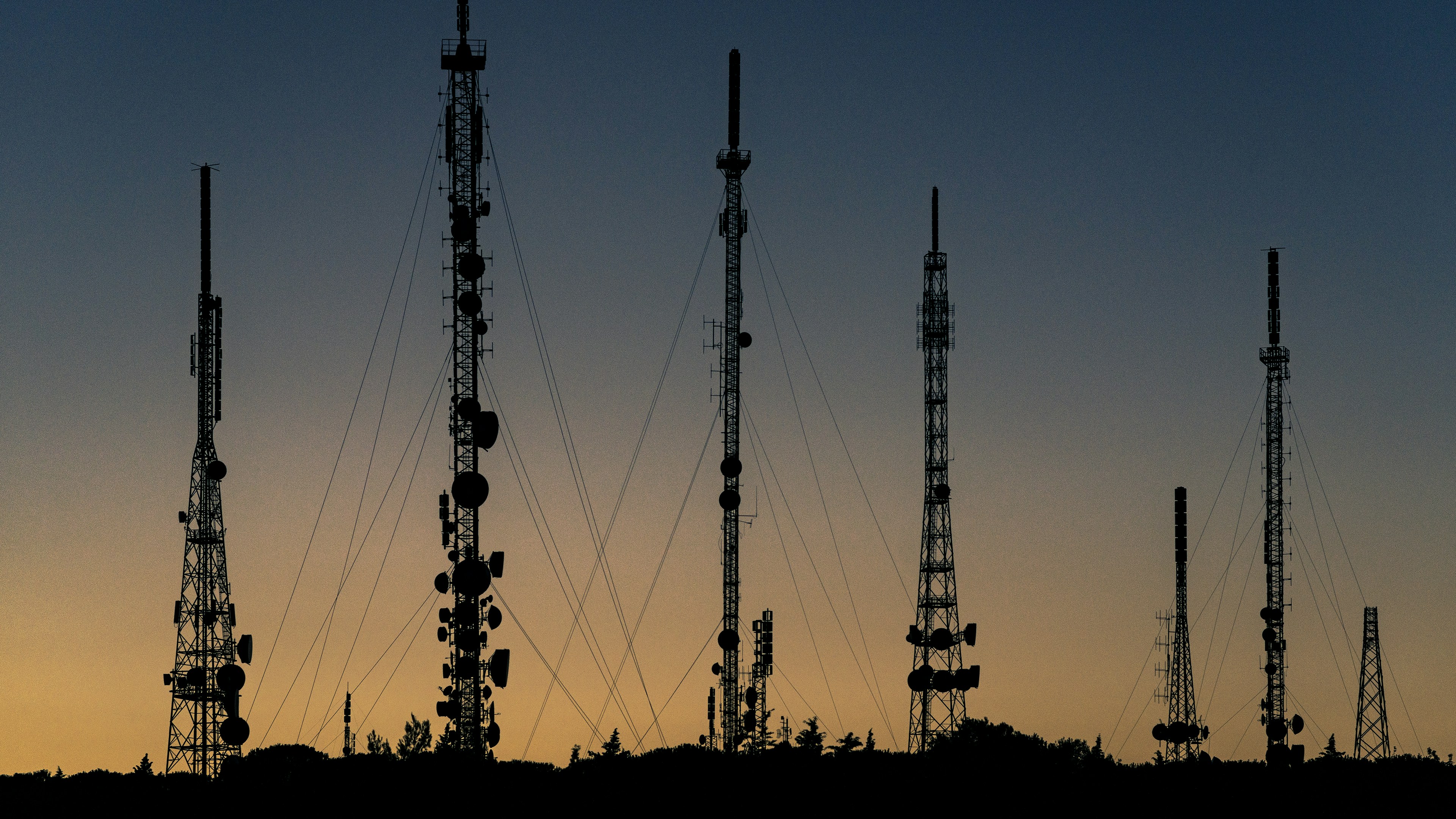
India has over 840,000 telecom towers hosting Radio Access Network (RAN) equipment. A RAN consists of three main components:
-
Radio Units (RUs): Receive and transmit radio signals from mobile devices
-
Baseband Units (BBUs): Convert radio signals to a digital format for the core network
-
Antennas: Physical hardware mounted on towers, rooftops, or street furniture
These components work together using interfaces like CPRI (Common Public Radio Interface). For 5G, the architecture splits further into Centralised Units (CU) and Distributed Units (DU), allowing more flexible deployment.
Fixed Access
For enterprise customers, fixed-line access matters more. The main technologies here include:
-
FTTH/FTTB (Fibre to the Home/Building): Optical fibre run directly to your premises via OLT (Optical Line Terminal) and ONT (Optical Network Terminal) equipment
-
DSL: Legacy copper-based connections, still present in older commercial areas
-
Fixed Wireless Access (FWA): 4G/5G-based wireless connections used where fibre hasn’t reached
Why This Matters for Your Business
When you order an internet leased line or a broadband connection, the access layer determines the last-mile medium. Fibre access gives you symmetrical speeds and lower latency. Copper or wireless alternatives may introduce bottlenecks. Always ask your provider what access technology serves your building, as it’s the single biggest variable in connection quality.
What Does the Core Network Actually Do for a Telecom Service Provider?
A core network, sometimes called a backbone network, is the high-speed central system that routes traffic across the country and beyond. If the access layer is your office driveway, the core layer is the expressway system.
Key Functions
Every telecom service provider runs core network functions that most business users never see but constantly depend on:
-
Authentication: Verifying whether a device or user is authorised to access the network (via HSS/UDM databases)
-
Switching/Call Control: Routing voice calls and data sessions to the correct destination
-
Aggregation: Combining traffic from thousands of access points into high-capacity transport links
-
Policy and Charging: Applying bandwidth rules, QoS (Quality of Service) policies, and billing
For enterprise services like MPLS VPNs or international private leased circuits, the core network handles traffic across NLD and ILD segments.
The Shift to Next-Generation Networks
India’s telecom carriers in India are steadily migrating from legacy circuit-switched infrastructure to packet-based, next-generation networks (NGN). This means digital telephone exchanges, media gateways, and signalling gateways are replacing older switching systems.
Modern core networks also deploy:
-
IMS (IP Multimedia Subsystem) for VoLTE and VoNR voice services
-
5G Core (5GC) with cloud-native, service-based architecture
-
Edge computing nodes that place processing closer to users, reducing latency for time-sensitive applications
Why the Infrastructure Layer Is the Most Overlooked and Most Critical Part
The infrastructure layer covers all the physical and passive assets that the access and core layers sit on top of. Without towers, fibre, power systems, and data centres, no telecom service provider can deliver a single megabit.
Passive Infrastructure and the IP-I Model
Since 2000, DoT has issued Infrastructure Provider Category-I (IP-I) registrations. IP-I entities build and lease passive infrastructure, such as towers, ducts, dark fibre, and right-of-way assets to licensed telecom operators. This sharing model means multiple telecom carriers in India can co-locate equipment on the same tower, splitting costs.
Transport Networks: Fronthaul, Midhaul, Backhaul
Between the access and core layers sit three transport segments that most people lump together as “backhaul,” but they’re distinct:
|
Segment |
Connects |
Latency Requirement |
Typical Medium |
|---|---|---|---|
|
Fronthaul |
Radio Unit → Baseband/DU |
Under 25 µs (5G) |
Dark fibre, WDM |
|
Midhaul |
DU → CU |
Low-moderate |
Fibre, Ethernet |
|
Backhaul |
CU/BBU → Core Network |
Moderate |
Fibre, microwave, IP/MPLS |
For enterprise customers, backhaul quality directly affects leased line performance.
Data Centres and Edge Facilities
Telecom carriers in India operate central, regional, and edge data centres that host core network functions, content caches, and cloud workloads. The push toward edge computing places some facilities within city limits, closer to enterprise users. This reduces round-trip times for latency-sensitive applications like video conferencing and ERP systems.
Software-Defined Networking and Virtualisation
The infrastructure layer is also migrating toward SDN (Software-Defined Networking) and NFV (Network Function Virtualisation). This allows network functions that previously required dedicated hardware, such as firewalls, load balancers, and WAN optimisers, to run as software on standard servers. For enterprises, this translates into faster provisioning and more flexible service configurations.
Key Takeaways
The three-layer telecom network structure (access, core, and infrastructure) shapes enterprise connectivity performance, including leased line quality and MPLS VPN reliability. Understanding network infrastructure helps enterprises evaluate connectivity providers more effectively and negotiate stronger service-level agreements.
Airtel Business operates across all three ecosystem layers and maintains an extensive global connectivity infrastructure. As a telecom service provider, it offers diverse routing options designed to support resilient enterprise connectivity.
FAQs
-
The three layers are access (last-mile connections to users), core (traffic routing and authentication backbone), and infrastructure (towers, fibre, data centres). Together, they form the full network stack that every telecom service provider operates across.
-
Telecom carriers in India operate over 840,000 telecom towers as of 2025, supporting millions of base transceiver stations. However, only about 35% of towers are fibre-connected, according to TRAI, which can impact network capacity and service quality.
-
IP-I (Infrastructure Provider Category-I) is a DoT registration allowing entities to build and lease passive infrastructure to licensed operators. This sharing model has operated since 2000 across India.
-
Fronthaul connects radio units to baseband/distributed units with a latency under 25 microseconds for 5G. Backhaul connects base stations to the core network with moderate latency requirements. Both use fibre as the preferred medium.
-
The core network handles authentication, traffic routing, and QoS policy enforcement. As telecom carriers in India migrate to 5G-ready, cloud-native cores, enterprise services like MPLS VPNs and SD-WAN gain better SLA performance.