| Overview: A self cheque allows you to withdraw cash from your own bank account by writing your name as the payee. This comprehensive guide covers proper writing techniques, security measures, RBI compliance, common mistakes to avoid, and digital alternatives for safe banking in India. |
Why Self Cheques Remain Essential in Digital India
Despite India’s rapid digital transformation, cheque transactions worth over ₹18 lakh crore flow through the banking system annually. Self cheques account for nearly 10% of all branch withdrawals in urban areas, making them a crucial financial tool for Indian households.
A self cheque serves as your backup when ATM limits fall short, digital systems fail, or you need immediate access to larger amounts. Unlike regular cheques, you write your own name as the payee, ensuring only you can encash it.
Understanding how to write a self cheque correctly protects you from fraud while maintaining quick access to your funds during emergencies, which is an important part of overall financial responsibility.
What Makes a Self Cheque Different from Regular Cheques
A self cheque is essentially a withdrawal slip in cheque format. You draw it on your own account with “Self” or your registered name in the payee field. This restricts encashment to the account holder only, unlike bearer cheques that anyone can cash.
| Cheque Type | Payee Field | Encashment | Risk Level | Best Use |
| Self Cheque | Self/Your Name | Account holder only | Medium | Cash withdrawal |
| Bearer Cheque | Blank/Bearer | Anyone holding it | High | Risky transfers |
| Crossed Cheque | Specific payee | Bank account only | Low | Secure payments |
Self cheques work perfectly for withdrawing amounts beyond your ATM daily limit. If your ATM allows ₹25,000 per day but you need ₹1 lakh for a property advance, a self cheque saves you multiple trips and transaction charges.
| Pro Tip: Always carry valid photo identification when encashing a self cheque, as banks verify your identity before processing the withdrawal. |
Step-by-Step Guide to Writing a Self Cheque Safely
Follow these steps:
Date Field Accuracy
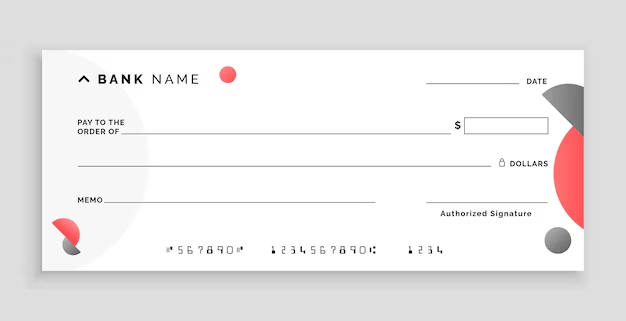
Write the current date in DD/MM/YYYY format at the top right corner. For example, if today is 15th January 2025, write “15/01/2025”. Never postdate or backdate a self cheque, as this creates unnecessary complications during encashment.
Payee Field Precision
In the “Pay” line, write “Self” or your exact registered name as per bank records. If your account shows “Rajesh Kumar Singh” but your ID shows “R.K. Singh”, always use the bank-registered version to avoid signature mismatch issues.
Amount Entry Techniques
Write the amount clearly in the designated box, such as “50,000/-“. The forward slash and hyphen prevent tampering. Never leave spaces before or after the numbers.
Signature Requirements
Your signature must match exactly with your bank specimen. Banks use signature verification software that detects even minor variations. If you’ve recently changed your signature, update it at the bank before using new cheques.
Security Measures and Fraud Prevention
Store unused cheques in a secure location at home. If you’re carrying a self cheque to the bank, keep it separate from your identification documents. This prevents misuse if your wallet gets stolen.
Crossing Techniques for Account Transfers
When transferring money between your own accounts, use a crossed self cheque. Draw two parallel lines at the top left corner and write “A/C Payee Only” between them. This ensures the money goes directly to your account rather than being withdrawn as cash.
RBI Compliance and Validity Rules
The Reserve Bank of India mandates that cheques remain valid for three months from the issue date. After this period, banks treat them as “stale” and refuse payment. Plan your cash requirements accordingly and avoid writing self cheques too far in advance.
If you lose a signed self cheque, immediately inform your bank in writing to stop payment on that specific cheque number. Most banks provide stop payment services for a nominal fee of ₹100-300.
Common Scenarios Where Self Cheques Prove Valuable
Here are some common situations:
Emergency Cash Access
During network outages or system maintenance, digital banking services become unavailable. Rakesh experienced this during a recent cyclone when he needed ₹75,000 for emergency repairs. His pre-written self cheque provided immediate access when UPI and internet banking failed.
High-Value Transactions
ATM withdrawal limits typically range from ₹25,000 to ₹50,000 daily. For larger requirements like wedding expenses or business payments, self cheques eliminate multiple ATM visits and associated charges.
Proof of Funds Requirements
Some visa applications or loan processes require proof of available funds. A bank-endorsed withdrawal slip from a self cheque serves as valid documentation of your liquidity.
| Did You Know? Banks maintain detailed records of all self cheque transactions, creating an audit trail that helps during tax assessments or financial planning. |
Digital Alternatives and Modern Banking Solutions
While self cheques remain useful, digital alternatives offer enhanced convenience and security. Personal loans provide instant fund access through mobile apps, eliminating the need for physical bank visits during emergencies.
For regular high-value transactions, consider digital payment solutions that offer better tracking and security. The Airtel App enables seamless financial management without paper-based processes.
When planning major purchases requiring immediate cash access, explore pre-approved credit facilities. These provide instant liquidity without the time delays associated with cheque clearance and bank visits.
Risk Assessment Framework
| Security Factor | Self Cheque | Digital Transfer | Cash Withdrawal |
| Fraud Risk | Medium | Low | High |
| Convenience | Medium | High | Medium |
| Transaction Speed | 30 minutes | Instant | 15 minutes |
| Documentation | High | High | None |
Your Path to Safe Self Cheque Usage
Writing and using a self cheque safely requires attention to detail, proper security measures, and understanding of banking regulations. Always fill all fields completely, match your signature precisely, and store unused cheques securely. Maintaining a good banking relationship, which is often reflected in a healthy credit score, is also an underlying factor for smooth financial operations.
Remember that self cheques serve as emergency backup tools in our increasingly digital world. While convenient, they require careful handling to prevent fraud and ensure smooth transactions.
For modern financial needs requiring instant access to funds, consider digital solutions like checking your credit score with Airtel Finance. They help you qualify for immediate credit facilities. These alternatives often provide faster, more secure access to money when you need it most, reducing reliance on traditional cheque-based transactions.
FAQs
1. Can I endorse a self cheque to someone else for encashment?
No, self cheques cannot be legally endorsed to third parties. Only the account holder whose name appears on the cheque can encash it at the bank.
2. What happens if my self cheque signature doesn’t match bank records perfectly?
Banks will reject the cheque and return it unpaid. You’ll need to visit the branch with proper identification to update your signature specimen before resubmitting.
3. Is there a maximum limit for self cheque withdrawals in Indian banks?
Most banks set daily cash withdrawal limits between ₹2-5 lakh via self cheque. Amounts above this require advance notice and additional documentation for compliance purposes.
4. Can I withdraw money using a self cheque from any branch of my bank?
Yes, self cheques work at any branch of your bank across India. However, non-home branch transactions may require additional verification and could take longer to process.
5. What should I do if I make a mistake while writing a self cheque?
Never use correction fluid or overwrite mistakes. Cancel the cheque by writing “CANCELLED” across it and start fresh with a new cheque to avoid bank rejection.