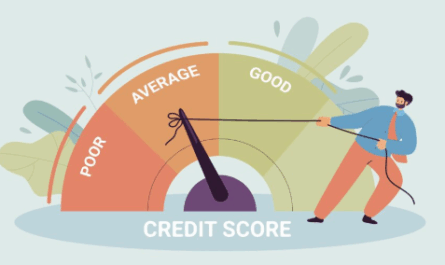
You’re in the high 600s. You haven’t defaulted on anything major, but your score won’t budge. The problem is almost certainly small, repeated payment delays that keep dragging you back.
The Reason Your Score Won’t Move
Payment history is the single heaviest factor in your CIBIL score. It carries 35% of the total weight. You don’t need to miss an EMI entirely for it to hurt. Paying even 2 to 5 days late can trigger a DPD (Days Past Due) entry on your report. That entry stays visible to every lender who pulls your file.
Here’s what makes this frustrating for someone in your range: a single 30-day late payment can cost you 50 to 70 points. At 680, that drops you to 610. At 660, you’re back below the threshold where most lenders even consider your application.
The damage isn’t proportional to the amount either. A ₹500 forgotten credit card fee gets the same negative flag as a ₹10,000 missed EMI. CIBIL tracks whether you paid on time. It doesn’t weigh the rupee amount.
The Salary Date Trap
One of the most common patterns for people stuck in the high 600s: your EMI due date falls before your salary hits your account. If your salary credits on the 5th but your EMI debits on the 1st, you’re relying on your leftover balance every single month. When that balance falls short, the payment bounces.
A bounced payment is worse than a late payment. It signals to lenders that you don’t have the funds at all.
The fix is straightforward. Most banks and NBFCs let you request an EMI date change. Call your lender and ask to shift it to 2 to 3 days after your salary date. This one adjustment eliminates the most common cause of accidental defaults.
- Call your lender’s customer service
- Request EMI date change to align with salary
- Confirm the change applies from the next billing cycle
Set Up Autopay on Every Account
If you’re managing multiple EMIs or credit cards, manual payments are risky. You forget one, you get distracted, your phone dies on the due date. Autopay removes human error entirely. The money leaves your account automatically on the due date.
Set it up for:
- All active EMI accounts
- Credit card minimum due (at least)
- Any subscription or loan with auto-debit options
One-time setup. Permanent protection. After 3 to 6 months of clean autopay records, your score will start reflecting the consistency. This is the fastest path from the high 600s to 730+.
Keep a Buffer for Bounce Protection
Autopay only works if there’s money in the account when the debit goes through. If your balance is ₹0 on debit day, the payment fails and you get hit with a bounce plus a DPD entry.
The solution: keep a dedicated buffer of ₹2,000 to ₹3,000 in your salary account at all times. Think of it as insurance for your credit score. Even if an unexpected expense drains your account, that buffer covers your auto-debit.
This requires some discipline, especially if you’re earning ₹25,000 to ₹45,000 a month. But the cost of one bounce (late fee + score drop + recovery time) is far higher than the cost of parking a small buffer.
- Set a personal minimum balance rule
- Never dip below it for discretionary spending
- Replenish it the day your salary is credited
Convert your big purchases in Easy EMI : Pre-qualified loan offer amount of up to ₹ 3 Lakhs
Clear Every Small Outstanding Due Right Now
Pull your CIBIL report and scan it line by line. Look for:
- Annual fees you forgot to pay
- Small balances carried forward on old cards
- Subscription charges on cards you stopped using
- Any amount showing as overdue, even ₹100
These tiny amounts are silent score killers. They get reported as defaults after 30 days, and they sit on your report just like major missed payments. Clearing them takes minutes.
The impact shows up in your next CIBIL update cycle, usually within 15 to 30 days.
Once cleared, you can expect to recover 5 to 20 points per month through consistent good behaviour. Larger jumps of 20 to 50 points happen when overdue accounts are settled or errors corrected.
Read our 2-Minute Tip on how a ₹500 unpaid due drops your score by 50+ points.
Your 90-Day Plan to Break Past 700
You don’t need a year. You need 90 days of zero missed payments and zero bounced debits. Here’s your checklist:
- Week 1: Pull your CIBIL report. Clear every small outstanding due.
- Week 1: Set up autopay on all credit accounts.
- Week 1: Call lenders to align EMI dates with salary.
- Month 1 to 3: Maintain ₹2,000 to ₹3,000 buffer. Don’t apply for new credit.
- Month 3: Check your updated score. You should see 20 to 50 points of recovery.
Every month of clean payments builds momentum. The further you get from your last late entry, the less it weighs on your score. Recovery takes 3 to 12 months depending on your starting point, but the high 600s is a strong position to start from. You’re closer to 730 than you think.
Check your CIBIL report for errors using the Score Tracker in the Airtel app.