| Overview: Credit cards trigger powerful psychological responses that often lead to unplanned spending. This article examines how credit cards influence our brain’s reward system, explains why impulse purchases occur, and offers practical strategies to manage credit card spending habits. Learn how to recognise spending triggers and maintain financial discipline. |
How Credit Cards Trick Your Brain into Spending More
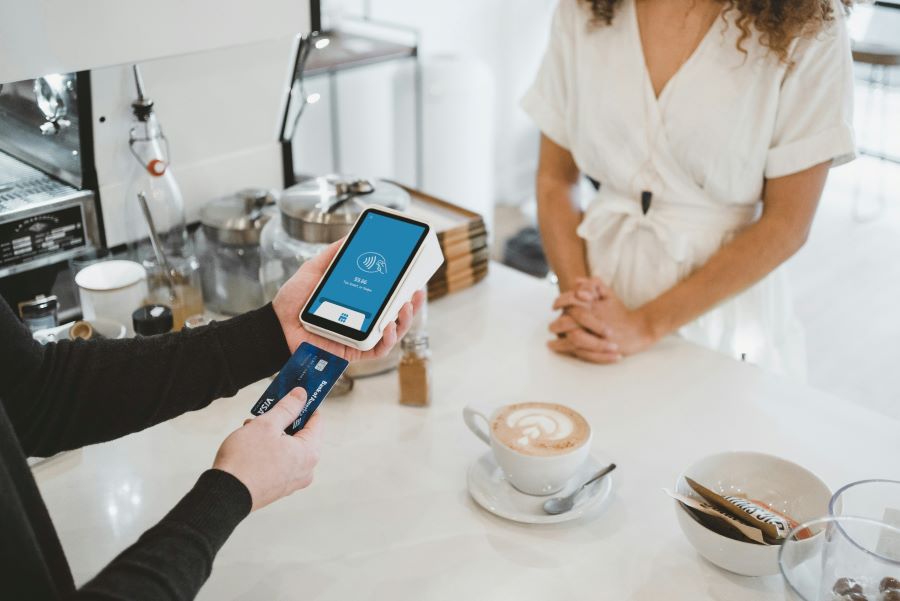
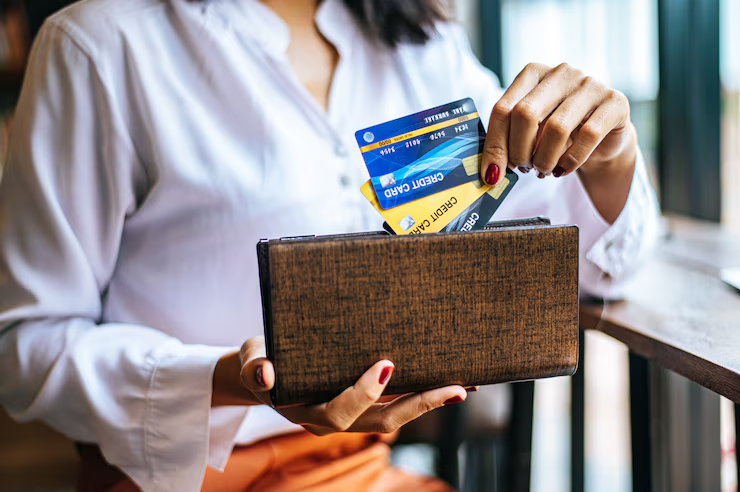
The psychology of credit card spending is fascinating—and potentially dangerous for your wallet. When you swipe your credit card, your brain experiences something scientists call “payment decoupling”—the “physical separation between purchase pleasure and payment pain.
Unlike cash transactions, where you physically hand over money, credit cards postpone the financial pain, making spending feel almost consequence-free. This psychological disconnect explains why the average credit card transaction is typically 12-18% higher than when using cash.
The Dopamine Effect: Your Brain on Credit Cards
When you make a credit card purchase, your brain releases dopamine—the same “feel-good” chemical triggered by eating chocolate or receiving praise. This creates a powerful reward cycle:
- You see something desirable.
- You purchase it with your credit card.
- Your brain releases dopamine, creating pleasure.
- This pleasure reinforces the behavior.
- You become more likely to repeat the spending.
This neurological response explains why avoiding impulse purchases becomes increasingly difficult the more you rely on credit cards. Each successful transaction strengthens the neural pathways associated with spending pleasure.
Common Triggers Behind Impulsive Credit Card Spending
Understanding the psychology of credit card spending requires recognising what triggers impulsive purchases. Research from the Indian Institute of Management suggests that 73% of urban credit card users report making impulse buys at least twice monthly.
External Triggers
Some external triggers are:
- Flash Sales and Limited-Time Offers: The fear of missing out (FOMO) creates urgency.
- End-of-Aisle Displays: Retailers strategically place impulse items where you’re most likely to see them.
- Checkout Line Merchandise: Small, affordable items positioned where you’re already in “buying mode.”
- Free Shipping Thresholds: “Just ₹200 more for free shipping” often leads to unnecessary purchases.
Internal Triggers
A few internal triggers can be:
- Emotional States: Shopping to alleviate boredom, stress, or sadness.
- Decision Fatigue: Making too many decisions depletes self-control.
- Social Comparison: Buying to keep up with peers or social media influencers.
- Reward Mentality: “I deserve this” thinking after accomplishments.
| Pro Tip: Keep a spending journal noting your emotional state before purchases. Patterns often emerge showing specific emotions trigger your impulse buying. |
Practical Strategies for Avoiding Impulse Purchases
Controlling credit card spending habits requires both awareness and practical tactics. Here are proven strategies to help you resist the urge to splurge:
1. Implement the 24-Hour Rule
The 24-hour rule is remarkably effective for avoiding impulse purchases. When tempted by a non-essential item:
- Take a photo of the item.
- Note the price and location.
- Walk away and wait 24 hours.
- If you still want it tomorrow, reconsider the purchase.
This simple cooling-off period allows the initial dopamine rush to subside, enabling more rational decision-making. A study by the National Institute of Mental Health and Neurosciences (NIMHANS) found this technique reduced impulsive buying by up to 64% among regular credit card users.
2. Create Friction in Your Shopping Process
The psychology of credit card spending thrives on convenience, so introduce deliberate obstacles:
- Remove saved credit card details from shopping websites.
- Delete shopping apps from your phone.
- Unsubscribe from marketing emails and sale notifications.
- Use cash for purchases under ₹1,000.
Each barrier provides a moment for reconsideration, making impulsive purchases less likely.
3. Visualise Your Financial Goals
When tempted to make an impulse purchase, try this calculation:
| If you save instead of spending | Monthly investment | Value after 10 years (8% return) |
| ₹2,000 on impulse buys | ₹2,000 | ₹3,65,000 |
| ₹5,000 on impulse buys | ₹5,000 | ₹9,12,500 |
| ₹10,000 on impulse buys | ₹10,000 | ₹18,25,000 |
Seeing how small sacrifices compound over time provides powerful motivation for avoiding impulse purchases.
4. Use Technology to Monitor Spending
The Airtel Thanks App allows you to track your spending in real time, set budget alerts, and receive notifications when you’re approaching your spending limits. This awareness is crucial for controlling credit card spending habits.
| Customer Story: Priya, a 32-year-old IT professional from Pune, struggled with online shopping impulses. “I set up spending alerts on my phone that trigger whenever I exceed ₹5,000 in weekly discretionary spending. This simple awareness reduced my impulse buys by almost 70% in three months.” |
Healthy Credit Card Habits to Develop
Breaking impulsive spending patterns requires developing new habits. Here are evidence-based approaches to transform your credit card spending habits:
- Pay in Full Monthly: Never carry a balance to avoid interest charges.
- Track Your Credit Score: Good spending habits improve your credit score.
- Review Statements Weekly: Awareness is the first step toward control.
- Set Spending Categories: Allocate specific amounts for different expense types.
- Reward Financial Discipline: Create non-monetary rewards for meeting savings goals.
Comparing Cash vs. Credit Card Spending Psychology
| Aspect | Cash Spending | Credit Card Spending |
| Pain of payment | Immediate and tangible | Delayed and abstract |
| Spending awareness | High (visual depletion of resources) | Low (no visible resource depletion) |
| Purchase amount | Typically lower | Average 12-18% higher |
| Budgeting ease | Easier (when funds are gone, spending stops) | More challenging (requires active tracking) |
| Emotional response | More cautious, deliberate decisions | More impulsive, reward-driven decisions |
Understanding the psychology of credit card spending is your first defence against financial impulsivity. By recognising how credit cards influence your brain’s reward system, identifying personal spending triggers, and implementing practical restraint strategies, you can enjoy the convenience of credit cards without falling into debt traps.
To avoid impulse purchases, focus on making conscious choices that align with your financial goals, rather than eliminating all spontaneity. Begin by monitoring your spending patterns and consider implementing a 24-hour rule for non-essential purchases. For helpful tools and insights to manage your finances, explore what Airtel Finance has to offer.
FAQs
1. How does the psychology of credit card spending differ from cash transactions?
Credit cards create “payment decoupling,” separating purchase pleasure from payment pain, unlike cash, where you feel the immediate loss, making spending psychologically easier.
2. What neurological processes make avoiding impulse purchases difficult?
Credit card purchases trigger dopamine releases in your brain, creating pleasure that reinforces spending behavior, essentially forming a reward-based habit loop that’s difficult to break.
3. How can I identify my personal triggers for impulsive credit card spending habits?
Keep a spending journal, noting your emotional state, time of day, and circumstances around impulse buys to identify patterns that trigger your spending.
4. Does checking your credit score regularly help with avoiding impulse purchases?
Yes, regular credit score monitoring creates accountability and awareness of how spending impacts your financial health, encouraging more disciplined credit card habits.
5.What’s the most effective strategy for controlling credit card spending habits?
The 24-hour rule is most effective—when tempted, wait 24 hours before purchasing. This cooling-off period allows rational thinking to override emotional impulses.