Share
ShareWhat is the Internet of Things (IoT) – Complete Guide
-
 January 8, 2026
 -

 12 min read
Dating back to early 1980s, a Coke machine was built in Carnegie Mellon University, Pittsburgh that could report its contents through a network. This seemingly ordinary dispenser held an extraordinary distinction – it was, as far as anyone knew, the world’s first glimpse into the Internet of Things (IoT).
As of 2023, the growth of IoT has been tremendous. Statistics paint a vivid picture: Over 15 billion IoT devices are currently active, blurring the boundary between the digital and physical world. Projections indicate that this number is set to skyrocket to 29 billion by 2030 (Source:Statista). This underscores the pervasive influence of IoT in our daily lives.



What does this explosive growth signify?
Beyond the numbers, it depicts a future where our homes, workplaces, and cities are connected and exchange data. IoT-driven innovations will reshape manufacturing, healthcare, transportation, and more. But, before we dive into the intricacies of IoT, let’s cast our gaze upon its vast landscape today.
What is the Internet of Things (IoT)? A Complete Guide
The Internet of Things (IoT) connects everyday objects, machines, and systems through smart sensors and networks to exchange real-time data. This technology powers automation, improves efficiency, and supports better decision-making across industries such as healthcare, manufacturing, and logistics.
In this guide, we will go through how the Internet of Things works, its architecture, business impact, applications, security, and how Airtel delivers secure, scalable IoT connectivity for enterprises.
Understanding IoT
The Internet of Things is transforming how devices interact, communicate, and deliver value by connecting the physical and digital worlds.
Definition & Core Concept
The Internet of Things refers to the network of physical objects that contain sensors, software, and connectivity to collect and share data. These connected objects can be everyday devices such as home appliances, vehicles, industrial machines, and wearable technology. By exchanging information in real time, these devices help individuals and organisations make faster, more accurate decisions.
A smart thermostat that adjusts the temperature automatically or a connected vehicle that sends maintenance data to the manufacturer are examples of how the Internet of Things IoT operates. This connection between the digital and physical worlds makes devices intelligent and responsive. It transforms ordinary equipment into data-driven tools that improve productivity and performance.
The Internet of Things enables objects to communicate with each other and with central systems, creating an environment where decisions are made based on accurate and current data.
Why IoT Matters Today
The Internet of Things plays a central role in modern digital transformation. Businesses in manufacturing, healthcare, logistics, and agriculture use IoT to improve operations and reduce costs. Affordable sensors, advanced networks, and powerful cloud platforms make it possible for even small enterprises to adopt IoT technology.
Organisations benefit by:
-
Tracking assets and equipment in real time
-
Predicting maintenance needs to avoid breakdowns
-
Automating repetitive tasks
-
Increasing safety through remote monitoring
For a modern Internet of Things company, data and connectivity are vital components of innovation. IoT turns traditional processes into connected ecosystems that drive efficiency and growth.
IoT Architecture: How It Works
The Internet of Things works through a structured process that connects devices, networks, and cloud platforms. This process involves four main stages: Sensing, Connectivity, Data Processing, and User Action.
Sensing (Device Data Collection)
The first stage of the IoT architecture is data collection. Sensors attached to devices capture information from their surroundings. These sensors record measurements such as temperature, motion, pressure, or location.
Examples include:
-
Sensors in trucks monitoring engine performance
-
Smart meters tracking energy consumption
-
Medical devices recording patient vitals
These sensors convert physical data into digital signals for analysis. This process forms the foundation for most Internet of Things use cases across industries.
Connectivity (NB-IoT / 4G / 5G – Prefer Cellular IoT)
Connectivity is the second stage of IoT architecture. It allows devices to send and receive data across networks. While Wi-Fi and Bluetooth can serve small setups, enterprises increasingly prefer Cellular IoT due to its broader coverage and reliability.
Why Cellular IoT is more effective:
|
Attribute |
Cellular IoT Advantage |
|
Range |
Operates over large distances without the need for local networks. |
|
Reliability |
Offers consistent performance even for mobile and remote assets. |
|
Security |
SIM-based authentication and private APNs protect the network. |
|
Scalability |
Supports thousands of devices with easy management. |
For reliable connectivity, organisations use Airtel IoT SIMs. These SIMs work on 4G, 5G, and NB-IoT networks and connect devices across multiple industries through one platform.
With Cellular IoT, businesses can deploy sensors without depending on Wi-Fi or short-range connections, which is critical for any Internet of Things company operating across regions.
Data Processing (Cloud, Edge, Airtel IoT Hub)
Once the data is collected, it must be processed efficiently. Cloud and edge computing systems handle this by analysing the data to produce meaningful insights.
Platforms such as the Airtel IoT Hub for device and cloud management simplify how businesses manage large volumes of IoT data. They help enterprises:
-
View and control devices from a single dashboard
-
Analyse real-time patterns and performance
-
Connect APIs with existing systems for automation
-
Use edge analytics for faster processing near the source
Edge computing improves response time and reduces data transfer delays. It is especially useful for time-sensitive applications like healthcare monitoring and predictive maintenance.
User Action (Automation & Insights)
The final stage converts data insights into practical action. IoT dashboards and apps display live data, allowing users to respond quickly to events or patterns.
For example:
-
A fleet manager receives alerts about fuel efficiency.
-
A doctor tracks patient recovery in real time.
-
A farmer modifies irrigation schedules based on soil data.
This final stage gives the Internet of Things its true value. It allows decision-makers to act instantly, creating an ecosystem that is responsive, efficient, and intelligent.
IoT Connectivity Options
Choosing the right connectivity is critical for the success of any Internet of Things deployment, as it directly impacts performance, reliability, and scalability.
Why Cellular IoT Beats Wi-Fi/Bluetooth
When selecting connectivity, businesses often compare Wi-Fi, Bluetooth, and Cellular IoT. For enterprise-scale projects, Cellular IoT provides the strongest results.
Advantages of Cellular IoT:
-
Range: Works over wide geographic areas.
-
Reliability: Maintains a stable signal even with many connected devices.
-
Security: Uses SIM-based identification and private APNs for data protection.
-
Scalability: Allows expansion to thousands of devices with minimal configuration.
These strengths make Cellular IoT ideal for logistics, manufacturing, and energy sectors where uptime and coverage are essential.
Enterprises can explore Airtel IoT SIMs to connect devices safely through managed networks that support high performance and security.
Airtel IoT SIMs for Secure Connectivity
Airtel IoT SIMs give businesses secure and reliable connections across devices. The service includes:
-
Pan-India 4G, 5G, and NB-IoT coverage
-
Private APN for secure communication
-
Real-time device and usage analytics
-
Remote provisioning and management
These SIMs allow businesses to expand their Internet of Things use without security concerns. Enterprises can deploy connected solutions confidently across large-scale environments.
Business Impact of IoT
The Internet of Things is reshaping how organisations operate by driving automation, improving efficiency, and providing real-time visibility across processes. Its impact extends from reducing costs to enabling smarter decision-making in every sector.
Automation & Productivity
The Internet of Things automates processes, improving accuracy and reducing manual effort. Sensors and systems can automatically trigger maintenance alerts, adjust production, or restock materials.
Examples include:
-
Automated lighting systems in offices that save energy
-
Industrial robots that adjust speed based on output requirements
-
Connected fleets that optimise delivery routes
Automation increases productivity, allowing human resources to focus on strategic activities.
Cost Efficiency
The Internet of Things IoT reduces expenses through predictive maintenance, optimised resource use, and efficient operations. By using real-time data, organisations can detect problems early and act before they escalate.
Examples:
-
Predictive alerts prevent costly breakdowns
-
Energy monitoring reduces consumption
-
Smart systems minimise waste
This proactive approach leads to long-term savings and improved resource allocation.
Operational Visibility
IoT provides complete visibility across operations. Businesses can monitor equipment, personnel, and logistics in real time. Data collected from multiple points helps managers make faster and more informed decisions.
Dashboards display performance trends, alert users to irregularities, and offer insights that drive better results. This transparency improves accountability and customer experience.
Types of IoT Applications
The Internet of Things powers innovation across multiple sectors, transforming how people live, work, and interact with their environment through connected and intelligent systems.
Smart Homes
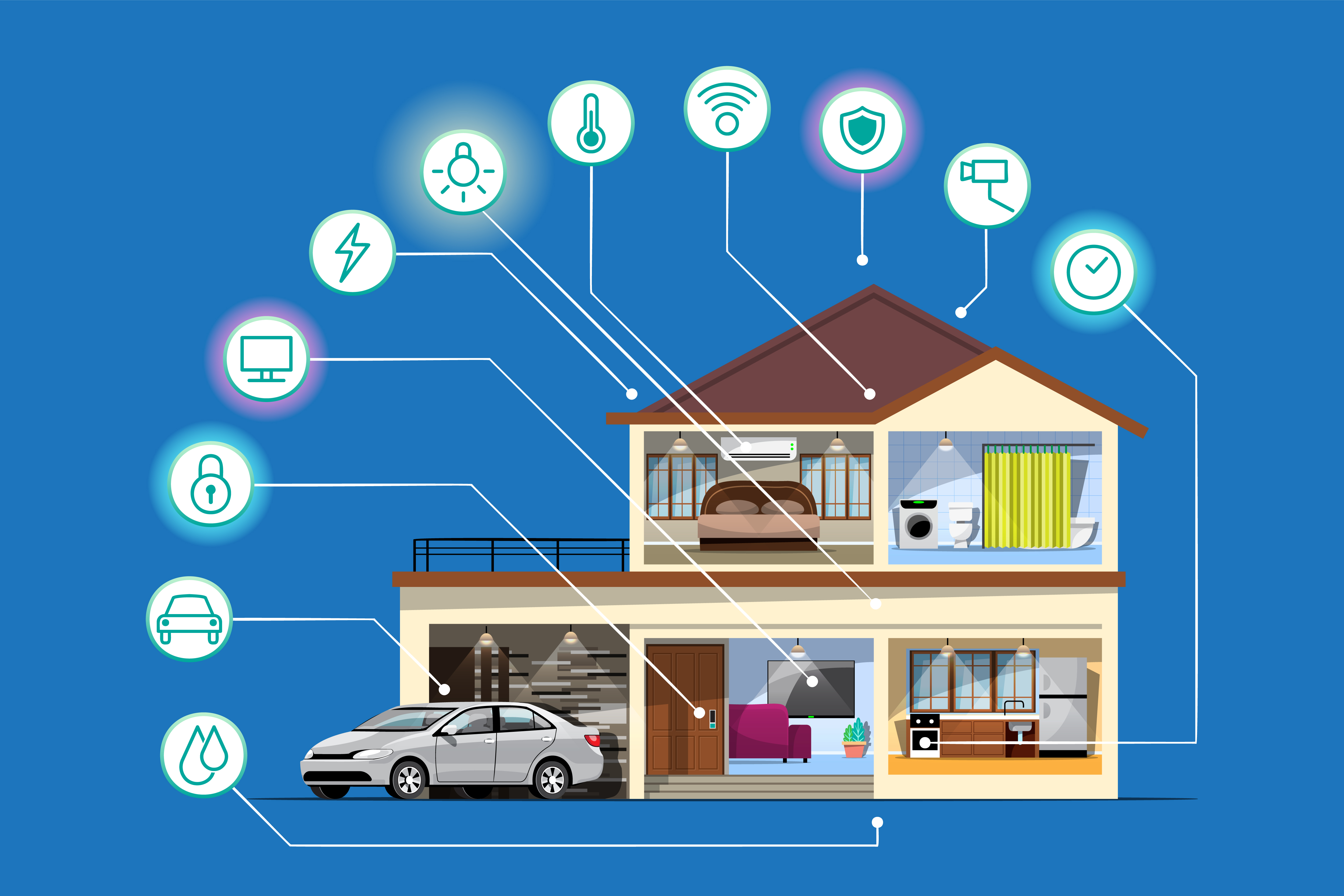
Smart homes are one of the most popular Internet of Things use cases. Devices such as thermostats, voice assistants, and connected lighting systems improve comfort and save energy. Users can control appliances remotely using mobile apps.
Industrial IoT
The Industrial Internet of Things connects machines and control systems in manufacturing plants. Sensors track performance, detect issues early, and support predictive maintenance.
An Internet of Things company in manufacturing can link multiple facilities to monitor output and resource consumption from a central location.
Healthcare
The Internet of Things improves patient care and hospital management. Wearables and smart medical devices record vital signs and transmit them to healthcare providers. Remote monitoring helps doctors make faster decisions and provides better care to patients.
Smart Cities
Cities use the Internet of Things IoT to manage traffic, reduce waste, and improve public safety. Connected sensors in streetlights, public transport, and utilities enhance efficiency and help city planners make data-based decisions.
Agriculture
IoT applications in agriculture help farmers increase productivity. Sensors measure soil moisture and weather conditions, while drones capture aerial images for crop analysis. These tools support better irrigation and fertiliser management, improving crop yield.
IoT Security Challenges & Solutions
As the Internet of Things expands, security has become a major concern for organisations. Protecting devices, networks, and data from cyber threats is vital to maintain reliability and trust in connected systems.
Device Vulnerabilities & Firmware Issues
IoT devices can become targets for cyberattacks if they run outdated firmware or lack strong authentication. Attackers may exploit weak points to steal data or disrupt operations. Businesses must maintain proper control over device updates and access permissions.
Network Risks & Data Exposure
As IoT devices transmit large volumes of data, unprotected networks can face interception or unauthorised access. Weak encryption and exposed APIs increase risk. Strong network-level security is essential for maintaining data privacy.
Solutions (Airtel Private APNs, Encryption, IoT Hub Monitoring)
Airtel offers a range of solutions that secure IoT networks:
-
Private APNs: Restrict device connections to trusted networks.
-
Encryption: Protects information during transfer and storage.
-
Airtel IoT Hub Monitoring: Provides real-time device visibility and alerts for suspicious activity.
These measures strengthen the security of the Internet of Things and protect organisations from potential data breaches.
Real-World IoT Use Cases
The Internet of Things is already transforming industries through practical applications that enhance efficiency, accuracy, and decision-making across diverse environments.
Supply Chain Tracking
IoT sensors help logistics companies track shipments, monitor conditions, and prevent losses. The Internet of Things IoT improves visibility from warehouse to destination, reducing inefficiency and improving delivery accuracy.
Precision Farming
Farmers rely on IoT to monitor soil and crop conditions. Sensors measure moisture and nutrients, helping them decide when to water or fertilise. This leads to higher yields and lower water usage.
Medical Wearables
Healthcare providers use connected devices to monitor patient health remotely. Wearables record vital data such as heart rate and oxygen levels, allowing early intervention in case of irregularities.
Smart Energy & Utilities
IoT transforms the energy sector by enabling smart grids and connected meters. The Internet of Things use in utilities helps balance energy supply and demand, detect faults, and reduce waste.
Manufacturing & Predictive Maintenance
Factories deploy IoT sensors to track machine performance. Predictive analytics detects faults early and prevents unplanned downtime.
By using Airtel IoT SIMs, industries maintain consistent connectivity for automation and asset tracking.
The Future of IoT
The Internet of Things continues to evolve rapidly, driven by advancements in connectivity, artificial intelligence, and edge computing that will shape the next generation of smart, data-driven solutions.
5G Growth
5G networks will significantly expand the capacity and speed of the Internet of Things. With faster data transfer and lower latency, 5G enables real-time communication for autonomous vehicles, industrial robots, and connected infrastructure.
This new network capability allows every Internet of Things company to innovate further and deliver smarter, faster solutions.
Edge + AI Integrations
Artificial Intelligence combined with edge computing represents the next stage in IoT development. Devices will analyse data locally instead of sending everything to the cloud. This approach reduces response time, lowers bandwidth use, and improves privacy.
Industries will adopt this model to achieve greater autonomy and faster decision-making.
Airtel Advantage
Airtel empowers businesses to unlock the full potential of the Internet of Things through secure, reliable, and scalable connectivity solutions designed for enterprise growth and innovation.
Airtel IoT SIMs
Airtel IoT SIMs give enterprises reliable and secure connectivity. They integrate smoothly into existing systems and support large-scale deployments with high-speed cellular coverage across India.
Airtel IoT Hub for Device Management
The Airtel IoT Hub connects devices, applications, and analytics under one secure platform. It supports real-time monitoring, device control, and integration with enterprise software.
Secure, Scalable Connectivity
Airtel delivers scalable and secure IoT connectivity that supports millions of devices. With private APNs, data encryption, and intelligent network management, businesses gain a protected environment for their connected operations.
Build a secure and scalable Internet of Things ecosystem with Airtel. Empower your organisation with intelligent connectivity, real-time visibility, and automation.
Speak to an IoT expert today. Visit IoT Connectivity Solutions to begin your digital transformation.