Share
ShareHow Fleet Management Solutions Help Enterprises Optimise Fleet Performance
-
 February 7, 2026
 -

 5 min read
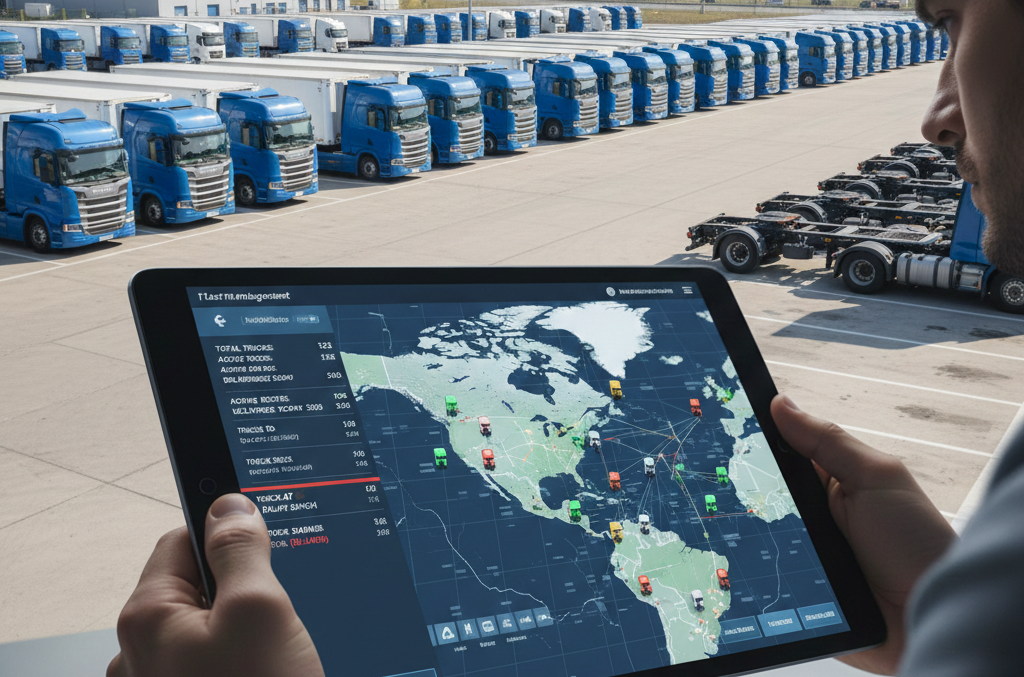
Modern enterprises depend on logistics networks that operate with precision. According to reports, transportation costs account for over 30% of total logistics expenses in large enterprises. Delays, theft, and inefficient routing cause heavy losses. Robust fleet management and fleet tracking technologies have become vital for maintaining control, reducing costs, and achieving operational excellence.



IoT-based tracking innovations, such as Airtel IoT SuperTracker, are reshaping enterprise logistics by offering greater visibility, reliability, and cost efficiency in the movement of vehicles and cargo.
How Advanced Fleet Management Solutions Drive Enterprise Performance and Efficiency
Efficient fleet management enables enterprises to gain control over logistics and operational efficiency. Advanced fleet tracking systems, powered by IoT, deliver actionable insights that help decision-makers optimise routes, assets, and workforce productivity.
Better Operational Control Through Smart Fleet Management
Fleet management has evolved beyond manual logs and basic GPS monitoring. Modern IoT-driven systems provide real-time visibility across entire fleets, covering vehicles, shipments, and drivers. Continuous data collection allows enterprises to improve planning and execution.
IoT-based fleet tracking systems deliver granular insights into route performance, delivery timings, and vehicle utilisation. Such insights help fleet managers make informed operational decisions that directly influence fuel efficiency, resource allocation, and driver productivity.
The Airtel IoT SuperTracker contributes to operational control by combining GSM-based location tracking with cloud connectivity. Its SIM-triangulation technology operates even where GPS signals are weak, allowing consistent fleet visibility in challenging environments.
Cost Efficiency Through Data-Driven Fleet Tracking
Cost control remains central to every enterprise logistics strategy. Traditional GPS-based trackers involve high power requirements and costly infrastructure, restricting their use to large fleets. The Airtel IoT SuperTracker addresses this issue through a plug-and-play IoT model that is three times more economical than standard GPS trackers.
Comparison: Traditional GPS vs. IoT-Based Tracking
|
Feature |
Traditional GPS Trackers |
IoT SuperTracker |
|
Power Consumption |
High |
Low |
|
Installation |
Complex |
Plug-and-play |
|
Battery Life |
Limited |
Up to 192 days |
|
Coverage |
GPS dependent |
GSM + SIM triangulation |
|
Cost Efficiency |
Expensive |
Cost-effective |
The system’s long battery life and minimal installation needs reduce downtime and maintenance expenses. With these benefits, fleet management becomes more predictable and less resource-intensive.
Data-driven fleet tracking further contributes by detecting idle time, monitoring route deviations, and assessing driver behaviour. These insights drive tangible cost savings while improving delivery precision.
Security, Safety and Asset Visibility
Cargo theft and loss during transit remain significant challenges for Indian enterprises. Reports indicate that two-thirds of cargo theft incidents in Asia occur in India, highlighting the need for reliable fleet management tools.
IoT-enabled fleet tracking enhances safety by providing continuous oversight of vehicle and consignment locations. The Airtel IoT SuperTracker introduces multiple safety-centric capabilities:
-
Geofence management: Defines operational zones and sends alerts when vehicles cross boundaries.
-
Route replay: Displays a vehicle’s entire journey for review and auditing.
-
Alerts management: Notifies managers of delays, route changes, or unauthorised movements.
Such features allow logistics leaders to reduce theft risks and maintain accountability across their supply chains. By integrating these tools into existing fleet management platforms, enterprises can secure high-value assets, prevent misuse, and improve driver compliance.
Driving Sustainability and Performance Optimisation
Environmental and performance objectives often align in modern logistics. IoT-enabled fleet tracking solutions promote fuel efficiency through intelligent routing and data analytics. By identifying congested routes or unnecessary idling, companies reduce both emissions and fuel expenditure.
Predictive maintenance also plays a crucial role in sustainable operations. IoT sensors can monitor vehicle health indicators, sending alerts before mechanical issues escalate. Preventing breakdowns minimises waste, lowers repair costs, and keeps fleets on the road longer.
With its low-power design and efficient data transmission model, the Airtel IoT SuperTracker supports enterprises seeking energy-efficient tracking methods. The device’s extended battery life of up to 192 days contributes to lower environmental impact and reduced operational waste.
Enterprises adopting such IoT-based fleet management systems report measurable improvements in uptime, delivery accuracy, and driver productivity—key factors for achieving sustainability targets alongside performance goals.
Application Across Industries
IoT-based fleet tracking systems benefit multiple industries beyond logistics.
-
Public Transport: Improves passenger safety and scheduling.
-
Healthcare: Tracks movement of critical medical supplies.
-
Construction: Monitors heavy machinery usage and site logistics.
-
Retail: Optimises distribution routes and delivery timings.
In each sector, the Airtel IoT SuperTracker adapts to specific operational needs. Its portable form factor and GSM-based tracking make it ideal for assets beyond traditional vehicles, such as containers, trailers, or third-party shipments.
This adaptability gives enterprises flexibility in designing fleet management frameworks that scale across diverse applications without significant infrastructure changes.
Technology Advantage: GSM-Based Tracking Without GPS Dependency
Traditional trackers rely solely on GPS signals, which may weaken in tunnels, warehouses, or remote regions. The Airtel IoT SuperTracker uses GSM network connectivity and SIM triangulation for accurate tracking in such conditions.
This innovation allows consistent fleet tracking across the entire logistics chain. Enterprises gain continuous visibility even where GPS alone would fail. The solution combines 2G connectivity, configurable ping frequency (from two minutes to twenty-four hours), and variable battery usage modes for custom tracking needs.
Such flexibility positions IoT-driven fleet management solutions as scalable tools for both small- and large-scale operations, enhancing reliability and control.
The Road Ahead: Strengthening Enterprise Operations with Smart Fleet Management
Enterprises pursuing operational excellence can no longer rely on conventional tracking tools. Fleet management powered by IoT delivers measurable improvements in efficiency, safety, and cost performance. Technologies such as the Airtel IoT SuperTracker redefine how businesses approach fleet tracking by providing greater control, lower costs, and continuous asset visibility.
To remain competitive, organisations should adopt IoT-based tracking frameworks that integrate real-time analytics, predictive maintenance, and intelligent route optimisation. Investing in a future-ready solution like the Airtel IoT SuperTracker enables enterprises to drive sustainable logistics, enhance productivity, and optimise fleet performance across every operational layer.
Empower enterprise logistics through advanced fleet tracking technology.