Share
ShareFrom Manual Meters to Smart Utility IoT: The Transformation of Data Collection and Billing
-
 August 21, 2025
 -

 6 min read
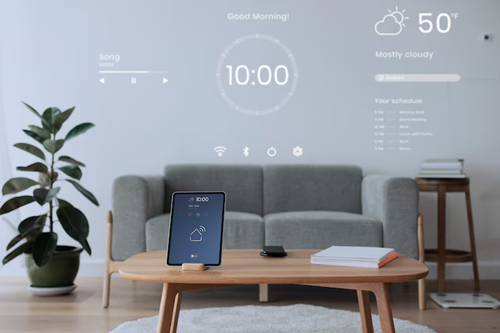
Earlier, a utility worker would trudge from house to house, jotting down meter readings on a clipboard. Now, fast forward to today, where smart utilities automatically transmit consumption data to utility providers. This stark contrast encapsulates the transformative impact of Internet of Things (IoT) technologies on utility data collection with smart utility systems.
The journey from manual, error-prone processes to intelligent, automated IoT-enabled utility management is reshaping how providers collect data, manage resources, and bill consumers. In this article, we’ll explore the key aspects of this transformation, including:



- The shift from manual to smart metering
- Impact on billing accuracy and transparency
- Real-time data collection and analytics
- Consumer engagement and empowerment
Manual Metering: The Challenges
Historically, utility data collection and billing relied on labor-intensive, error-prone manual processes. Before IoT, utility personnel physically visited premises to record consumption data from traditional meters, presenting numerous challenges:
- Time-consuming manual readings requiring field personnel
- Infrequent data collection, typically monthly or quarterly
- Billing inaccuracies due to human error or estimation
- Limited visibility into consumption patterns
- Delayed detection of leaks, outages, or abnormal usage
These inefficiencies not only strained utility operations but also led to customer dissatisfaction stemming from estimated bills and limited transparency.
The introduction of IoT-enabled smart utilities has fundamentally transformed this landscape. These intelligent devices automatically measure and transmit consumption data, enabling continuous, real-time monitoring without human intervention.
IoT-Enabled Smart Metering: The Game Changer
Smart utilities—intelligent devices that measure consumption and communicate this data wirelessly to utility providers. Smart meters form the foundation of modern utility infrastructure, enabling:
- Automated data collection with smart utility meters
- Continuous, real-time monitoring of consumption
- Precise billing based on actual usage data
- Immediate anomaly detection for leaks, outages, or unusual patterns
- Enhanced transparency through consumer access to usage data
Key Capabilities of Smart Meters:
- Automated data collection and transmission
- Two-way communication between utilities and consumers
- Real-time consumption monitoring
- Remote connection/disconnection
- Power quality monitoring (for electricity meters)
- Integration with home energy management systems
By replacing manual meter reading with automated data collection with smart utility meters, utilities can achieve:
- Precise billing based on actual usage data
- Immediate anomaly detection for leaks, outages, or unusual patterns
- Enhanced transparency through consumer access to usage data
- Improved resource management and distribution
The deployment of smart meters has accelerated globally, with adoption rates varying by region and utility type. Electricity smart meters have seen the most widespread implementation, followed by water and gas meters.
Billing Automation: Accuracy and Transparency
IoT-powered billing automation delivers unparalleled accuracy and transparency in utility billing processes. By minimising manual intervention, automated meter reading ensures precise measurement of utility usage, reducing billing discrepancies and errors.
| Aspect | Manual Billing | Automated Billing |
| Accuracy | Prone to human error and estimation | Precise measurement of actual usage |
| Transparency | Limited visibility into consumption | Detailed breakdown of charges |
| Disputes | Frequent, due to inaccuracies | Reduced, through accurate data |
| Cash Flow | Delayed, due to billing cycles | Improved, through efficient processes |
Moreover, integrated billing software provides customers with real-time access to usage data and transparent breakdowns of charges. This transparency is critical for building consumer trust and reducing billing disputes.
Data-Driven Utility Management
Beyond billing automation, the real-time data generated by IoT-enabled utility systems offers tremendous value for optimising operations and decision-making. By analysing consumption patterns, peak usage periods, and anomalies, utilities can:
- Identify trends and forecast future demand
- Detect inefficiencies and optimise resource allocation
- Proactively maintain infrastructure and prevent outages
- Personalise recommendations for reducing consumption
- Design dynamic pricing models reflecting actual costs
With IoT, the utility industry is shifting from reactive to proactive management, leveraging data-driven insights to enhance efficiency, reduce losses, and improve customer experiences.
Consumer Engagement and Empowerment
IoT has fundamentally changed the relationship between utilities and their customers by providing unprecedented transparency and control over resource consumption. Smart utility systems empower consumers with:
- Real-time visibility into consumption patterns
- Alerts for unusual usage or potential leaks
- Tools for setting consumption goals and tracking progress
- Comparative data showing usage against similar households
Mobile applications and web portals serve as the primary interfaces for this consumer engagement, transforming passive utility customers into active participants in resource management.
Overcoming Implementation Challenges
While the benefits of smart metering are compelling, utilities must navigate several challenges to ensure successful implementation:
- High upfront infrastructure costs
- Integration with legacy systems
- Data security and privacy concerns
- Regulatory compliance requirements
- Consumer adoption and education
Utilities need to develop robust business cases and financial models to justify the substantial investment in smart meter rollouts. Collaborating with experienced technology partners, such as Airtel IoT, can help mitigate risks and ensure seamless integration with existing systems.
Data security is paramount, given the sensitive nature of consumer energy data. Utilities must implement stringent cybersecurity measures, including encryption, access controls, and continuous monitoring, to protect against breaches and maintain customer trust.
Clear communication and education campaigns are also critical to drive consumer adoption and allay any concerns about smart meter technology. Utilities should emphasise the benefits for customers, such as improved billing accuracy, energy savings opportunities, and enhanced service quality.
Enabling the Smart Utility Transformation
Implementing IoT in utilities requires robust connectivity solutions that ensure seamless data transmission between smart utilities, sensors, and central management systems. This is where Airtel IoT plays a crucial role, providing the connectivity backbone for smart utility deployments.
With millions of devices already connected, Airtel IoT offers:
- Secure, enterprise-grade connectivity via NB-IoT and other LPWAN technologies
- Comprehensive data transmission infrastructure
- Cloud-based data storage and analytics platforms
- Integration with billing and customer management systems
By leveraging Airtel’s extensive network infrastructure, utilities can deploy IoT solutions even in remote areas, extending the benefits of data collection with smart utility meters to previously underserved regions.
The Future of Smart Utility Systems
As IoT technologies continue to evolve, the utility industry is poised for even greater transformation. Emerging trends such as AI-powered predictive analytics, blockchain-enabled peer-to-peer energy trading, and advanced demand response programmes will further optimise resource management and enhance consumer experiences.
The integration of utility IoT systems with broader smart city initiatives will create synergies across multiple domains, enabling holistic approaches to urban resource management and sustainability.
Summing Up
The transformation of utility data collection and billing through IoT technologies represents a paradigm shift in how essential services are managed, delivered, and consumed. By replacing manual processes with automated, data-driven systems, utilities can achieve unprecedented levels of efficiency, accuracy, and customer satisfaction.
Smart utilities serve as the foundation of this revolution, generating the granular data that powers automated billing, consumption insights, and operational improvements. The resulting benefits extend across the utility value chain, from reduced operational costs for providers to enhanced transparency and control for consumers.
As IoT technologies continue to evolve, their integration into utility systems will deepen, enabling increasingly sophisticated applications that further optimise resource usage, reduce environmental impact, and enhance the quality of service. The journey from manual to smart utilities illustrates the transformative potential of IoT to remake even the most established industries through the power of connected intelligence.