Share
ShareSmart Energy Meter Benefits: Why Utilities Are Moving to Smart Systems
-
 February 7, 2026
 -

 5 min read
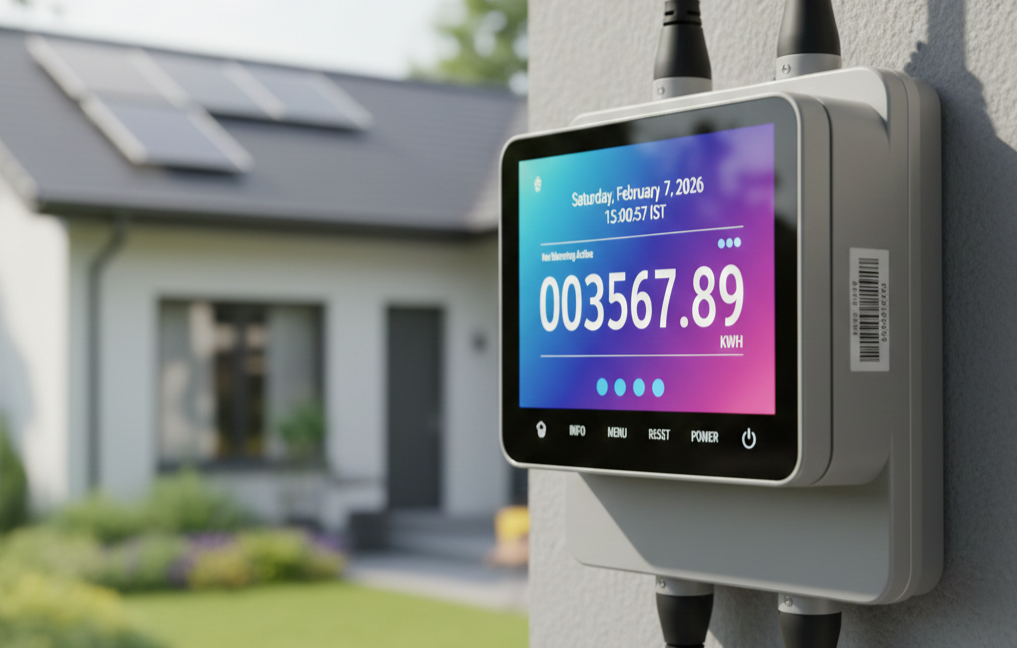
Global power distribution is transforming rapidly. According to the International Energy Agency, smart grid investments exceeded USD 300 billion in the last decade, reflecting an accelerating move toward digitisation. In India, traditional energy meters contribute to over 20% distribution loss due to theft and inefficiency.
Governments and utilities are prioritising technology-driven monitoring to improve reliability and transparency. The rise of the smart energy meter is central to this transformation. As utilities modernise, smart utility solutions are becoming the core of an intelligent and connected power infrastructure.



Advancing Efficiency Through Smart Energy Meter Deployment
A smart energy meter records consumption in real time, transmitting accurate data to central systems via IoT connectivity. This capability eliminates manual reading errors and supports automated billing.
Top Advantages
-
Accurate measurement: Real-time readings prevent discrepancies.
-
Energy theft reduction: Continuous monitoring detects irregularities promptly.
-
Operational visibility: Utilities can analyse patterns and adjust load distribution efficiently.
A smart energy meter enables dynamic pricing, allowing customers to benefit from off-peak rates. This contributes to energy conservation and better grid balancing. For utilities, these meters enhance forecasting accuracy, supporting predictive maintenance and grid optimisation.
Smart Utilities: Building the Foundation for Data-Driven Operations
Smart utilities integrate IoT, analytics, and communication networks to manage electricity, water, and gas distribution. These systems collect, analyse, and interpret massive data streams to optimise performance and decision-making.
Airtel IoT Smart Utilities exemplifies this integration by combining multi-network connectivity, NB-IoT, 4G, 5G, and 2G backup with secure cloud analytics. This structure supports uninterrupted communication between meters and central data platforms.
Benefits of Smart Utilities Integration
|
Aspect |
Traditional Utilities |
Smart Utilities |
|
Data Access |
Manual and delayed |
Real-time digital reporting |
|
Maintenance |
Reactive |
Predictive and proactive |
|
Efficiency |
Moderate |
Significantly enhanced |
|
Scalability |
Limited |
Highly adaptable |
|
Consumer Engagement |
Minimal |
Real-time visibility and control |
Through automation and predictive analytics, smart utilities can identify faults before they cause outages. This results in faster restoration and improved customer satisfaction. Real-time dashboards help executives evaluate performance metrics instantly, promoting agile decision-making.
A smart energy meter operates as the sensor backbone within this system. Together, these technologies create a self-monitoring grid that supports sustainable and cost-effective operations.
Leveraging IoT Connectivity for Scalable Power Management
IoT connectivity is the core enabler of both smart utilities and the smart energy meter ecosystem. Without reliable communication, the benefits of automation and analytics would remain limited.
Airtel IoT Smart Utilities addresses this challenge with network resilience and scalability. Its multi-layered connectivity, ranging from NB-IoT for low-power devices to 5G for high-speed data transmission, supports millions of meters across vast territories.
IoT Connectivity Advantages
-
Scalability: Easy addition of new devices without infrastructure overhaul.
-
Low power usage: NB-IoT supports long battery life in remote meters.
-
Secure cloud integration: Data hosted on MeitY-empanelled cloud platforms strengthens compliance and reliability.
-
Operational analytics: Integration with Head-End Systems (HES) and Meter Data Management (MDM) systems enhances data visibility.
For decision-makers, the combination of IoT connectivity and analytics in smart utilities simplifies power distribution management. The system minimises technical losses and accelerates billing cycles through automated data flow.
A smart energy meter connected via such a network not only transmits consumption data but also receives remote configuration commands. This bidirectional communication enables remote disconnection, tariff updates, and diagnostic alerts, all critical for operational agility.
Driving Digital Transformation in Power Distribution
Utilities globally are embracing digital transformation to reduce losses, increase reliability, and meet sustainability goals. The World Bank estimates that efficient grid management could save developing nations billions in annual losses.
The smart energy meter is at the forefront of this evolution. Its integration within smart utilities frameworks creates a digital ecosystem that aligns with regulatory reforms and renewable integration targets.
Airtel IoT Smart Utilities contributes to these goals through its cloud-enabled architecture and partnership with Advanced Metering Infrastructure Service Providers (AMISPs). This collaboration supports large-scale rollouts, enabling accurate data capture and remote management for millions of endpoints.
Business Impact
-
Revenue protection: Reduced losses through energy theft detection.
-
Data-driven strategy: Access to consumption trends for informed investment planning.
-
Regulatory compliance: Transparent operations support government programmes such as India’s Revamped Distribution Sector Scheme (RDSS).
-
Customer empowerment: Consumers gain control through access to real-time data and alerts.
A smart energy meter thus evolves beyond measurement; it becomes a digital node that drives intelligence throughout the power grid.
Future of Smart Utilities and Energy Digitisation
The future of smart utilities lies in full-scale digital convergence. Combining IoT, artificial intelligence, and cloud-based analytics will make energy distribution self-optimising. Utilities adopting these technologies gain resilience, speed, and data precision.
Emerging technologies such as AI-driven anomaly detection and blockchain-based transaction recording will strengthen trust and transparency. The smart energy meter will remain pivotal, transmitting verified data that supports these advanced capabilities.
Airtel IoT Smart Utilities is positioned to support this evolution through its scalable connectivity and secure infrastructure. Its model demonstrates how large utilities can modernise while maintaining control, reliability, and compliance.
Powering the Digital Future of Utilities
Utilities worldwide are moving towards digitised operations to meet rising efficiency demands and sustainability goals. The smart energy meter provides accurate, real-time insights that transform billing accuracy, operational control, and consumer transparency. Together with IoT-powered smart utilities, it creates a data-driven energy ecosystem that reduces losses and strengthens reliability.
For organisations aiming to modernise power management, investing in scalable and secure IoT connectivity is crucial. Airtel IoT Smart Utilities offers a proven pathway, combining multi-network coverage, cloud analytics, and scalable deployment to power the next generation of smart infrastructure.
Explore how Airtel IoT Smart Utilities can accelerate digital transformation in energy management.