














Need more information about
Airtel Business solutions?
Airtel Business solutions?
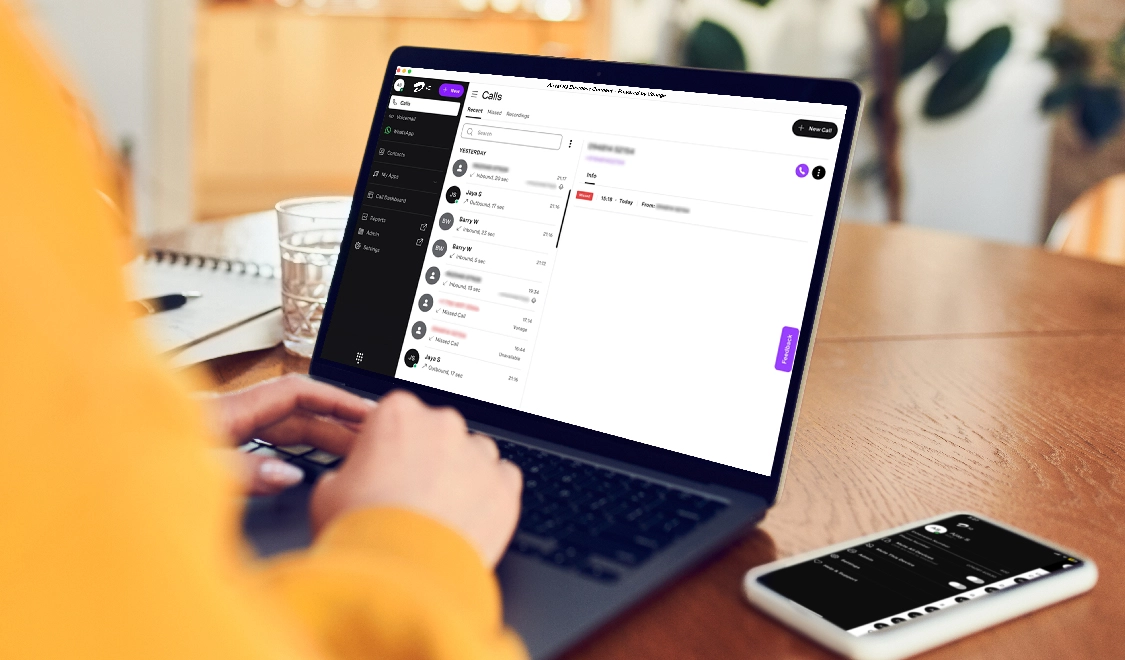
Empower your workforce with a multichannel VoIP communication platform, powered by 
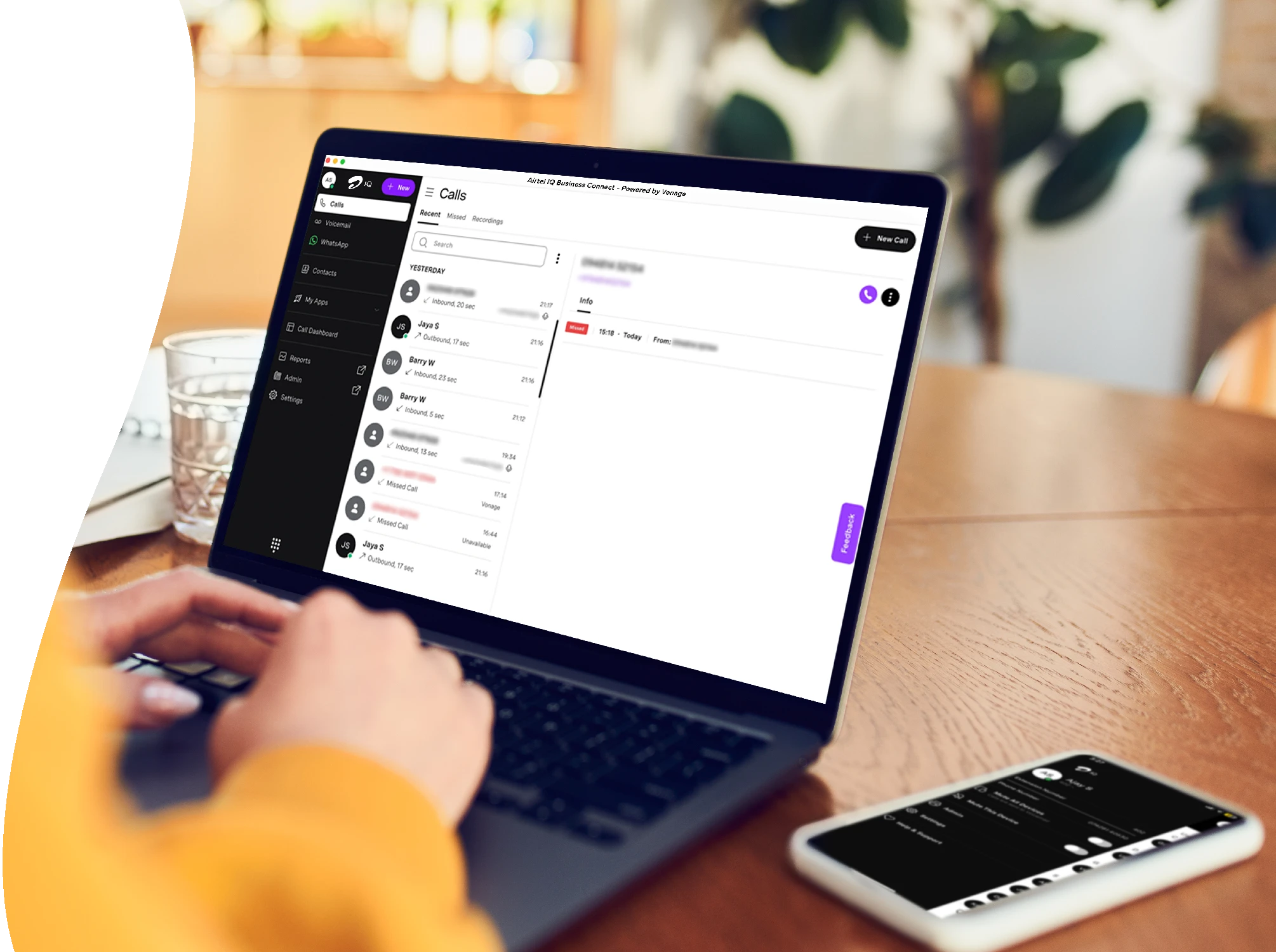
In an ever-evolving digital landscape, efficient communication is the backbone of successful businesses. Airtel Business IQ Connect , powered by Vonage, offers a comprehensive, cloud-based communication solution designed specifically for Indian enterprises. Enhance collaboration, boost productivity, and take your business to new heights with our state-of-the-art tools.

Heavy capital expenditure required for on-premise deployment of PBX systems leading to complex management and reduced flexibility.

A cost-effective cloud-based VoIP solutions that eliminates high communication costs while helping scale on the go.

Scattered communication across personal phones, WhatsApp, and desk phones leading to loss of messages and clutter.

An all-in-one communication platform that seamlessly integrate voice, SMS and WhatsApp messaging.

Dedicated phones lines meant being confined to office desk phones.

A user friendly app for mobiles and desktops, perfect for remote and hybrid environments, and field forces, ensuring your team stays connected

Access dedicated mobile and desktop applications for seamless communication.

Switch calls between mobile and desktop effortlessly, allowing your field force to stay connected on the go.

Integrate WhatsApp for Business directly into the app for a unified communication experience.

Enjoy high-quality voice calls through our reliable VoIP service.

Never miss a message with virtual voicemail and voicemail-to-email options.

Enhance customer experience with our Interactive Voice Response (IVR) system.

Easily onboard and manage your field force with virtual numbers.

Monitor calls with whisper and barge-in features for effective workforce management.

For security, compliance & constructive feedbacks


Airtel Business Connect is a cloud-based communication platform that combines voice, and SMS into one application. Powered by Vonage, it replaces traditional PBX systems with VoIP technology accessible through mobile and desktop apps. The platform eliminates hardware costs while providing enterprise features like virtual numbers, IVR, and call recording. Designed for Indian businesses, it helps teams communicate professionally from anywhere—whether they’re at desks, working remotely, or visiting customers in the field.
Businesses lose critical customer conversations when employees use personal phones, desk lines, and WhatsApp separately. Airtel Business Connect solves this by centralising all channels into one platform. Your team accesses voice calls, SMS, and WhatsApp through a single interface on mobiles or desktops. This prevents message loss during employee transitions, speeds up response times, and maintains professional consistency. The cloud-based system also cuts communication costs—you pay only for features used, without expensive hardware investments or maintenance burdens.
Any Indian business struggling with scattered communication should consider this platform. Sales teams benefit from virtual numbers and mobile access for field visits. Customer support centres use IVR and call monitoring to manage high volumes efficiently. SMEs get enterprise features without PBX hardware costs. Financial services firms secure branch connectivity, while logistics companies track field operations seamlessly. The platform suits businesses from 5 to 5,000 employees—particularly those with remote workers, multiple locations, or customer-facing teams requiring professional communication tools.
SMEs find this platform particularly valuable because it removes traditional communication barriers. Instead of investing ₹ 5-10 lakhs in PBX hardware, businesses pay monthly subscriptions starting around ₹ 1,500-2,500 per user. The cloud-based system needs no IT staff for maintenance—service providers handle all updates remotely. SMEs can add users instantly as they grow, project professional images through IVR and virtual numbers, and equip teams with mobile apps. Setup happens within days, not weeks, minimising business disruption completely.
Traditional PBX systems require server rooms, hardware costing lakhs, and dedicated technical staff. Airtel Business Connect operates entirely through cloud infrastructure—no physical equipment needed. While PBX limits employees to desk phones, this platform works on smartphones, tablets, and laptops anywhere with internet. Traditional systems support only voice calls; Airtel Business Connect integrates voice, SMS, and WhatsApp. Configuration changes take minutes through online dashboards versus days of technician visits. You convert capital expenditure into predictable monthly operating costs.
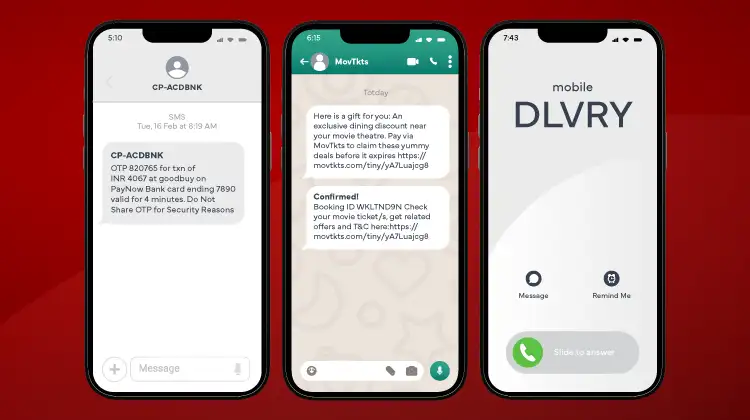
The platform unifies three primary communication channels: voice calls through VoIP technology, SMS messaging, and WhatsApp for Business. Voice features include HD-quality calling, conference calls, call forwarding, and virtual numbers with local or toll-free options. SMS capabilities handle both individual and bulk messaging with delivery tracking. WhatsApp integration provides verified business profiles, message templates, media sharing, and automated responses. All channels work through unified mobile and desktop applications, maintaining complete conversation history. This multi-channel approach ensures businesses reach customers through their preferred communication methods.
Yes, WhatsApp for Business integrates directly within the platform’s unified interface. Your team manages WhatsApp conversations alongside voice calls and SMS without switching applications. The integration includes business verification badges, pre-approved message templates, automated greetings, and quick replies. Agents share images, documents, and catalogues while maintaining professional boundaries through virtual numbers. The platform stores complete WhatsApp conversation histories, enabling smooth handoffs between team members. Research shows 89% of consumers prefer businesses offering WhatsApp communication—this integration captures that preference professionally.
Employees access full functionality through dedicated Android/iOS mobile apps and Windows/Mac desktop applications. The same login works across all devices, synchronising calls, messages, and settings automatically. Field sales representatives start calls on smartphones, then seamlessly continue on office desktops. Remote workers handle customer queries from home laptops with identical features to office systems. The platform supports tablets for warehouse or retail floor use. Device switching happens without dropping connections or losing context. This flexibility supports modern work patterns where employees move between locations daily.
Call flip lets employees transfer active calls between devices without disconnection. A salesperson receiving customer calls on their mobile while driving can “flip” the conversation to their laptop upon reaching the office. The feature works through simple button taps—no manual dialling or callbacks required. Field technicians flip calls from smartphones to tablets when they need to share technical diagrams. Office workers transfer desk calls to mobiles when heading to meetings. This functionality ensures conversations continue smoothly regardless of location changes or device preferences.
The platform includes virtual voicemail accessible from any device, eliminating physical answering machines. When customers call outside business hours or during busy periods, they leave voice messages in personalised mailboxes. The voicemail-to-email feature automatically sends audio files to designated email addresses, letting employees respond quickly even when travelling. Messages include caller details, timestamps, and duration information. Teams can set custom greetings for different scenarios—holidays, lunch hours, or specific departments. Virtual voicemail ensures no customer query goes unanswered, improving response rates significantly.
Administrators control everything through web-based portals accessible from any browser. Adding new employees takes minutes—enter details, assign virtual numbers, and set permissions. The portal displays all users, their assigned numbers, departments, and access levels in organised dashboards. Bulk operations let admins onboard entire teams simultaneously. Virtual numbers get allocated based on roles—sales teams might receive mobile-friendly numbers while support gets toll-free options. Admins modify call routing rules, update IVR menus, and reassign numbers when employees change roles. No technical expertise required—the interface uses simple dropdown menus.
Virtual receptionist technology answers calls automatically, greeting customers professionally before routing them appropriately. The Interactive Voice Response (IVR) system presents menu options: “Press 1 for sales, 2 for support, 3 for accounts.” Customers reach correct departments without human operators. Businesses customise greetings, menu structures, and routing rules through online portals. Multi-level IVR handles complex organisations—main menu leads to department sub-menus. The system operates 24/7, managing after-hours calls through voicemail or emergency routing. This automation reduces wait times while projecting professional, enterprise-level service.
Yes, the platform records calls automatically for quality assurance, training, and regulatory compliance. Recordings are stored securely in cloud servers with encrypted access controls. Managers review conversations to coach team members, resolve customer disputes, or verify transaction details. Search functions help locate specific calls by date, duration, caller number, or agent name. Financial services and healthcare businesses use recordings to meet compliance requirements. The system supports selective recording—certain numbers or departments can exclude recording based on privacy policies. Storage duration follows customisable retention periods matching business needs.
Managers access comprehensive dashboards showing active calls, queue lengths, and agent availability. The whisper feature lets supervisors provide guidance to agents during calls—only the agent hears these coaching tips, not customers. Barge-in functionality allows managers to join conversations when situations require intervention. Visual indicators show call duration, waiting customers, and missed call counts. Historical data reveals patterns like peak calling times or frequently asked questions. These monitoring tools help managers optimise staffing, identify training needs, and ensure service quality without hovering over employees’ shoulders physically.
Remote employees function identically to office staff through mobile and desktop apps. Field sales teams receive calls on virtual business numbers, maintaining professional separation from personal phones. The platform’s device-agnostic nature means construction supervisors, delivery personnel, and home-based agents access identical features. Managers monitor remote team performance through centralised dashboards showing call volumes and response times. Virtual numbers follow employees wherever they work—Mumbai, Bengaluru, or rural locations. The system enables 24/7 customer connectivity while supporting flexible work arrangements that modern businesses increasingly adopt.
Yes, it operates entirely through cloud infrastructure hosted in secure data centres. Unlike on-premise systems requiring server rooms and hardware, everything runs through internet connections. Your business data, call recordings, and configurations stay protected in professionally managed facilities with backup systems. Cloud architecture means automatic updates without service disruptions. The platform scales instantly—adding 100 users requires no new equipment. Businesses access services through web browsers and apps, eliminating location dependencies. This cloud-first approach reduces IT complexity while providing enterprise-grade reliability typically costing lakhs with traditional systems.
Deployment typically completes within days, compared to weeks or months for traditional PBX installations. After signing up, businesses receive login credentials and begin configuring virtual numbers immediately. The setup involves no hardware installation, cable laying, or server configuration. Teams download mobile and desktop apps, administrators set up IVR menus and call routing through web portals. Most SMEs go live within 2-5 business days. Larger enterprises with complex requirements might need 7-10 days for custom configurations. The cloud-based nature eliminates procurement delays and technical complications.
The platform scales effortlessly from 5 to 5,000+ users without infrastructure changes. Adding employees involves simple portal clicks—no hardware limitations or capacity planning needed. Seasonal businesses scale up during peak periods, then reduce users during quiet months. Opening new branches? Employees there get instant access with location-specific virtual numbers. The pay-per-user model means costs align with actual usage. Features scale equally well—start with basic voice calls, add WhatsApp integration later, implement IVR when customer volumes justify it. Growth happens organically without disruptive system overhauls.
Business communications receive multiple security layers starting with encrypted VoIP calls preventing interception. Data transmission between devices and servers uses industry-standard SSL/TLS protocols. Cloud infrastructure includes firewalls, intrusion detection, and regular security audits. Access controls ensure only authorised personnel view call recordings or customer information. Login systems support strong passwords and multi-factor authentication. Data centres feature physical security, redundant power supplies, and disaster recovery systems. Regular backups protect against data loss. The platform maintains security certifications required by regulated industries, providing audit trails for compliance verification.
The platform meets enterprise security standards through comprehensive compliance frameworks. Encrypted storage and transmission protect sensitive customer conversations. Call recordings include access logs showing who listened and when—critical for audit requirements. Financial services firms find the platform suitable for maintaining transaction records. Healthcare organisations use it while protecting patient confidentiality through controlled access. The system generates compliance reports demonstrating adherence to data protection regulations. Regular third-party security assessments verify continued compliance. Businesses in regulated sectors can configure retention policies, access controls, and audit mechanisms matching their specific industry requirements.