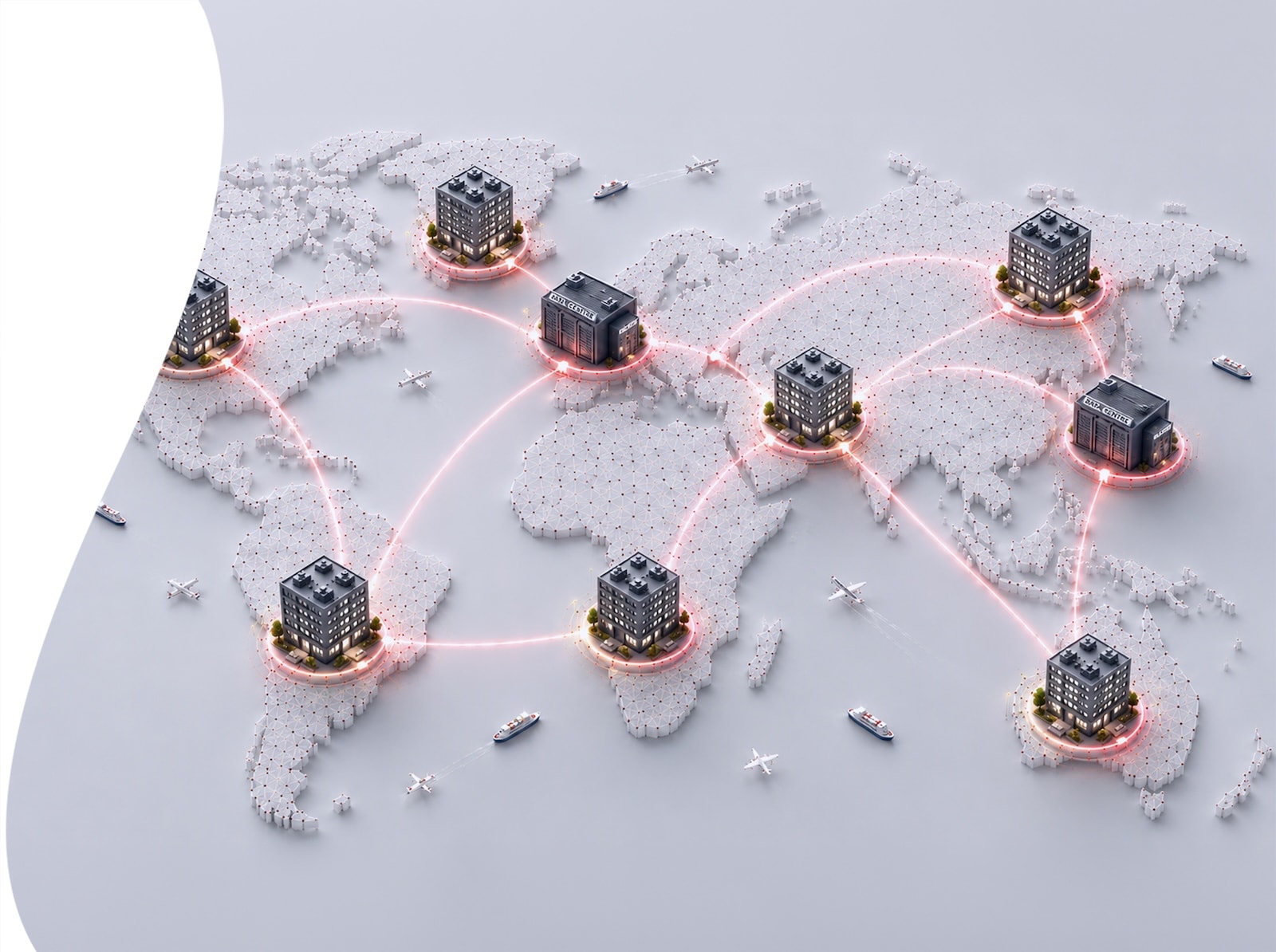
Expand Your Business Globally with Airtel’s International Private Line
Fragmented international networks create inconsistent performance, expose security gaps, and add unnecessary operational complexity. Airtel's International Private Line, also known as an international private leased circuit (IPLC), solves this with a dedicated physical path across owned subsea cables, bypassing the public internet entirely and providing the stable, private infrastructure required for heavy data synchronization between headquarters and regional hubs.
- Financial Trading
- BFSI Transactions
- Cloud Gateway
- VoIP Collaboration
- Media Broadcasting
Achieve seamless, low‑latency trading across global exchanges
- 34+ submarine cable systems with minimum three diverse global routes for low-latency connectivity.
- Active-active redundancy and automatic failover to ensure uninterrupted trading continuity.
- Dedicated, symmetric bandwidth with SLA backed uptime for real-time, high-volume order flows without congestion.

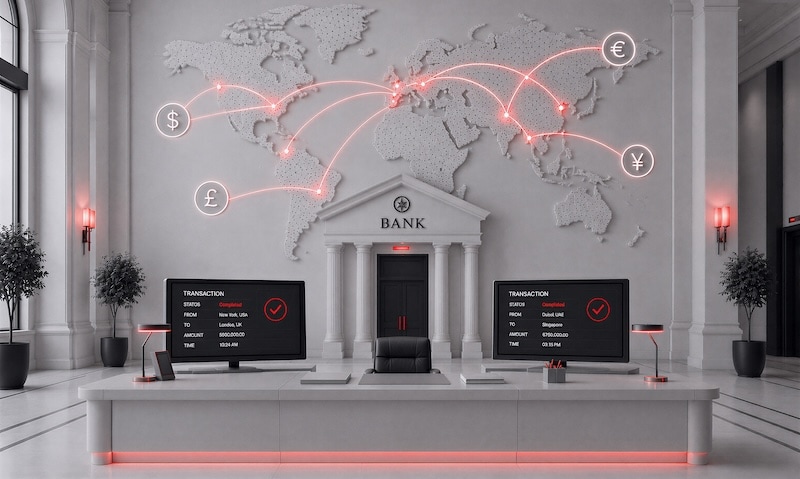
Ensure compliant, reliable financial operations with private global connectivity
- Global reach across 50+ countries and 75+ PoPs with undersea cables, enabling consistent transaction performance between international banking centers.
- Private, non‑internet‑routed international leased line circuits that create a secure path for sensitive financial data across borders.
- 24×7 enterprise-grade managed support with proactive monitoring and assured service reliability.
Drive seamless cloud performance with predictable, private connectivity
- Flexible bandwidth options scaling up to 100 Gbps, supporting data replication, backup and cloud migrations.
- Global network spanning 5 continents and 400,000+ route kms for reliable cloud access worldwide.
- Dynamic load balancing and resilient route diversity for uninterrupted application availability.

Jitter-free video calls and communication for seamless multinational team productivity
- Low-latency dedicated international undersea cables circuits optimized for real-time voice and video traffic.
- QoS prioritization for minimizing jitter, packet loss, and call disruption.
- SLA-backed resilient IPLC network ensures uninterrupted enterprise communication

Deliver lag‑free live streaming and real‑time content distribution
- Submarine cables powered high-capacity international bandwidth designed for HD, 4K, and latency-sensitive media transmission.
- Diverse global routes ensure resilient, uninterrupted content delivery.
- Dedicated international underwater internet cables circuits deliver consistent throughput for latency-sensitive live broadcasts.

Exclusive features of Airtel International Private Line
-

High Availability
Diverse subsea cable routing to ensure your traffic stays online even during unpredictable physical cable cuts or maintenance.
-

Dedicated Bandwidth
Uncontended, symmetric international circuits with assured throughput and predictable performance, independent of external network conditions.
-

Predictable Latency
Optimized international routes minimize the physical distance data travels, providing the rapid response times essential for global collaborative applications.
-

Carrier-grade SLAs
Ensure secure, reliable data transfer with superior infrastructure, 99.99% uptime commitment. Proactive monitoring and rapid fault resolution included as standard.
-
24x7 NOC Monitoring
24/7 Global Network Operations Center to identify potential issues before they impact your business, maintaining your consistent operational flow.
-
Scalable Bandwidth
Scale seamlessly up to 100 Gbps, meeting growing business demands without any complex hardware upgrades.
Why choose our International Private Line?
-

Assured Performance
Guaranteed low latency performance for mission critical workloads, underpinned by 24×7 global monitoring and support from a trusted IPLC telecom provider.
-

Route Diversity
34+ submarine cables, 7 subsea cable landing stations and minimum three diverse paths on every route.
-

Strategic Bypass Routing
Intelligent rerouting around high-risk geographies keeping enterprise traffic protected and always flowing.
-

Global Presence
Extensive underwater internet cables network delivering reliable IPLC connectivity across APAC, MENA, Europe, and American markets.
Other custom solutions, empowering your business journey















Need more information about

Frequently Asked Questions About International Private Leased Circuit (IPLC)
What is International Private Leased Circuit (IPLC) in telecom?
International Private Leased Circuit or IPLC is a dedicated, point-to-point private line connecting two international locations without touching the public internet. Airtel’s International Private Line delivers this as a secure IPLC network over owned network of 34+ subsea cables — the backbone choice for guaranteed international leased line performance.
What is IPLC in VPN?
IPLC isn’t a VPN. A VPN or virtual private network encrypts traffic over the shared public internet, while IPLC is a dedicated physical circuit that bypasses the internet entirely. Businesses that need private, uncontended international leased line capacity for sensitive workloads choose Airtel’s IPLC connectivity over a VPN.
What is IEPL?
IEPL – International Ethernet Private Line, is a layer 2 dedicated, Ethernet-based international leased line offering flexible, scalable bandwidth. Unlike traditional international private leased circuit (IPLC) connections, IEPL uses packet-switched Ethernet.
What is IEPL vs IPLC?
IEPL uses Ethernet technology and typically offers flexible, scalable bandwidth, while IPLC (International Private Leased Circuit) traditionally uses fixed, TDM-based circuits with guaranteed symmetric capacity. This can make IPLC more expensive to scale to higher speeds. However, enterprises seeking dedicated, secure connectivity may choose IPLC for its predictable performance and SLA-backed reliability, particularly for mission-critical traffic.
What is DPLC in networking?
DPLC – Domestic Private Leased Circuit, is the in-country counterpart to IPLC. It is a dedicated point-to-point line connecting offices within the same nation. DPLC covers domestic branches, while an international private leased line like Airtel IPLC connects locations across borders with the same dedicated, secure model.
What is a subsea cable?
A subsea cable (or submarine cable) is a fiber-optic line laid across the ocean floor to carry data between continents. These underwater internet cables form the physical backbone of global connectivity — including the 34+ subsea cable network that powers Airtel’s IPLC services worldwide.
How are undersea cables laid?
Specialized cable-laying ships plot a route avoiding fault lines and shipping lanes, then feed armored fiber-optic cable directly onto the seabed — buried in shallow waters, laid loose in deeper trenches. Airtel’s undersea cables are laid this way across owned and consortium routes to guarantee resilient IPLC connectivity.
What happens if undersea cables are cut?
Subsea cables can be cut or damaged for multiple reasons, including ship anchors, natural disasters, and even shark bites. When this happens, as seen during the 2025 Red Sea undersea cable incident near Jeddah, traffic may be rerouted through alternative paths. However, latency can increase, and repairs may take weeks.
That is why Airtel provides a minimum of three backup paths for submarine connectivity on every route, along with intelligent rerouting around high-risk geographies. These measures help reduce single points of failure and keep your enterprise traffic moving reliably.
What are Tier 1 ISPs?
A Tier 1 ISP is a carrier that reaches the entire internet through settlement-free peering, without paying for transit and sitting at the top of the internet hierarchy. For example, Airtel is a tier-1 operator offering carrier services globally, with a submarine network reaching 50+ countries across 5 continents via 34+ cables spanning 400,000+ route kilometers, alongside 400,000+ route kilometers of terrestrial fiber in India and a presence across Africa with 75,000+ route kilometers.
Why choose Airtel for Internet Leased Line services?
Airtel offers scalable, resilient, and reliable international private leased line services through a global submarine network reaching 50+ countries via 34+ cables and 7 cable landing stations. This is supported by strong terrestrial connectivity, including 430,000+ route kilometers in India and 75,000+ in Africa, along with 75+ global points of presence and 1,200+ interconnects.
Airtel also offers intelligent rerouting around high-risk geographies and a minimum of three diverse paths on every route to help protect your enterprise traffic and keep it flowing under challenging conditions. Backed by a robust network and a dedicated team, Airtel guarantees low-latency performance for mission-critical workloads through 24×7 global monitoring and support.