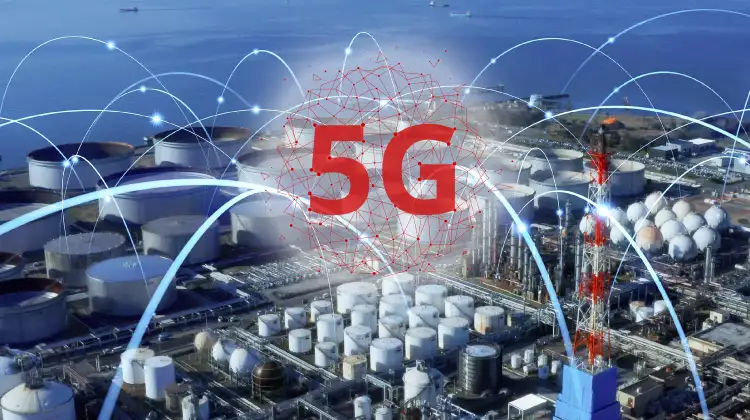
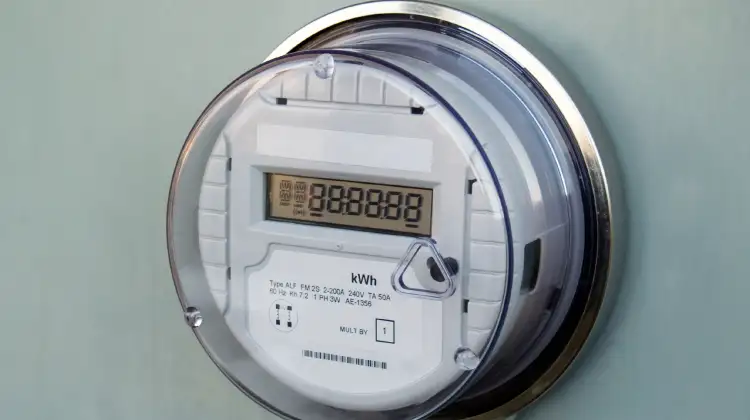
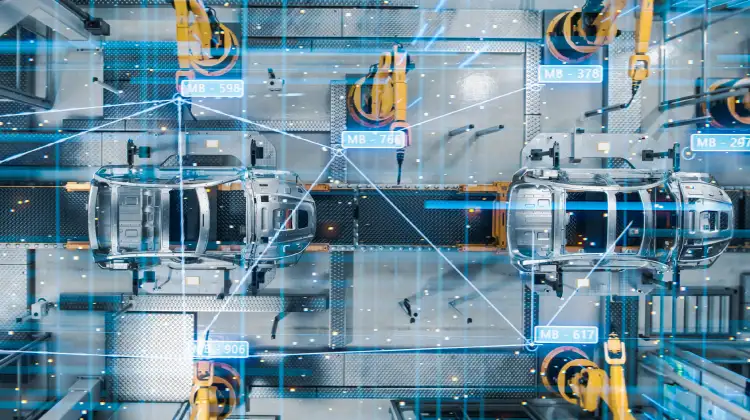
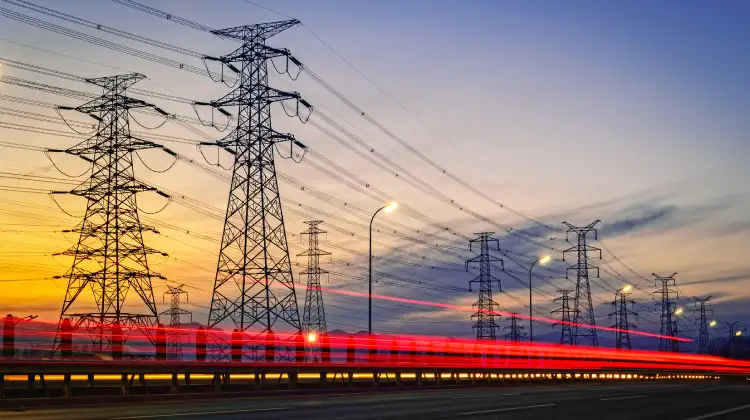
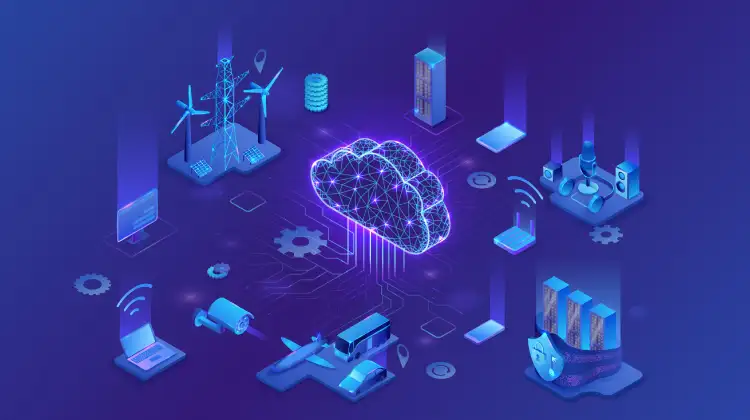
Ensure seamless communication across connected devices and applications.
Learn More Learn more about IoT Connectivity

SEBI mandates all nine ESG attributes to be mentioned in the company’s Business Responsibility and Sustainability Report (BRSR). This move aims to address high carbon emissions, inefficient asset optimization, and fragmented energy consumption data. Airtel IoT's Smart Energy Management helps by offering discovery and insights feature, reducing energy costs and driving sustainability.

Manual monitoring and reporting of energy consumption was prone to errors, leading to minimal visibility into consumption patterns.

Real-time monitoring will be enable accurate energy consumption tracking, offering a single dashboard for trends, anomalies, carbon footprint and emissions.

Uncertainty about energy asset performance and wear and tear, led to excessive downtime during peak usage times.

Continuous asset health tracking with AI-driven insights will be enabling proactive maintenance, reducing costs and enhancing performance.

Inability to track KPIs across multiple assets led to leakages, inefficient consumption, and increased OPEX and CAPEX expenditures.

By tracking multiple KPIs across assets like energy meters, DG, AHU, and water, efficiency and savings will be getting optimized.
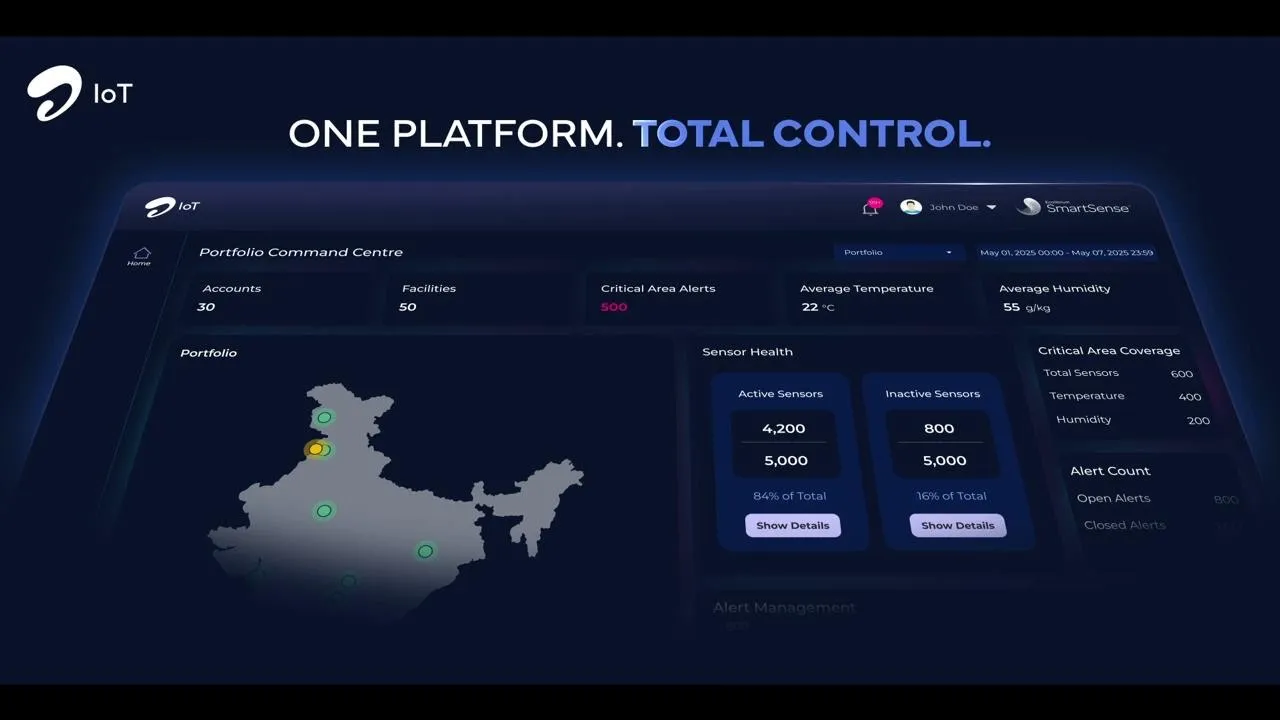
Airtel IoT Smart Energy Management offers an end-to-end solution for monitoring and optimizing energy consumption across facilities. It integrates IoT hardware, secure connectivity, and AI-driven analytics to deliver real-time insights, compliance reporting, and predictive maintenance. Designed for ESG mandates, it enables cost savings, sustainability, and operational efficiency across diverse industries.

A centralized dashboard with AI/ML insights, identifies anomalies and offers actionable recommendations.

Advanced telco-grade security with 4G network and robust cloud infrastructure.

An end-to-end integrated solution with a unified view for all kinds of assets to simplify operations and control.

Centralized data monitoring, reporting and insights help accelerate your decarbonisation journey.


Ensure seamless communication across connected devices and applications.
Learn More
Learn more about IoT Connectivity
One-platform to easily manage all your connected devices powered by NBIoT, 5G, 4G, & 2G.
Learn More
Learn more about IoTHub
Collect, process analyze data efficiently with cutting-edge headend applications & meter data management system.
Learn More
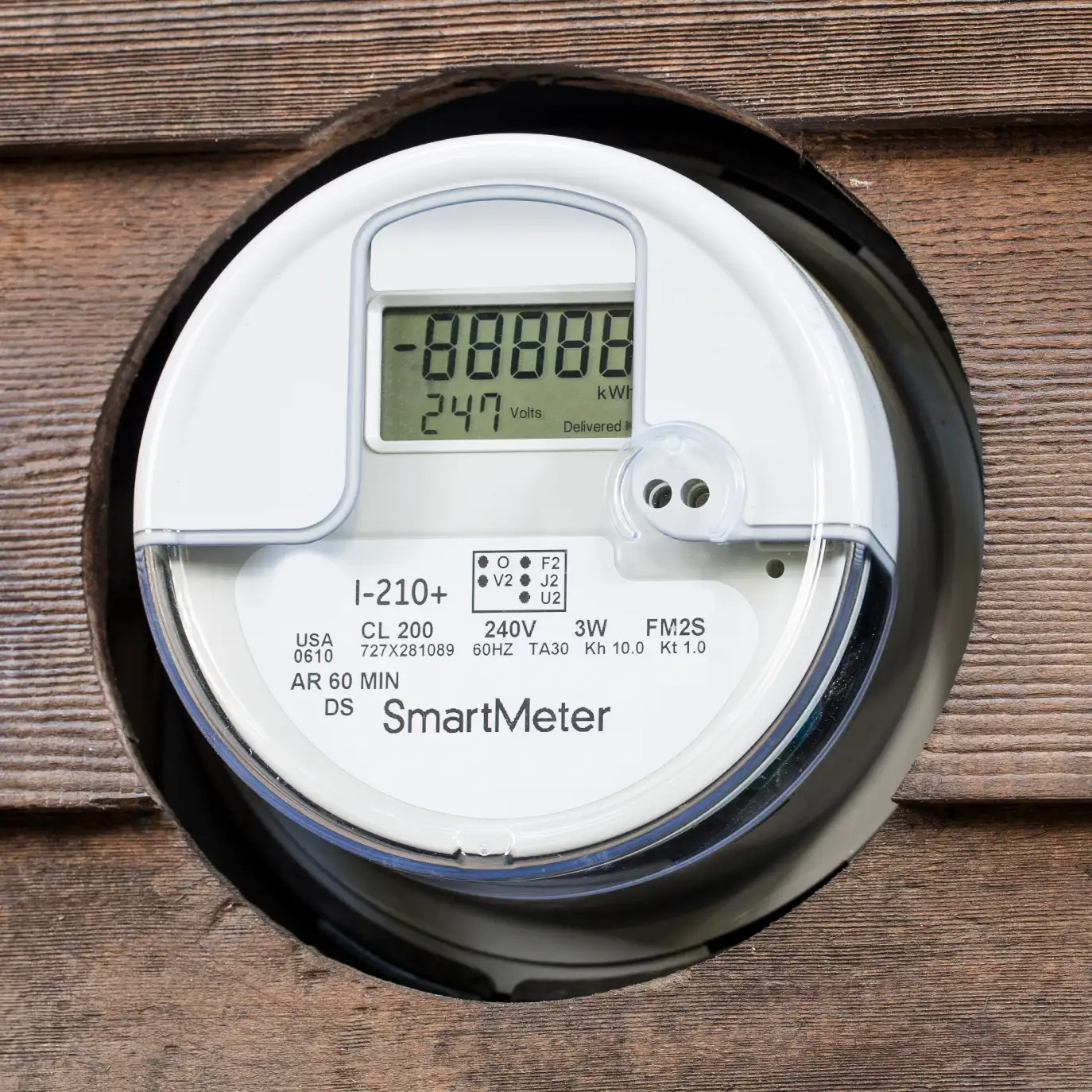
Learn more about Smart Meter Systems

Energy management refers to the systematic monitoring, control, and optimisation of energy consumption across various systems and assets. Traditionally, it involved manual tracking, which was prone to errors and lacked real-time insights. Effective energy management now uses technology to provide visibility into consumption patterns and enable informed decisions that help reduce operational costs and improve efficiency. It also plays a key role in supporting sustainability efforts by identifying wasteful practices and helping organisations move towards reduced carbon emissions and better asset utilisation.
The Internet of Things (IoT) enhances energy management by enabling real-time tracking and control of energy usage across multiple assets. Through connected devices and sensors, IoT gathers accurate data continuously, which can be visualised via central dashboards. This automation reduces human error and provides valuable insights into energy consumption patterns, asset performance, and potential inefficiencies. IoT-driven systems also support predictive maintenance and anomaly detection, helping organisations improve efficiency, reduce downtime, and make strategic decisions for cost-saving and sustainable operations.
IoT-enabled energy management systems offer several key benefits. They provide real-time data visibility that allows for immediate detection of anomalies and inefficiencies. This leads to more accurate reporting, improved operational efficiency, and reduced downtime. The integration of multiple Key Performance Indicators (KPIs) across devices such as generators, HVAC units, and water systems also enables better optimisation of resources. Also, these systems support sustainability by tracking energy-related emissions, thereby aiding compliance with environmental regulations and helping businesses work towards net-zero targets.
Airtel IoT Smart Energy Management solution operates by collecting real-time data from connected assets and presenting it via a centralised AI/ML-powered dashboard. It enables continuous monitoring of energy consumption, emissions, and operational efficiency. The system analyses this data to identify usage trends, anomalies, and areas of wastage. It also offers insights into asset health, helping businesses perform proactive maintenance. This approach replaces manual reporting with automated, data-driven decision-making, ultimately leading to improved energy efficiency and better regulatory compliance.
The AI/ML-powered dashboard in Airtel’s solution continuously analyses energy usage data to identify patterns and inefficiencies. It enables accurate tracking of energy trends, detects anomalies, and provides actionable insights. This helps in proactively addressing performance issues before they escalate. The dashboard consolidates information into a single view, allowing teams to monitor multiple parameters like energy consumption, emissions, and asset performance. The use of artificial intelligence ensures decisions are based on data, leading to smarter energy use and reduced wastage.
Airtel’s Smart Energy Management solution tracks a broad range of Key Performance Indicators (KPIs) across critical assets. These include metrics related to energy meters, diesel generators (DG), air handling units (AHU), and water systems. KPIs may cover energy consumption levels, operational efficiency, equipment wear and tear, and potential leakages. By providing a detailed overview of these metrics, the system enables better asset performance monitoring and more effective energy use, ultimately leading to optimised operational expenditure (OPEX) and capital expenditure (CAPEX).
The system tracks carbon footprint and emissions by collecting data from various energy-consuming assets and processing it through an AI-enabled platform. It calculates emissions in real time and presents them on a centralised dashboard that helps organisations to monitor their energy consumption and environmental impact accurately. This visibility supports timely interventions to reduce emissions and aligns energy use with sustainability goals. The system transforms fragmented consumption data into actionable insights, aiding businesses in reporting and managing their carbon output more effectively.
Artificial Intelligence (AI) plays a crucial role in asset health tracking within Airtel’s Smart Energy Management system. It continuously monitors equipment performance and identifies signs of wear or potential failure. By predicting issues before they occur, the system enables proactive maintenance, reducing unplanned downtime and extending asset lifespan. AI-driven insights also optimise operational efficiency by ensuring that assets are functioning at peak performance, contributing to lower maintenance costs and improved reliability of critical infrastructure.
The system optimises these assets by continuously tracking KPIs and using real-time data to assess performance. For energy meters and diesel generators (DG), it monitors usage patterns and efficiency. In air handling units (AHU) and water systems, it identifies irregularities and potential waste. This holistic view enables targeted improvements and predictive maintenance. By providing insights into how each asset contributes to overall consumption, the system helps reduce inefficiencies and optimise energy and resource utilisation across the board.
Airtel’s solution aids Environmental, Social, and Governance (ESG) compliance by enabling transparent reporting and monitoring of energy usage and emissions. It supports businesses in meeting the requirements set out in the SEBI Business Responsibility and Sustainability Report (BRSR), particularly by addressing attributes related to environmental impact. Through real-time data and AI-driven insights, it helps identify and mitigate excessive emissions and inefficiencies. This empowers businesses to make informed, sustainable choices aligned with ESG standards, enhancing accountability and operational transparency.
Yes, Airtel’s Smart Energy Management solution is designed to assist companies in complying with SEBI’s Green Mandate. It addresses the ESG reporting requirements outlined in the Business Responsibility and Sustainability Report (BRSR) by offering real-time tracking of energy consumption and emissions. The system provides clear insights into asset performance and environmental impact, helping companies align operations with sustainability goals. By transforming fragmented data into actionable intelligence, the solution supports efficient reporting and strategic decision-making in line with regulatory expectations.
The solution contributes to net-zero targets by enabling detailed monitoring and reduction of energy-related emissions. It provides insights into consumption patterns and carbon footprint, allowing for informed decisions to lower environmental impact. AI-driven analytics help identify inefficiencies and recommend optimisations across energy and utility assets. This continuous feedback loop supports incremental improvements towards net-zero objectives. By integrating sustainability into daily operations, the system empowers organisations to reduce their emissions footprint in a structured and measurable way.
The system involves connecting IoT-enabled sensors and devices to existing energy infrastructure. These devices feed real-time data into a centralised dashboard that monitors and analyses performance. As the solution focuses on continuous tracking and AI analysis, installation likely involves minimal physical disruption and is tailored to fit diverse asset configurations. The system is designed to be scalable and integrate smoothly with an organisation’s existing operational technology.
Centralised data monitoring enables comprehensive visibility into energy consumption and emissions, which is critical for decarbonisation efforts. By consolidating real-time data from various assets into a single dashboard, the system helps organisations understand where emissions are highest and which areas need intervention. It supports informed decision-making for reducing carbon output and improving energy efficiency. The integration of AI further refines these insights, so that decarbonisation strategies are data-led and actionable, accelerating progress towards long-term environmental sustainability goals.
Industries with significant energy consumption and regulatory obligations stand to benefit most. These include manufacturing, energy and utilities, IT/ITeS, and financial services. Each of these sectors manages multiple high-energy assets and must comply with increasing sustainability and reporting requirements. Airtel’s solution supports efficient resource use, proactive asset maintenance, and regulatory compliance, making it particularly useful in sectors where operational efficiency and environmental accountability are both critical to business success and long-term strategic planning.
The solution can be tailored to an organisation’s specific energy needs. By tracking energy meters, DG units, AHUs, and water systems, it accommodates different infrastructure types. This customisation makes sure relevant data insights, operational compatibility, and targeted optimisation, making the system suitable for varied business requirements and energy usage patterns.
Airtel IoT Smart Energy Management system is designed with enterprise-grade security protocols to ensure the protection of critical operational data. It typically employs end-to-end data encryption, secure device provisioning, and role-based access controls to prevent unauthorised access. Continuous monitoring and threat detection mechanisms help maintain system integrity, while compliance with industry standards supports data privacy. These security features work together to safeguard energy data across all connected assets and help with secure energy management for business environments.
Traditional energy monitoring relies on monthly meter readings and manual data collection. Smart energy management systems use IoT sensors to track consumption patterns every few minutes, sending updates to centralized platforms. While traditional setups react after problems occur, smart systems spot energy spikes immediately. A malfunctioning HVAC unit consuming 30% extra power gets flagged within hours, not weeks. Smart systems also automate responses—adjusting equipment during peak tariff hours or scheduling heavy machinery operations for off-peak periods to cut costs.
Modern smart energy systems connect with your existing infrastructure through brand-agnostic platforms. ComAp’s Energy Management System, for instance, works with current generators, solar arrays, and battery storage without requiring complete replacement. Integration uses lightweight protocols like MQTT over cellular or LoRaWAN networks, secured through TLS encryption. However, older buildings need retrofitting—installing new sensors and upgrading electrical panels. Airtel IoT supports this transition with MBRT technology that ensures connectivity even in remote locations where 2G networks struggle.
Smart energy management reduces costs by using IoT sensors, AI analytics, and centralized dashboards to optimize consumption and prevent wastage. It shifts high-load operations to off-peak hours, leveraging tariff variations for savings. Predictive maintenance detects anomalies early, such as HVAC inefficiencies, avoiding up to 30% extra energy use. Digital twins and machine learning algorithms provide real-time insights, enabling proactive decisions. Case studies show significant impact, including ₹1.5 crore annualized savings for a global financial institution and 5% yearly savings for a retail chain. Many providers offer zero-upfront-cost models, making adoption financially viable.
Smart energy management is ideal for large enterprises managing multiple facilities and thousands of assets. It offers centralized dashboards, AI-driven insights, and predictive analytics to optimize energy use across locations. These systems integrate with existing infrastructure, support ESG compliance, and scale easily for complex operations. Industries like manufacturing, hospitality, BFSI, and real estate have adopted these solutions to reduce costs and meet sustainability goals. With the Indian market projected to grow 13% annually through 2030, enterprise adoption is accelerating as organizations prioritize efficiency and carbon reduction.
Energy management systems track a wide range of data, including consumption patterns, voltage fluctuations, power factor, and phase-wise load distribution. They monitor asset-level performance for HVAC units, chillers, pumps, and generators, along with environmental factors like temperature, humidity, and occupancy. These platforms also capture water usage and carbon footprint data, supporting ESG compliance and sustainability reporting. Advanced analytics calculate key metrics such as Energy Performance Index and CO₂ footprint per employee, while AI-driven alerts enable anomaly detection and predictive maintenance. Airtel IoT’s solution provides real-time dashboards, automated reporting, and actionable insights for smarter decision-making.