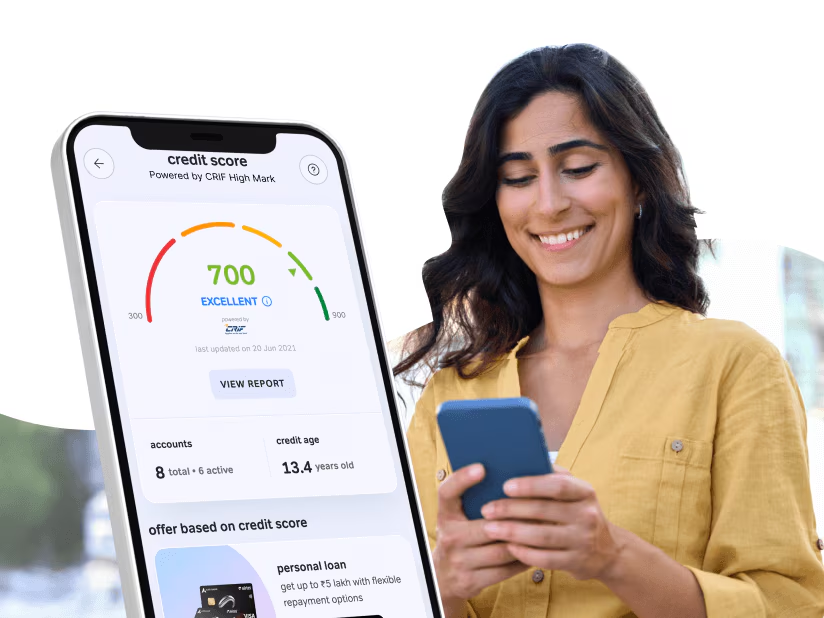

A CIBIL score is a three-digit number ranging from 300 to 900 that represents your creditworthiness. Generated by the Credit Information Bureau (India) Limited, this score is calculated based on your credit history, repayment behaviour, and financial habits. Lenders use your CIBIL score to assess the risk of lending you money, making it a crucial factor in loan and credit card approvals.
Why Is Your CIBIL Score Important?
Your CIBIL score acts as your financial report card, influencing every major financial decision in your life. A good CIBIL score opens doors to better loan terms, lower interest rates, and faster approvals. Whether you're planning to buy a home, start a business, or handle an emergency expense, your CIBIL score determines how easily you can access credit and at what cost.
How to Check My CIBIL Score Online for Free on Airtel Thanks App?
Checking your CIBIL score has never been easier with Airtel Finance. Here's how you can access your free credit report worth ₹500:
Open the Airtel Thanks App on your smartphone.
Navigate to the Finance section from the main menu.
Select "Check Credit Score" option.
Enter your basic personal details like PAN and mobile number.
Complete the verification process.
Instantly view your CIBIL score and detailed credit report.
The entire process takes less than 2 minutes, and you get CIBIL and CRIF certified results that you can trust for all your financial planning needs.
CIBIL Score Range and Meaning
Understanding your CIBIL score range helps you know where you stand financially:
300-549 (Poor): Indicates high credit risk, loan approvals unlikely.
550-649 (Fair): Below average score, limited loan options with higher interest rates.
750-900 (Excellent): Outstanding credit profile, best loan terms and instant approvals.
Most lenders prefer borrowers with scores above 750, as they represent lower risk and responsible financial behaviour.
How Is the CIBIL Score Calculated?
Your CIBIL score calculation involves multiple factors that reflect your financial discipline:
Payment History (35%): Timely repayment of EMIs, credit cards, and dues; late payments hurt your score.
Credit Utilisation (30%): Use less than 30% of your total credit limit for optimal scoring.
Credit History Length (15%): Longer, consistent repayment history boosts your score.
Credit Mix (10%): A healthy mix of secured and unsecured loans reflects responsible credit use.
New Credit Enquiries (10%): Frequent loan or card applications can lower your score.
Why Do Lenders Check CIBIL Score?
Lenders check your CIBIL score to minimise their risk and make informed lending decisions. Your score provides them with a quick snapshot of your creditworthiness without having to manually review your entire financial history. It helps them determine loan approval, interest rates, and credit limits. A higher CIBIL score indicates lower default risk, enabling lenders to offer you better terms and faster processing.
What Are the Benefits of Maintaining a Good CIBIL Score?
Maintaining a good CIBIL score offers numerous advantages that can save you money and provide better financial opportunities:
Lower Interest Rates: Banks offer their best rates to borrowers with excellent CIBIL scores.
Faster Loan Approvals: Good scores lead to quicker processing and instant pre-approved offers.
Higher Credit Limits: Credit cards and loans come with better limits and terms.
Better Negotiating Power: You can negotiate for better terms with lenders.
Access to Premium Products: Exclusive credit cards and loan products become available.
Reasons Why You May Have a Low CIBIL Score
Several factors can negatively impact your CIBIL score:
Late or Missed Payments: Even one missed EMI or credit card payment can significantly lower your score. Consistency in payments is crucial for maintaining a good CIBIL score.
High Credit Utilisation: Using more than 30% of your credit card limit regularly signals financial stress to credit bureaus.
Multiple Loan Applications: Applying for several loans simultaneously creates multiple hard enquiries, which can temporarily lower your score.
Loan Defaults or Settlements: Any history of loan defaults or settling dues for less than the full amount severely impacts your creditworthiness.
What to Do If You Do Not Have a CIBIL Score?
If you're new to credit and don't have a CIBIL score, start building your credit history gradually:
Begin with a secured credit card against a fixed deposit, which requires minimal documentation and helps establish your payment history.
Consider becoming an authorised user on a family member's credit card.
Apply for a small personal loan from your salary account bank, as they have your income history.
Make all payments on time to build a positive credit history from the beginning.
How to Improve Your CIBIL Score?
Improving your CIBIL score requires consistent effort and smart financial habits:
Pay All Bills on Time: Set up auto-pay for all EMIs and credit card bills to ensure you never miss a payment date.
Reduce Credit Card Balances: Keep your credit utilisation below 30% of your total available limit across all cards.
Don't Close Old Credit Cards: Length of credit history matters, so keep your oldest cards active with minimal usage.
Monitor Your Credit Report: Check your CIBIL score regularly using Airtel Finance's free credit report service to catch and dispute any errors.
Diversify Your Credit: Having a mix of different types of credit shows lenders you can manage various financial products responsibly.
Quick Tips to Improve Your Score
Here are actionable steps you can take immediately to boost your CIBIL score:
Pay more than the minimum amount due on credit cards.
Request credit limit increases but don't use the extra credit.
Pay off debts starting with the highest interest rate first.
Keep old accounts open to maintain credit history length.
Space out credit applications by at least 6 months.
Next Steps After Checking Your CIBIL Score
Once you have checked your CIBIL score through Airtel Finance, take these strategic steps:
If your score is above 750, you're in an excellent position to apply for loans with the best terms available. Consider exploring Airtel Finance's lending products for competitive rates and quick processing.
For scores between 650-750, focus on improvement strategies while still being eligible for most loan products. Work on reducing credit utilisation and ensuring timely payments.
If your score is below 650, prioritise building your credit health before applying for new credit. Use this time to establish better financial habits and clear any outstanding dues.
Non-Credit Factors That Don't Affect Your CIBIL Score
It's important to understand what doesn't impact your CIBIL score to avoid unnecessary worry. Your salary, savings account balance, investments in mutual funds or stocks, insurance policies, and cash transactions don't directly affect your CIBIL score. Similarly, your age, gender, marital status, employment history, and educational qualifications are not considered in CIBIL score calculations. Focus on credit-related factors for score improvement
Scan the QR code to Check your credit score
Receive a loan with Airtel Flexi Credit There will be a QR code here
Scan the QR code to Check your credit score
Receive a loan with Airtel Flexi Credit
FAQs
You can check your CIBIL score for free through the Airtel Thanks App. Simply go to the Finance section, select “Check Credit Score,” enter your details, and get instant access to your CIBIL and CRIF certified credit report worth ₹500 at no cost.
A CIBIL score is a three-digit number (300-900) that summarises your creditworthiness, while a CIBIL report is a detailed document containing your complete credit history, including all loans, credit cards, payment patterns, and enquiries made by lenders.
CIBIL scores are typically updated monthly when banks and financial institutions report your payment behaviour and account status to the credit bureau. However, significant changes like loan closures or defaults may reflect sooner depending on when the lender reports the information.
CIBIL stands for Credit Information Bureau (India) Limited. It is India’s first credit information company, licensed by the Reserve Bank of India, and maintains credit files on over 600 million individuals and 32 million businesses.
The CIBIL score is a numerical representation of your credit history and repayment behaviour, ranging from 300 to 900. It’s calculated using your payment history, credit utilisation, length of credit history, types of credit, and recent credit enquiries to help lenders assess your creditworthiness.
While CIBIL score is a type of credit score, they’re not exactly the same. CIBIL score specifically refers to the score generated by CIBIL, while credit score is a broader term that includes scores from other bureaus like Experian, Equifax, and CRIF High Mark.
Yes, checking your CIBIL score through authorised platforms like Airtel Finance is completely safe. These platforms use secure, encrypted connections and are certified by credit bureaus. Always ensure you’re using legitimate services that don’t store your sensitive information unnecessarily.
CIBIL score improvement typically takes 3-6 months of consistent positive financial behaviour. Simple changes like paying bills on time and reducing credit utilisation can show results within a few months, while recovering from major defaults may take 12-24 months.
Maintain a good CIBIL score by paying all bills on time, keeping credit utilisation below 30%, maintaining a long credit history, having a diverse credit mix, and limiting new credit applications. Regular monitoring through free services like Airtel Finance helps track your progress.
A CIBIL score above 750 is considered excellent and qualifies you for the best loan terms and interest rates. Scores between 700-750 are good, 650-700 are fair, while anything below 650 needs improvement for better credit opportunities.
Yes, you can get your CIBIL score absolutely free through Airtel Finance. The service provides you with a comprehensive credit report worth ₹500 at no cost, certified by CIBIL and CRIF, accessible instantly through the Airtel Thanks App.
Checking your own CIBIL score (soft enquiry) doesn’t affect your score and you can do it as frequently as you want. However, when lenders check your score for loan applications (hard enquiry), multiple enquiries within a short period can temporarily lower your score.
The four main credit bureaus in India are CIBIL (Credit Information Bureau India Limited), Experian, Equifax, and CRIF High Mark. Each maintains credit records and generates credit scores, though CIBIL is the most widely used by Indian lenders for credit decisions.
A credit score is a numerical value (like 750) representing creditworthiness. Credit rating is a broader assessment including letter grades (like AAA, BB) used mainly for businesses and bonds. A credit report is the detailed document containing your complete credit history, accounts, and payment patterns that forms the basis for calculating your credit score.