

Check Your Credit Score for FREE
Know your CIBIL score instantly and understand your loan & card eligibility in seconds. ₹399 ₹0
✔ Verified Report
⏱ 2 Min Check
⚡ No Impact on Score
Get Flexi Credit up to ₹10 lakhs ✔️Instant disbursal ✔️100% online process
Check NowUnderstanding your CRIF High Mark credit report is essential for making informed financial decisions. Your credit report is like a financial report card that lenders use to evaluate your creditworthiness. When you access your free credit report through the Airtel Thanks App, you're getting CRIF's reliable information that banks and financial institutions rely on.
The CRIF High Mark report contains detailed information about your credit history, including all your loans, credit cards, and payment patterns. Reading this report correctly helps you identify areas for improvement and understand how lenders view your financial behaviour. Each section of the report tells a different story about your credit journey, from your personal information to your credit utilisation patterns.
A typical CRIF High Mark credit report includes several key sections that paint a complete picture of your financial health. The report starts with your personal information, followed by your credit summary, account details, and inquiry history. A CRIF High Mark credit report covers your personal details, credit summary, account info, and inquiry history. It displays various accounts—from credit cards to loans—listing the lender, account type, credit limit or loan amount, balance, payment history, and status. This helps you understand how lenders view your credit. The report also tracks your credit activity over time, highlighting the evolution of your credit health.
Your CRIF High Mark credit report consists of several critical components that work together to provide a complete financial picture:
Personal Information Section: Contains your name, address, PAN number, and other identifying details. This section must be accurate as lenders use it for verification purposes.
Credit Summary: Provides an overview of your total credit exposure, including the number of active accounts, total credit limits, and outstanding balances across all accounts.
Account Information: Details every credit account you've held, including closed accounts from the past seven years. This includes credit cards, loans, and other financial products, showing payment history, current status, and account behaviour.
Inquiry Section: Lists all recent credit inquiries made by lenders when you applied for credit products. Too many inquiries in a short period can negatively impact your credit score.
Public Records: Includes information about bankruptcies, court judgements, or other public financial records that might affect your creditworthiness.
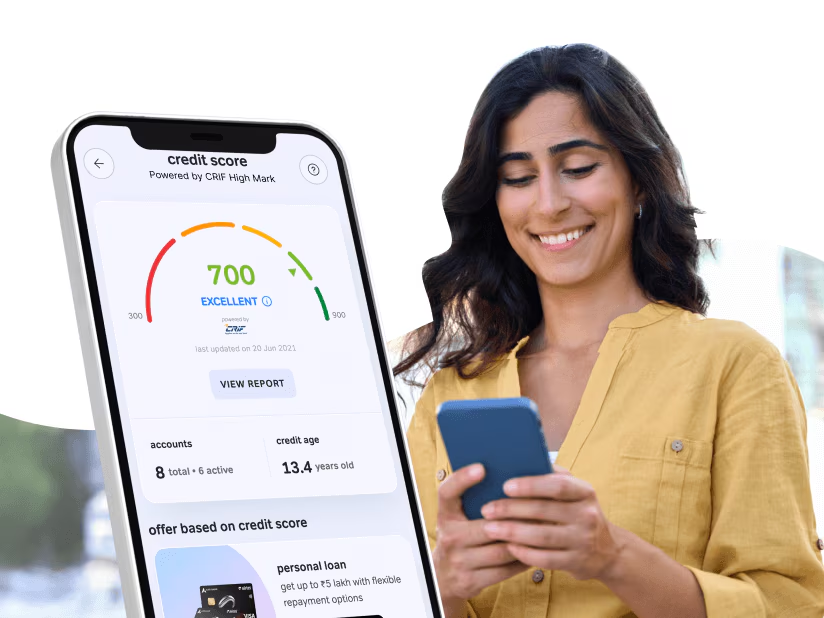
The CRIF High Mark score is a three-digit number that represents your creditworthiness based on your credit history. This score typically ranges from 300 to 900, with higher scores indicating better credit health. Your CRIF score is calculated based on factors such as payment history, credit utilisation, length of credit history, types of credit accounts, and recent credit inquiries.
A score above 750 is generally considered excellent and qualifies you for the best interest rates and credit terms. Scores between 650-750 are considered good, while scores below 650 may require improvement before applying for premium credit products. The CRIF High Mark scoring model considers your entire credit history, giving more weight to recent financial behaviour while still accounting for past credit management patterns.
Regular monitoring of your CRIF score through the Airtel Thanks App helps you track improvements and identify factors that may affect your creditworthiness. Understanding your score empowers you to take specific actions to improve your credit health over time.
If you discover errors in your CRIF High Mark credit report, taking immediate action is crucial to protect your credit health. Common errors include incorrect personal information, accounts that don't belong to you, wrong payment statuses, or outdated account information.
Step 1: Document the Error: Take screenshots or notes of all incorrect information, including account numbers, dates, and other specific details.
Step 2: Contact CRIF Directly: File a dispute directly with CRIF High Mark through their official website or customer service channels. Provide clear documentation supporting your claim.
Step 3: Contact the Lender: Reach out to the financial institution that reported the incorrect information. They can update their records and notify CRIF about the correction.
Step 4: Follow Up Regularly: Monitor your credit report monthly through the Airtel Thanks App to ensure corrections are made and no new errors appear.
Step 5: Maintain Records: Keep documentation of all communications and corrections for future reference.
The dispute resolution process typically takes 30-45 days, during which CRIF investigates your claim and coordinates with the reporting lender to verify information.
Know your CRIF High Mark report for financial health. The Airtel Thanks App offers free access to help you make informed decisions about loans, cards, and more. Monitor it to improve your score, spot errors, and understand lender views, especially for big loans. Good credit takes time; consistent monitoring helps maintain a strong score. Remember that building good credit is a marathon, not a sprint. Consistent monitoring and responsible credit behaviour will help you maintain a strong CRIF High Mark score over time.
Credit bureaus are financial institutions that collect and maintain credit information about individuals and businesses. In India, there are four main credit bureaus: CIBIL, Experian, Equifax, and CRIF High Mark. Each bureau collects data from banks, NBFCs, and other financial institutions to create comprehensive credit reports. Credit bureaus are institutions that collect and maintain credit data on individuals and businesses. In India, the main bureaus are CIBIL, Experian, Equifax, and CRIF High Mark, which gather information from banks and financial firms to generate credit reports.
CRIF High Mark is known for its detailed reports and extensive data coverage, pulling information from thousands of lenders nationwide. Understanding how bureaus operate highlights the importance of maintaining strong relationships with lenders, as these relationships affect your credit score.
Since lenders report to different bureaus, checking multiple reports is advisable. Accessing your free report via the Airtel Thanks App provides CRIF-certified information, offering a reliable view of your credit health.





It will take 2 mins and is absolutely free. We promise!
Check your Free Credit ReportKnow your CIBIL score instantly and understand your loan & card eligibility in seconds. ₹399 ₹0